
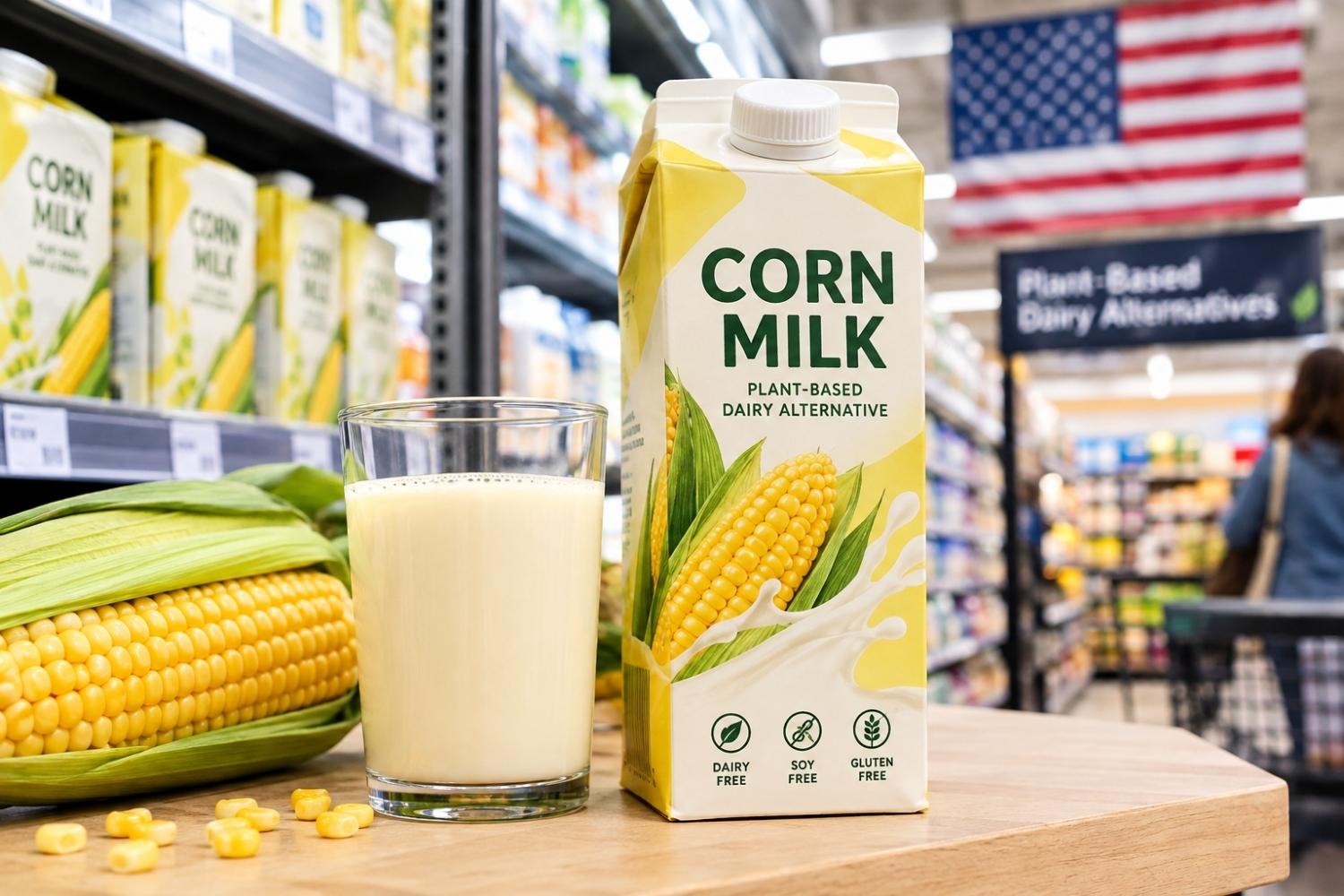
Four years of work and one hundred and twenty test versions to obtain a corn milk that doesn’t taste like corn inside a cappuccino. Tim Leclercq is co-founder and CEO of Maïzly, a company based in Cary, North Carolina, which in early 2025 brought to the United States what it presents as the world’s first corn-based plant-based beverage. The record, to be honest, is questionable, because in Vietnam corn milk has been prepared at home since well before anyone thought of putting it in a carton. After oats, almonds, soya and peas, in short, it’s corn’s turn. Recipes for corn mirk with espresso, ice and condensed milk are circulating on TikTok, some openly inspired by Korean cafes, where corn in the glass has long been at home. In American supermarkets, the industrial version is gaining shelves at a pace that the company does not fail to announce, press release after press release.
From six hundred to over two thousand shops
The American debut dates back to February 2025, with two flavors, original and chocolate. Before then, the brand had already gained experience in Costa Rica, Latin America and Africa, and had won the National Corn Growers Association’s Consider Corn Challenge competition. An award that, given who awards it, could hardly have gone to an almond milk. By September 2025 the drink had arrived in around six hundred points of sale, from the North-East to Texas, by December there were more than a thousand shops, with a new refrigerated version launched in New York and a growing presence in coffee shops in the United States and the United Kingdom. In June 2026 the company announced that it had surpassed the two thousand mark.
What’s really in the cartoon
If you are expecting a sort of “cob juice” you will be disappointed. The label of Maïzly Original lists water, soluble corn fibre, coconut oil, corn maltodextrin, sugar and chickpea proteins, then a series of additives (sucrose esters of fatty acids, tricalcium citrate, dipotassium phosphate, gellan gum) and vitamins D2, A and E. Corn, in other words, is there, but in the form of refined derivatives, not grains. For a 240 milliliter glass the manufacturer declares 130 calories, 8 grams of fiber, 4 grams of added sugars and just one gram of protein. Saturated fats reach 6 grams, thanks (or blame) to coconut oil. The beneficial properties for the intestine attributed to soluble fiber are, for now, a company claim.
The sữa bắp, the Vietnamese version
In Vietnam corn milk is called yes bắp and the recipe has no industrial secrets. Andrea Nguyen, author of Vietnamese cookbooks, describes it on her blog Viet World Kitchen with few ingredients, mostly corn and water. The grains are detached from the cob and cooked together with cobs, bracts and beards, which give off more aroma. Then everything is blended and filtered until a smooth and slightly sweet drink is obtained.
@AI generated
Some local variations add evaporated milk and condensed milk, others use coconut milk, or flavor everything with pandan, a tropical plant practically omnipresent in Southeast Asian cuisine. After all, corn also ends up in desserts in Vietnam, such as what a bắpand this is precisely the substantial difference with the American version: sữa bắp is not at all a substitute for cow’s milk, but rather a drink in itself, which must taste of corn.
