
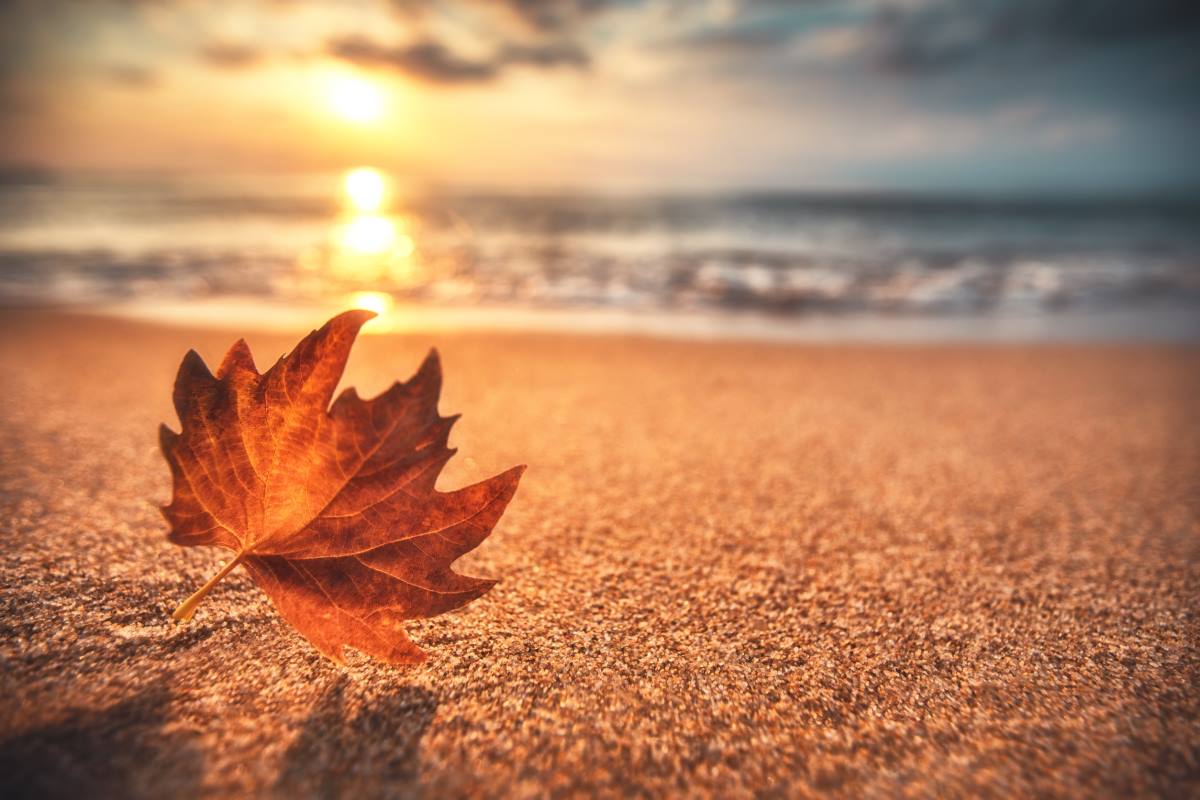
The term equinox derives from the Latin aequinoctium (equal night, in reference to the duration of the nocturnal period equal to the daytime) and indicates that moment of the earth’s revolution around the sun in which the latter is at the zenith of the equator.
The equinox occurs twice during the solar year – in autumn and spring – and, at that moment, the daytime period (i.e. the period of exposure to sunlight) and the nighttime period are the same.
Autumn equinox, day and night have the same duration
Why do day and night have the same duration during the equinoxes? Both on the autumnal equinox and on the vernal equinox theEarth’s rotation axis is perpendicular to the direction of the sun’s rays. From this moment on, the hours of light will continue to decrease until the winter solstice on December 21st, when the days will begin to get longer again.
The autumnal equinox – which normally falls between September 22nd and 23rd – is later than the spring equinox – which arrives between 19 and 21 March – because the revolution motion of the Earth around the sun is slightly slower in the month of July, near the terrestrial aphelion, i.e. the point of maximum distance of the Earth from the sun
Autumn equinox, celebrations and curiosities
There are really numerous traditional celebrations and curiosities related to the autumnal equinox. Let’s find out what the main information is dedicated to this very particular moment of the year which marks the transition from summer to autumn.
Mehr Day
Maybe you didn’t know that the September equinox marks the first day of Mehr or Libra In the Iranian calendar. It is one of the Iranian holidays called Jashne Mihragan, or the festival of sharing love in Zoroastrianism.
Mid-Autumn Festival
The Mid-Autumn Festival is celebrated the 15th day of the 8th lunar month and is an official holiday in many East Asian countries. Since the lunar calendar is not in sync with the Gregorian calendar, this date can fall on any day between mid-September and early October, in any case close to the autumnal equinox.
Abolition of the monarchy
The September equinox was the first day of the year in the French Republican calendar, which was used from 1793 to 1805. The First French Republic was proclaimed and the French monarchy abolished on 22 September 1792 making the following day (equinox day) the first day of the Republican Era in France.
The harvest moon
It’s called the harvest moon, or Harvest Moonaccording to Native American wisdom, the full moon closest to the autumnal equinox. Usually it is the one in September but this year it will not be like that and the full moon in October will be the harvest moon. This happens because in 2020 the full moon arrived very early in September, on the 2nd. This year, however, the full moon will be on September 26th and therefore closer (although later) to the date of the equinox.
Autumn Equinox at Machu Picchu
In Machu Picchu there is the Intihuatana stonewhich had the task, with its position, of showing the exact date of the two equinoxes and other astronomical events. This particular stone is one of the most studied objects of Machu Picchu and was used by the Incas for periodic measurement of the position of the sun.
Autumn equinox for the Celts
The autumnal equinox corresponds to the first Festival of Darkness for the Celts. This occasion focuses on the theme of separation between lovers or between mother and daughter. For the Celts Mabon is the festival of the equinox, the day that is halfway between the two solstices; it is a time of balance, when light and darkness are equal and begins autumn and has correspondence with the myth of Persephone and Demeter.
Autumn Equinox in Japan
The autumn equinox is one of Japan’s national holidays. It is part of the 24 Setsubun, the most important transition days of the yearwhich mark the transition from one period to another. The festival is called Shuubun No Hi or Higan no Chu-Nichi. On this day we go to observe the rain of maple leavessacred tree of Japan, just as with the arrival of spring you can admire the cherry blossoms.
Autumn equinox at Stonehenge
Stonehenge is the hub of the mysteries and celebrations linked to the equinoxes and solstices. Usually large gatherings a Stonehenge they take place during the summer, corresponding to the summer solstice, but the autumn equinox is another fascinating time to visit this magical place.
Autumn equinox in Greek mythology
In Greek mythology the autumnal equinox is linked to Hades, Demeter and Persephone. In ancient times, myths and legends served to find an explanation for the passage of the seasons which marked with great importance the alternation of work in the fields, harvests and rest.
Sunrise and sunset
The autumnal equinox and the spring equinox are the only times of the year when the sun rises exactly in the east and sets exactly to the west.
