
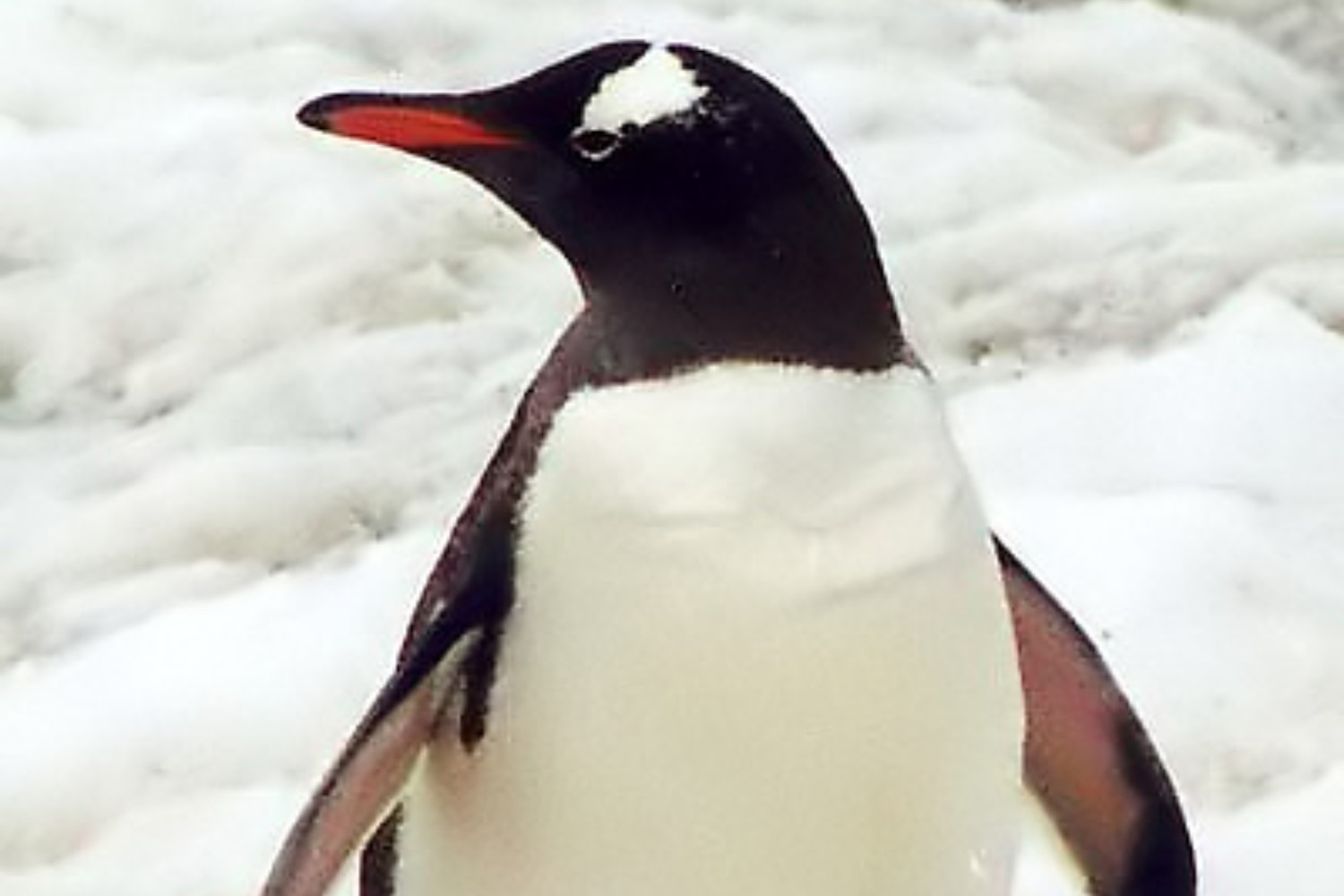
The remote Kerguelen Islands, an archipelago of volcanic origin dispersed in the southern Indian Ocean and known poetically as the Islands of Desolation, hold a biological secret revealed only today. A team of international researchers, led by scientists from the University of California, Berkeley and Chilean institutes, published on Communications Biology a study destined to redefine the taxonomy of penguins.
By analyzing the entire genome of 64 specimens from 10 different colonies, biologists discovered that what we believed to be simple gentoo penguins (Pygoscelis papua) actually belong to 4 distinct species that were separated evolutionarily between 300,000 and 500,000 years ago. The most sensational news concerns the identification of a completely new species for science: the Pygoscelis kerguelensiswhich inhabits the French archipelago and is the first new penguin species identified since 1921.
The mystery kept in museums for over a century
The discovery takes on even more fascinating contours if we consider that the official reference model, the holotype on which the description of the species is based, had been kept undisturbed since 31 December 1897 at the American Museum of Natural History in New York, collected at the time by the naturalist Robert Hall. For over a century, science has ignored the real identity of that specimen, as well as others preserved since 1874.
The separation of these populations was favored by extreme geographic isolation and the Antarctic Polar Front, a natural barrier of currents and temperatures. Unlike other seabirds, pygoscelids have a generalist diet that includes fish, squid, cuttlefish and krill, reducing the need for long migrations and transforming islands into unique genetic strongholds, equipped with specific adaptations in muscles, nervous system and metabolism.
From taxonomic division to extinction alarm
The scientific review promoted by the researchers – among which the contributions of the biologist Daly Noll and the teacher Juliana Vianna stand out – breaks down the old group into four distinct entities: the Pygoscelis papua North Falklands, the Pygoscelis ellsworthi southern Antarctic peninsula, the Pygoscelis taeniata eastern Crozet, Marion and Macquarie Islands, and finally the new Pygoscelis kerguelensis.
Unfortunately, the joy of discovery collides with a harsh environmental reality. According to climate models developed by the team, three of these species risk losing much of their habitat due to global warming by 2050. The absence of nearby lands in which to take refuge makes these island populations particularly vulnerable, imposing on international institutions the urgent need to launch targeted conservation strategies for each species before it is too late.
