
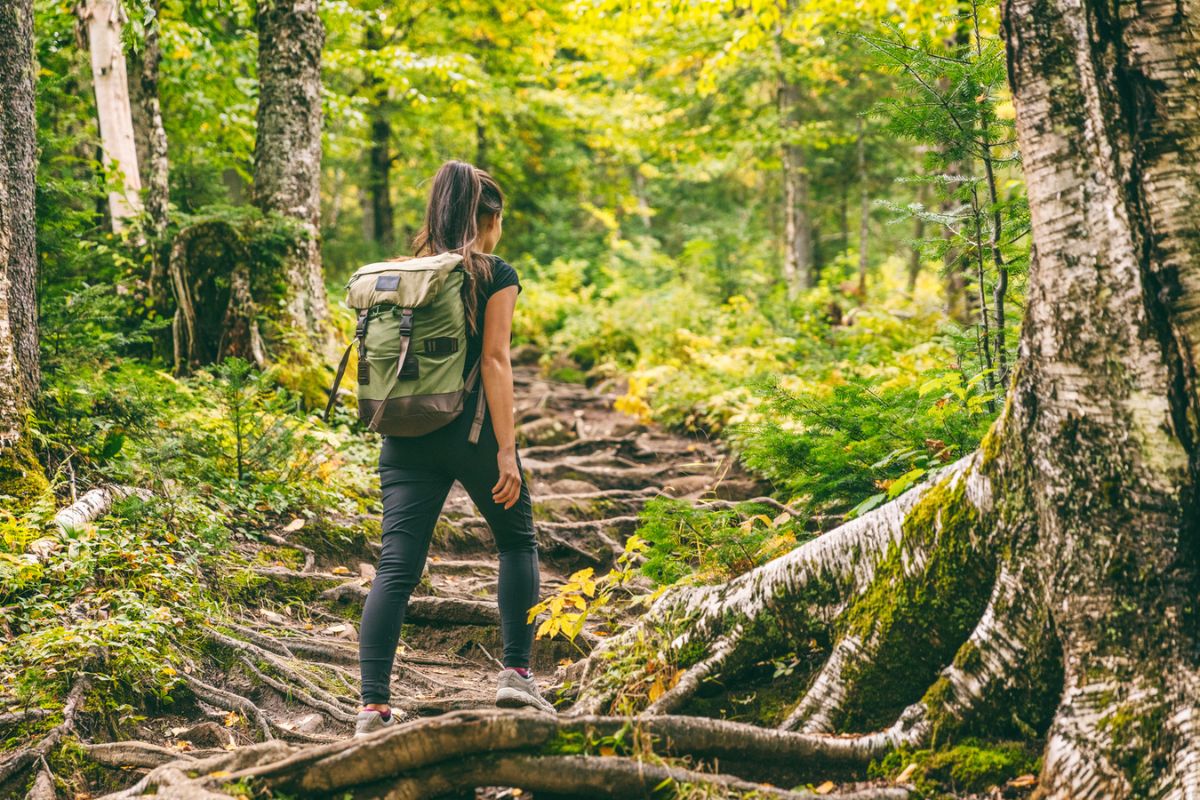
October is one of the best months to get back on the road. The intense heat of summer gives way to more pleasant temperatures, the woods slowly begin to change color and many of the busiest places become quieter.
But for trekking you don’t necessarily need the most famous destinations. Italy is full of lesser-known paths capable of combining surprising landscapes, history and small elements of adventure: bridges suspended among the trees, ancient mines, trenches from the Great War, works of art immersed in nature and panoramas that seem light years away from the cities.
Here are some itineraries to note for a trekking weekend.
The Scala del Paradiso path in Lombardy
View this post on Instagram
Less than an hour from Milan, in the Spina Verde Regional Park above Como, there is a route that seems to include multiple experiences in a single excursion.
The Scala del Paradiso ring passes through woods, ancient border roads and military remains of the First World War. The most evocative stretch is the long stone staircase of around 900 steps that climbs into the woods up to the panoramic points of Lake Como. Along the route you will also come across a small Tibetan bridge suspended between the trees and various structures of the Cadorna Line, the defensive system built between 1915 and 1918 along the northern Italian border. A short trek but full of different elements: nature, history and a pinch of adventure.
Useful data
The Monte Barro Ring: the panoramic trek above Lecco
For those leaving from Lombardy and looking for an excursion without having to travel long distances, Monte Barro is one of the most interesting destinations. The circular route passes through chestnut woods and offers spectacular views of the Brianza lakes and surrounding mountains. Along the route you will also come across the remains of the archaeological village of Piani di Barra, evidence of an ancient Roman-early medieval settlement. It is a balanced trek: scenic enough to be satisfying, but without requiring preparation from an expert hiker.
Useful data
The Path of Creation in South Tyrol
@greenMe
It is not a simple mountain path. On the Rodengo-Luson Alp, one of the most beautiful plateaus in Alto Adige, the route becomes a journey between nature and art. The Path of Creation extends for approximately 6.4 kilometers between meadows, woods and alpine pastures. Along the way you will encounter seven artistic installations inspired by the days of Creation, integrated into the landscape without altering its balance. The beauty of this itinerary is precisely the slow pace: there is no need to reach a peak or face large differences in altitude. You walk observing the territory, the mountain huts and the relationship between man and the environment that has characterized these mountains for centuries.
Useful data
The Orrido di Gaea: a hidden canyon in the Tuscan-Emilian Apennines
A small natural canyon carved by water is hidden among the woods of the Bolognese Apennines. The Gaea Ravine, near Villa d’Aiano, is a route where the landscape changes continuously: paths in the woods, small fords, waterfalls, rock formations and remains of ancient abandoned mills. It is a trek that gives the sensation of entering a wild environment, even if easily accessible. In autumn, with the colors of the forest changing, it becomes particularly evocative.
Useful data
Umbrian Grand Canyon: the path from Titignano to Roccaccia
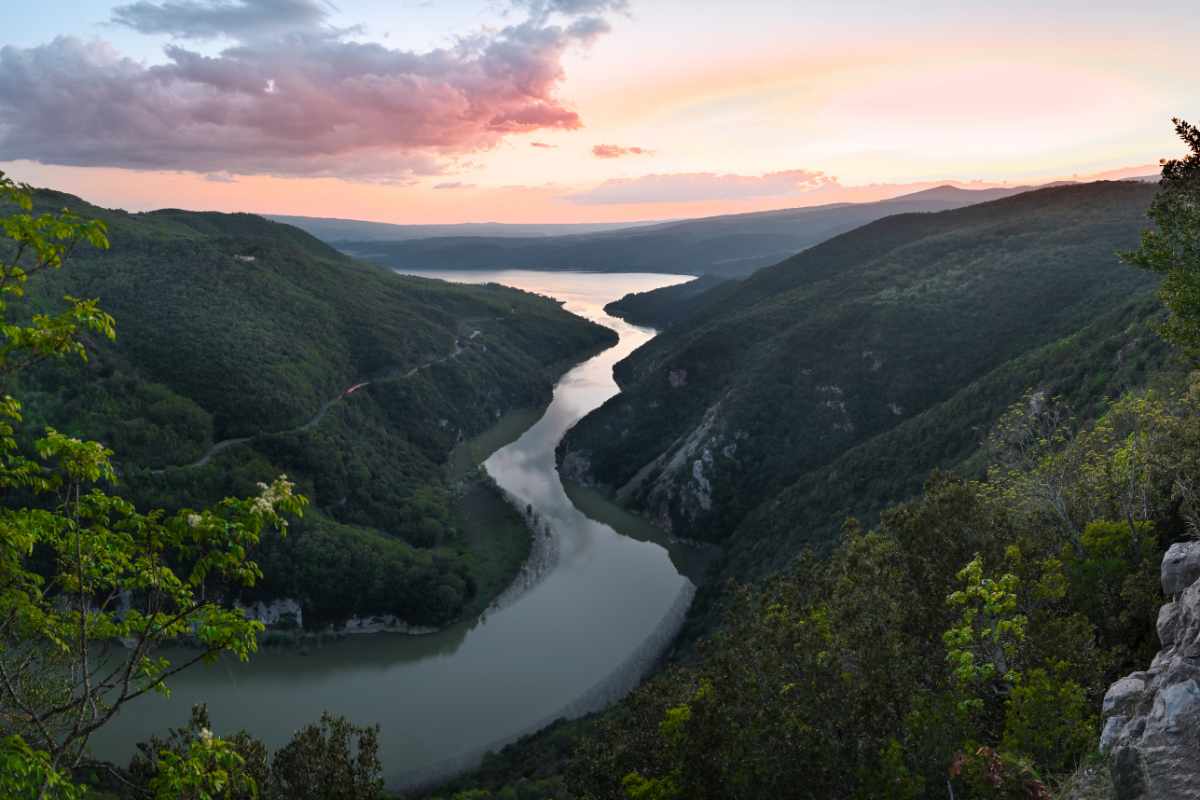
Among the most surprising landscapes of Umbria there is a place that seems to belong to another region: a small Grand Canyon carved by the Tiber river, with rocky walls, deep gorges and views that open onto Lake Corbara. The route that connects the village of Titignano to Roccaccia is a simple but fascinating excursion. We start from Titignano, an ancient fortified village in the province of Terni where time seems to have stopped, with its castle, church and panoramic terrace overlooking the Umbrian landscape.
Leaving the village, the path crosses dirt roads immersed in vegetation, among cypresses and woods, until reaching the remains of the Roccaccia, an ancient medieval fortification located at approximately 411 meters above sea level. From here one of the most beautiful panoramas in the area opens up: under your gaze extend Lake Corbara and the Forello Gorges, a natural canyon shaped over the centuries by the course of the Tiber. A place where nature and history meet and which, especially in the autumn months, offers particularly evocative colors and atmospheres.
The complete route is approximately 7 kilometers round trip and is also suitable for those who are not expert hikers. After the walk, it is worth stopping in Titignano to enjoy the village and perhaps have a dinner overlooking the landscape at sunset.
Trekking to the Vetusta Faggeta on Monte Cimino

Just over an hour from Rome, in the province of Viterbo, there is one of the most evocative woods in Lazio. It is the Old Beech Forest of Monte Cimino, recognized as a UNESCO heritage site, a place where walking means immersing yourself in an environment that still retains an almost primordial aspect.
Mount Cimino is just over a thousand meters high, but the real protagonist is not the peak: it is the forest. Some of the tallest beech trees in Europe grow here, together with large boulders of volcanic origin, springs and corners where the presence of man seems to almost disappear.
The numerous paths allow you to choose different itineraries, shorter or longer, all immersed in the silence of the beech forest. It is a particularly suitable place for those looking for a slow trek, made more of atmosphere than performance, where you can stop and listen to the sound of the leaves and breathe the air of the forest.
The area is also a perfect destination for practicing so-called forest bathing, the practice born in Japan that invites you to spend time immersed in nature to promote well-being and relaxation. In autumn, when the leaves begin to take on warm colours, the beech forest of Monte Cimino becomes one of the most fascinating corners of central Italy.
The Miners’ Path to Allumiere

@miners’ walk/Facebook
About an hour from Rome, in the Tolfa Mountains, there is a path that tells an almost forgotten story. The Miners’ Walk was created to enhance the mining past of Allumiere, a town that for centuries was one of the most important centers in Europe for the extraction of alum, used above all in the textile industry. The paths pass through beech and chestnut woods, ancient kilns, mines and traces of the activities that have transformed this territory for over four centuries. Various circular routes are available, from the simplest one immersed in the beech forest to the longer itineraries towards the Farnesiana and the medieval ruins of Cencelle.
Useful data
How to choose the right trek in October
October is an ideal month to go back to walking, but even in this period it is important to choose the route based on your abilities and the conditions at the time. Before leaving, it is always a good idea to check the weather, especially for mountain itineraries where the climate can change rapidly, find out about the difficulty of the path and check for the presence of refreshment points or water sources along the route.
Equipment also makes the difference: trekking shoes with good grip, a light backpack and clothing suitable for temperature changes allow you to experience the excursion in a safer and more pleasant way.
