
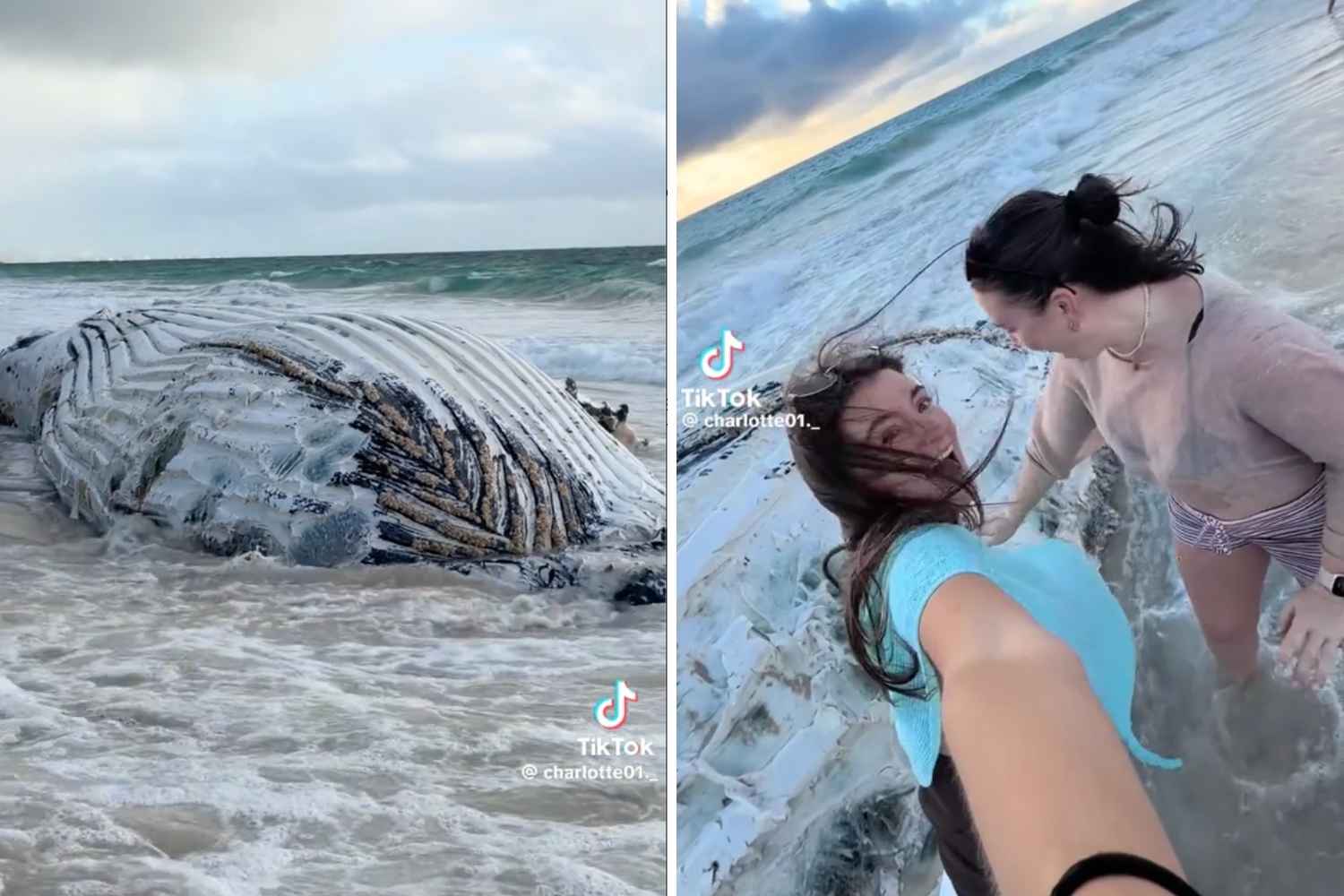
A dead whale several meters long remained for days on City Beach, in Perth, Australia, attracting hundreds of curious people and creating an unusual situation: people flocked to see the animal up close, take photographs and, in some cases, even touch it, despite the authorities’ invitations to keep their distance.
@chill_af_dude Felt too bad to see whale on this condition #perth #citybeach #whale #dead #sad
♬ Quiet Reflection – Mildred Hartwell
The carcass, a humpback whale weighing approximately 31 tons, washed up on the beach Monday morning. The removal proved to be much more complex than expected: the operators worked for hours to wrap the animal’s body with sheets and ropes and drag it for about a kilometer and a half, but without being able to complete the operation.
The transfer was blocked by the lack of a crane powerful enough to lift the carcass. The necessary means were scheduled for the following day, while in the meantime the site remained monitored and the beach was closed.
Sharks attracted to the carcass
Making the situation even more delicate was the presence of several sharks near the coast, including a white shark measuring around 5 metres, probably attracted by the presence of the whale. The authorities therefore prohibited access to the area and also the use of drones during removal operations, imposing fines for those who did not comply with the instructions.
However, the whale has become an attraction
Despite the bans, in the previous days many families approached the carcass, also taking advantage of the school holiday period in Australia. The mayor of the Town of Cambridge, Gary Mack, said the case had gone viral, attracting international attention.
Most people, according to the authorities, would have limited themselves to observing the animal with curiosity and amazement. However, what caused discussion was the behavior of some people, such as a visitor filmed while jumping on the belly of the whale.
“It’s not a toy,” commented the mayor, also recalling the risks linked to the presence of sharks and the conditions of the carcass.
Removing the animal is expected to cost between 60,000 and 100,000 Australian dollars and will end with the whale being sent to landfill. Once the operation is completed, the beach will remain closed for some time to ensure that no remains of the animal remain.
A story that shows how a rare natural event can quickly transform into a public spectacle, but puts a question at the center: in front of wildlife, even when it is now dead, are we still capable of observing without invading?
