
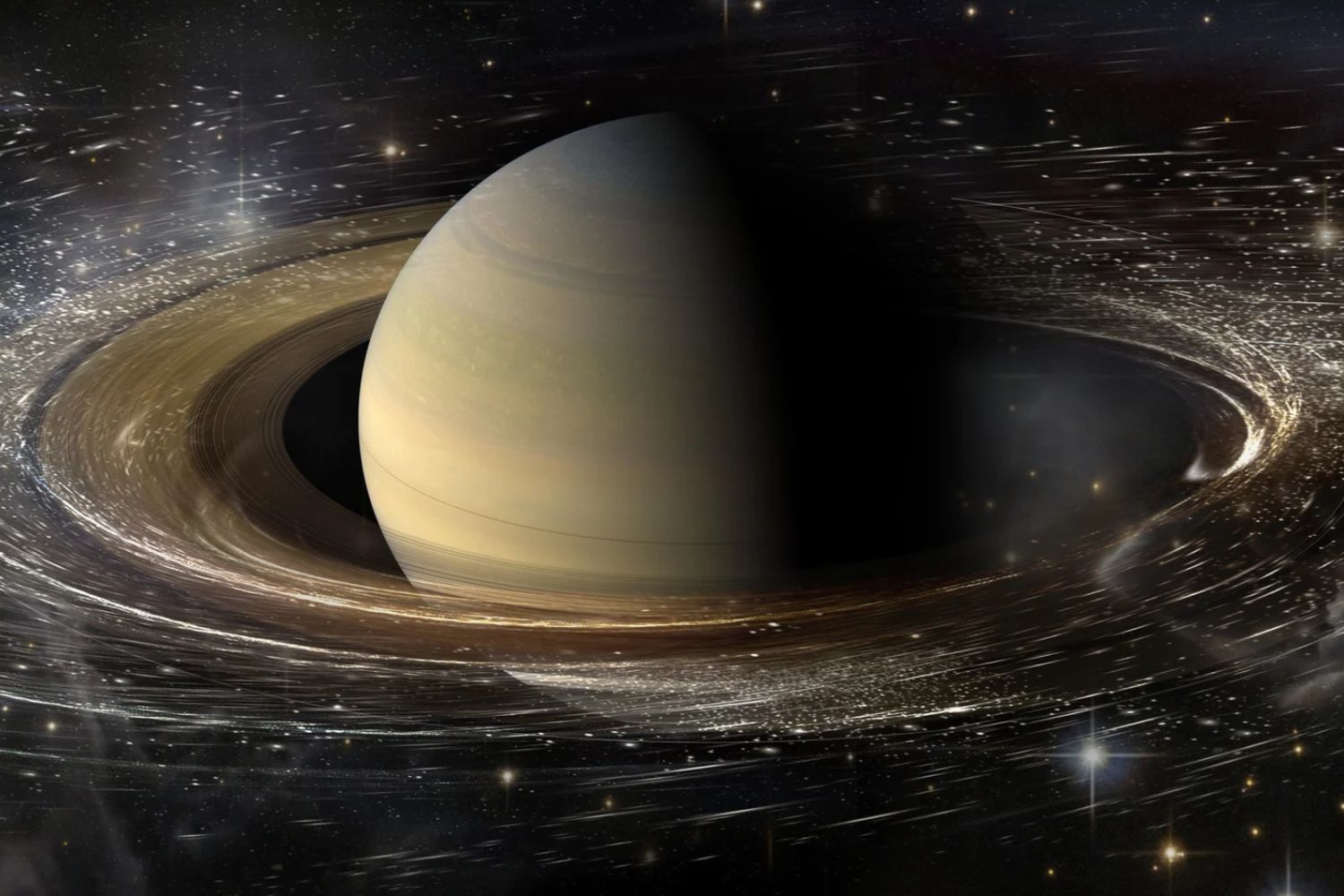
The October 4 we raise our eyes to the sky, two shows await us, one more beautiful than the other: Saturnthe Lord of the Rings, will be atoppositionTherefore visible all night (better with good binoculars), with Moon and Mars which will form a splendid conjunction. We don’t miss out!
Saturn at opposition
As the UAI explains, the celestial body undisputed protagonist of this month of October it is, without rivals, the planet Saturn: on October 4th it reaches opposition to the Sun.
As INAF explainsthe opposition is an alignment with the planet that is on the opposite side of the Earth from the Sun. For this to happen at night, the planet must be beyond Earth’s orbit. And in this situation the planet offers the best observation conditions since it is at the minimum distance from Earth, remaining then visible all night.
On October 4, Saturn will rise as the Sun sets, remaining visible throughout the night. As with all oppositions, the Lord of the Rings the planet will also be found at the minimum distance from Earthequal to approximately 1,261,744,000 km. This provides ideal conditions for observing it, with the naked eye and with the telescope, at its best maximum brightness and apparent angular dimensions.
©Stellarium
The ideal opportunity to appreciate the details of the magnificent rings. The planet will be visible in the east as darkness falls, at its peak in the south in the middle of the night, and then descending to the east before dawn. Saturn continues its slow retrograde motion in the constellation of the Whale
We raise our eyes to the sky to admire a beautiful and rather rare sight (on the map the sky of October 5, 2026 at approximately 1.00 am, southern horizon).
The Moon-Mars “kiss”.
©Stellarium
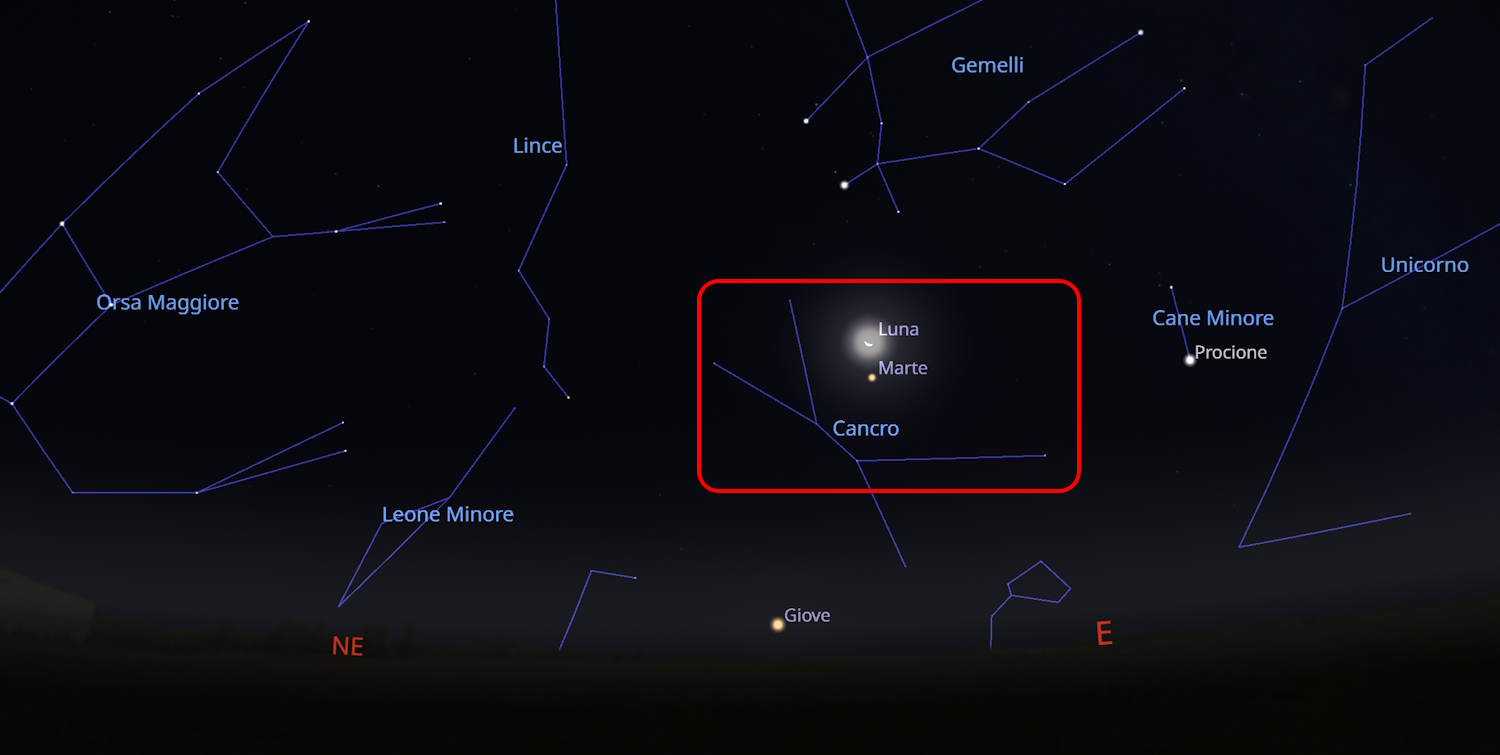
A truly special night on October 4th. As the UAI further explains, in fact, in the second part of the night between 4 and 5 October the Moon will get increasingly closer to Mars, until it reaches a close conjunction, in the constellation of Cancer (in the map the sky of October 5, 2026 at approximately 3.00 am, North-East – East horizon).
Source: UAI
