
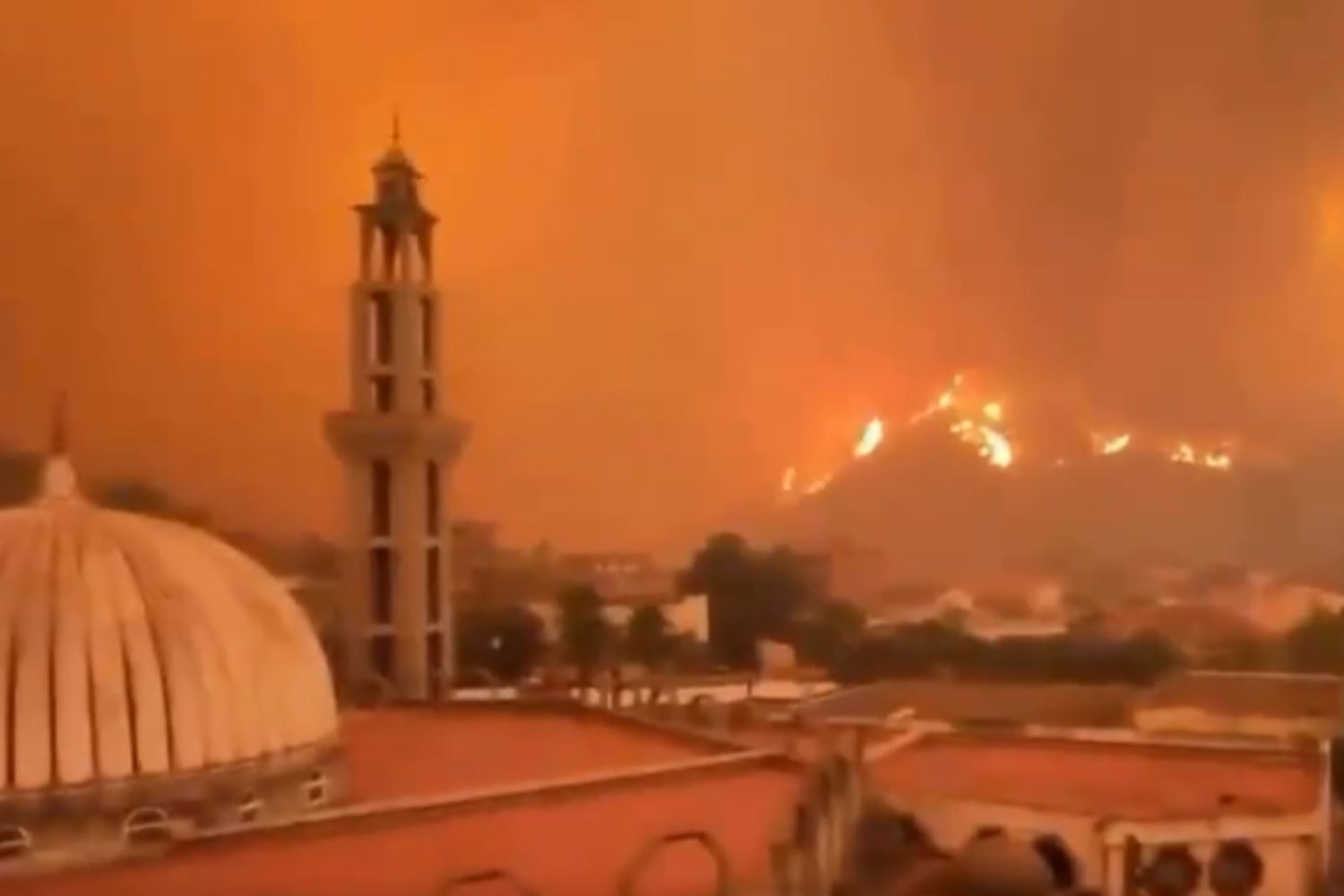
Deliberately setting a fire in a forest in Algeria could cost your life. The lower house of Parliament has in fact just approved an amendment to the Criminal Code which extends the death penalty to a series of crimes related to arson and the kidnapping of children.
The text concerns in particular fires intentionally set in forests and fields and some forms of voluntary destruction of public and private property. A reform that obtained 221 votes in favor out of the 407 members of the National Popular Assembly, with the support of the presidential majority and the Islamist parties. However, the forces of the left and the secular ones are against it.
However, it is not yet the last step. The provision will have to be examined by the Council of the Nation, the upper house of Parliament, before it can be definitively ratified.
But in the meantime, many doubts remain.
Because Algeria wants to go as far as capital punishment
The tightening comes after the fires that hit the north-east of the country hard between 26 and 30 August. The official toll speaks of at least 12 deaths, but the figures could be much higher. Amnesty International underlines that the authorities have not yet released an overall count of victims and cites sources considered credible who speak of over 70 deaths in just one municipality.
A few days after the fires, the president Abdelmadjid Tebboune had ordered the Minister of Justice to intervene on the Criminal Code to “reintroduce” the death penalty against those who set or instigate arson. And above all he had warned that, once all levels of appeal had been exhausted, the sentences would have to be carried out.
Capital punishment is nothing new in the Algerian judicial system. Here, the courts continue to pronounce death sentences, especially for murder, but the country has not carried out a death sentence since 1993. In fact, there is therefore a moratorium that has lasted for over thirty years.
Now, however, the novelty of the reform lies not only in the expansion of crimes punishable by death, but in the concrete possibility that that moratorium will be interrupted.
Not just fires: the changes to the Criminal Code also affect the kidnappings of minors. The text provides for capital punishment for the abduction of children and further aggravation in cases accompanied by torture, sexual violence or other ill-treatment. For some of the crimes involved, mitigating circumstances are also excluded.
Amnesty’s intervention
Amnesty International is calling on the Upper House of the Algerian Parliament to reject the changes to the Penal Code that expand the use of the death penalty, approved by the Lower House after more than thirty years without executions in the country.
According to the organization, the reform represents a serious step backwards on the human rights front. The changes came a few weeks after the devastating fires that struck north-east Algeria between 26 and 30 August and after the president Abdelmadjid Tebboune he had asked to toughen the penalties against arsonists.
The new text also provides for capital punishment for very broadly formulated conduct, such as inciting, encouraging or facilitating arson, including through social networks, as well as for some serious crimes against minors.
Amnesty also disputes the speed with which the amendments were approved, without meaningful discussion with human rights organizations and lawyers, and fears that such extensive rules could encourage abuse.
The organization recalls that Algeria has not carried out death sentences since 1993, although it continues to pronounce them, and invites the country to transform this de facto moratorium into a step towards the definitive abolition of capital punishment.
For Amnesty, the fires must be thoroughly investigated and those responsible prosecuted, but the loss of human life cannot be used to justify more. The State’s response, the organization underlines, should also focus on the causes of the fires, on any responsibilities in the prevention and management of emergencies and on the measures necessary to prevent similar tragedies from happening again.
In short, if there is also approval from the Upper House, Algeria will not limit itself to having the death penalty on paper for those who deliberately set fire to forests and fields: it could also reopen, after more than thirty years, the door to executions.
