
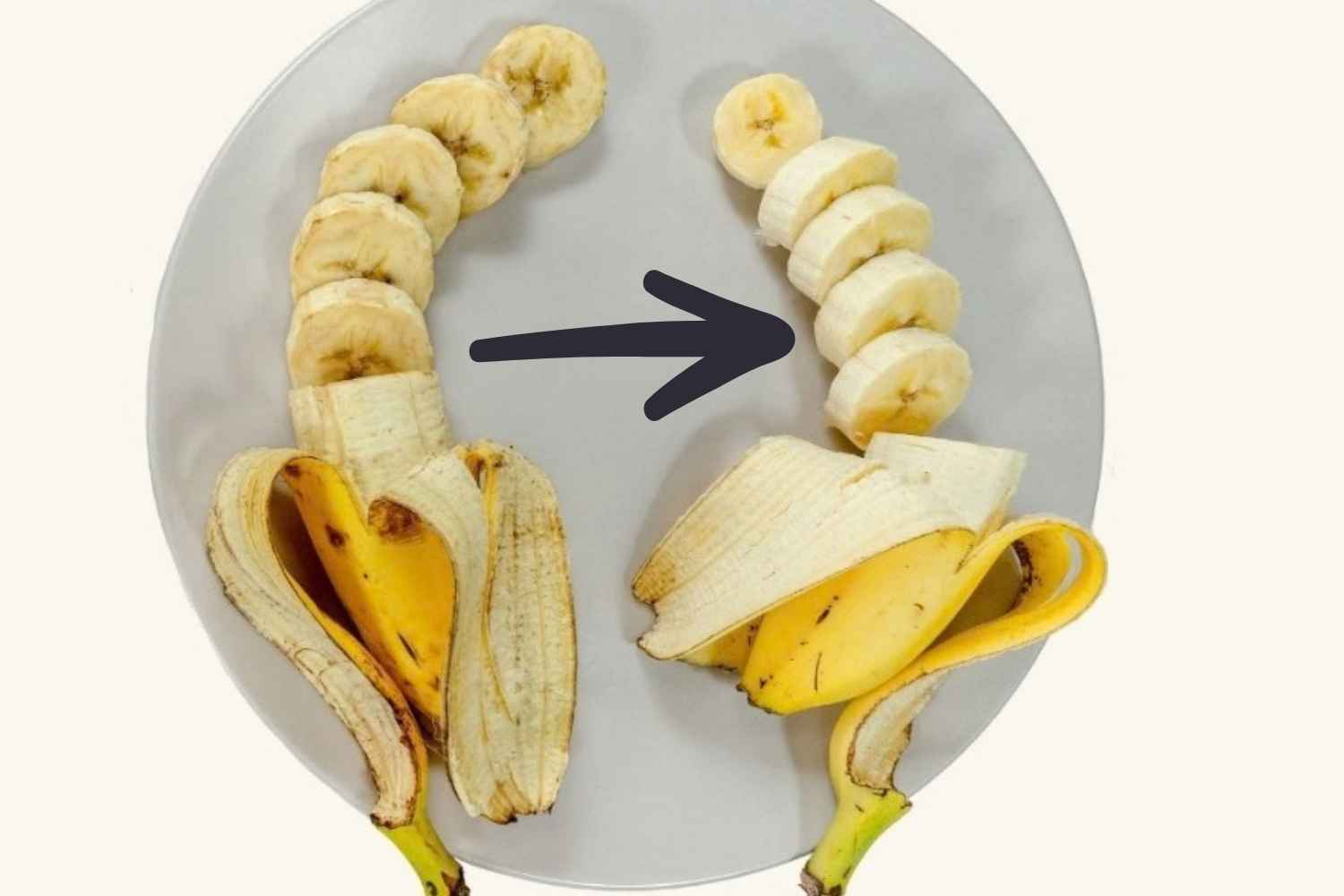
A peeled and cut banana that stays yellow for longer is not science fiction: it was developed by the British company Tropic Biosciences, which used gene editing to intervene in the browning process.
We’ve all seen a banana darken, but few know why it happens. Inside the cells of the fruit, some components that normally remain separate come into contact with each other and with the oxygen in the air when the pulp is damaged, for example by peeling, cutting or a simple impact. Enzymes called polyphenol oxidase (PPO) drive the reaction, which transform these substances into brown pigments.
The result is not only aesthetic, blackening in fact alters appearance, taste and consistency and makes the banana less appetizing, even if it is still perfectly edible.
The Tropic researchers started from a variety of banana belonging to the Musa acuminata species, one of the two wild species from which the bananas we eat derive, including those we find in the supermarket. To modify it they used a technique called CRISPR/Cas9, a kind of molecular scissors that cut the DNA at a precise point.
The target was a gene called PPO1, a sort of recipe that contains instructions for producing one of the enzymes responsible for blackening. Banana has three copies of this recipe and they changed them all. The change is minimal: a few letters of DNA added or removed, just enough to mess up the instructions, so the cell can no longer build the complete enzyme. With less enzyme in action, the pulp blackens much less.
An important point is that no genes from another species were added and that no foreign DNA remained in the final banana. Making CRISPR work in plant cells requires some molecular tools, but according to Tropic’s analyses, including whole genome sequencing, these elements did not remain in the banana. In other words, the plant retains the targeted change to the gene involved in browning, but not the DNA used to make it.
Finally, the proof of the tests after the harvest remains: compared with a conventional banana, the modified one showed a statistically significant reduction in the browning of the pulp. It must be said, however, that these results come from the company’s own documentation.
Is this a GMO banana?
Let’s come to the question that comes a little spontaneously when reading this news: are we talking about a GMO banana? In the UK the banana has been notified as precision bred organisma category provided for by the Precision Breeding Act that distinguishes edited plants from transgenic GMOs, as long as they contain only modifications that could also appear with traditional crossings or mutations and no foreign DNA.
For Europe the situation is a little different. Plants obtained through gene editing are currently treated as GMOs, according to a 2018 EU Court of Justice ruling, and would therefore have to follow the complex authorizations required for GMOs.
However, a reform arrived in 2026: the regulation on new genomic techniques (NGT), which critics call “new GMOs”. It was approved by the Council on 21 April and definitively by the European Parliament on 17 June, but the new rules will only apply from 17 July 2028, until then the GMO regulations apply.
With the reform, plants with limited modifications, those in the NGT-1 category, will be treated as those obtained through traditional crossing and will not be considered GMOs, while those with more complex modifications (NGT-2) will remain subject to GMO rules. NGT-1 will still have to be registered in a public register, cannot be used in organic farming and will only be labeled as seeds, not as a finished product.
Tropic banana may fall into the NGT-1 category, but there is no confirmation at this time.
Is the banana that doesn’t blacken already on sale?
Not yet, not even in the UK. The notification is only a step forward, the Food Standards Agency’s food safety assessment is now needed, with timescales still uncertain, and for now no organism obtained through precision breeding has received authorization for sale in England.
Tropic has already received the green light in ten other countries, including Japan, Brazil and the Philippines, and has started cultivation in Latin America to serve those markets.
The company’s stated objective is to reduce waste. He estimates that non-blackening bananas could cut waste and CO2 emissions along the supply chain by more than 25%, and a British government study found that 1.4 million still-edible bananas are thrown away in the UK every day. The advantage would mainly concern fruit already peeled, cut and ready for consumption, such as supermarket fruit salads, but these are data declared by the company and not verified on a large scale, the real impact will also depend on conservation, transport and consumer habits.
