
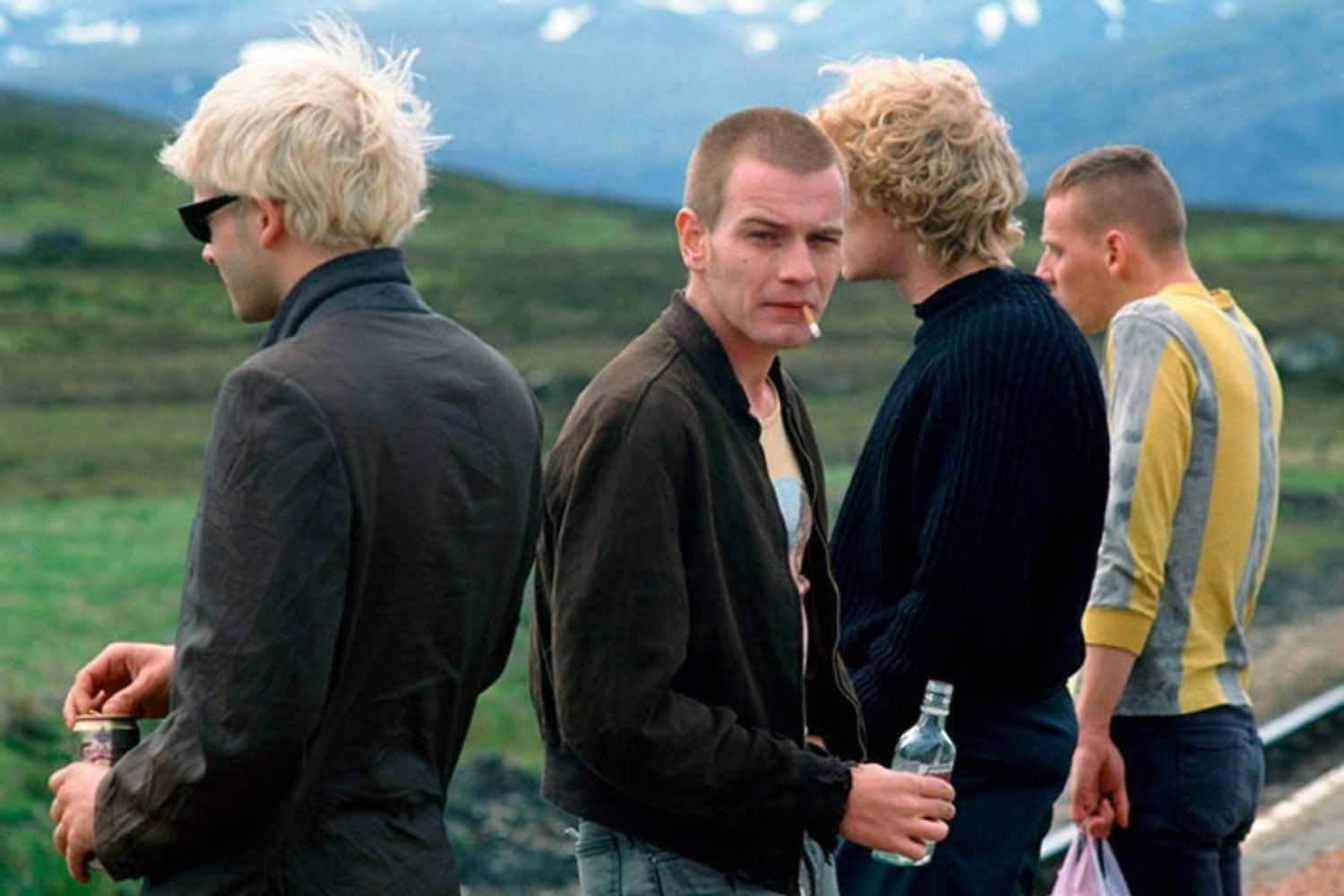
“Choose life, choose a job, choose a career, choose a family, choose a big fucking TV”. In 1996 those words opened one of the films destined to most profoundly mark the imagination of the nineties. Today, thirty years later, Trainspotting returns to the big screen.
Danny Boyle’s film, which transformed a group of young Edinburgh drug addicts into one of the fiercest and most recognizable portraits of a generation, is about to return to the big screen. On the occasion of its thirtieth anniversary, Trainspotting will once again arrive in Italian cinemas in a restored version in 4K for a special event lasting just three days: 19, 20 and 21 October 2026.
A return that is above all an opportunity to see, or discover for the first time, a film that did not limit itself to telling the story of the Nineties, but captured its restlessness, energy and sense of disillusionment.
Much more than a film about drug addiction
Directed by Danny Boyle and based on the novel of the same name published by Irvine Welsh in 1993, Trainspotting follows Mark Renton, played by a very young Ewan McGregor, in his life on the fringes of society. Alongside him there are Sick Boy, played by Jonny Lee Miller, Spud (Ewen Bremner), Tommy (Kevin McKidd) and above all the unpredictable and extremely violent Begbie, played by Robert Carlyle.
They are friends, accomplices and at the same time part of the trap from which Renton continually tries to escape. Their daily lives are marked by heroin, alcohol, petty crimes, destructive relationships, detox attempts and relapses. But to reduce Trainspotting to a film about drugs would be to lose much of what made it so important.
The film, which made its debut in British cinemas in February 1996, opens with one of the most famous monologues of 1990s cinema. «Choose Life», choose life. Except Renton doesn’t say it like a motivational slogan. It’s exactly the opposite. His list of work, family, televisions, appliances, mortgages and consumption becomes a mockery of the respectable life that society offers him, or rather imposes on him. Renton observes that model and decides to escape.
The problem is that the alternative he chooses does not lead to freedom, but to another form of dependence. It is precisely this ambiguity that makes Trainspotting still powerful today: its protagonists desperately try to escape from an existence that they perceive as empty, but often end up in something even more destructive.
Behind the hallucinated images, the very dark humor and some scenes that have become legendary there is in fact the portrait of a generation that grew up in a context marked by precariousness and disillusionment. Boyle does not observe Renton and the others from the outside and construct a simple moral lesson about addictions. It takes the viewer inside their world. The camera runs, falls, distorts reality. There are grotesque, euphoric and suddenly terrible moments. This is also why Trainspotting managed to talk about drugs without turning into either a sermon or a celebration. The result was a dirty, fast-paced and profoundly pop film, capable of speaking to a much larger audience than it seemed intended for.
The soundtrack became legend
It’s virtually impossible to separate Trainspotting from its music. Iggy Pop, Lou Reed, Blur, New Order, Primal Scream and especially Underworld contributed to building a sonic identity that became an integral part of the film.
And if there is a song that more than any other continues to be associated with Trainspotting, it is “Born Slippy .NUXX” by Underworld, used in the final part of the film and which became one of the anthems of British club culture of the Nineties. The music does not simply accompany the images: it dictates the rhythm of the film and contributes to that feeling of continuous running that runs through the entire story.
Why Trainspotting still works thirty years later
Fashions, music, cities and even many of the addictions that mark the new generations have changed. Yet some of Trainspotting’s questions remained surprisingly relatable.
What does it mean to be successful? How much of our lives do we really choose? And what happens when we don’t recognize ourselves in the future that is proposed to us? Perhaps this is what prevented the film from becoming just a nostalgic snapshot of the 1990s.
Thirty years after its release, Trainspotting retains that very difficult combination of anger, irony, disgust and desire for freedom that transformed it into a cult. And from 19 to 21 October 2026, for three days, it will once again be possible to hear those first notes and see Renton racing on the big screen, this time in 4K.
