
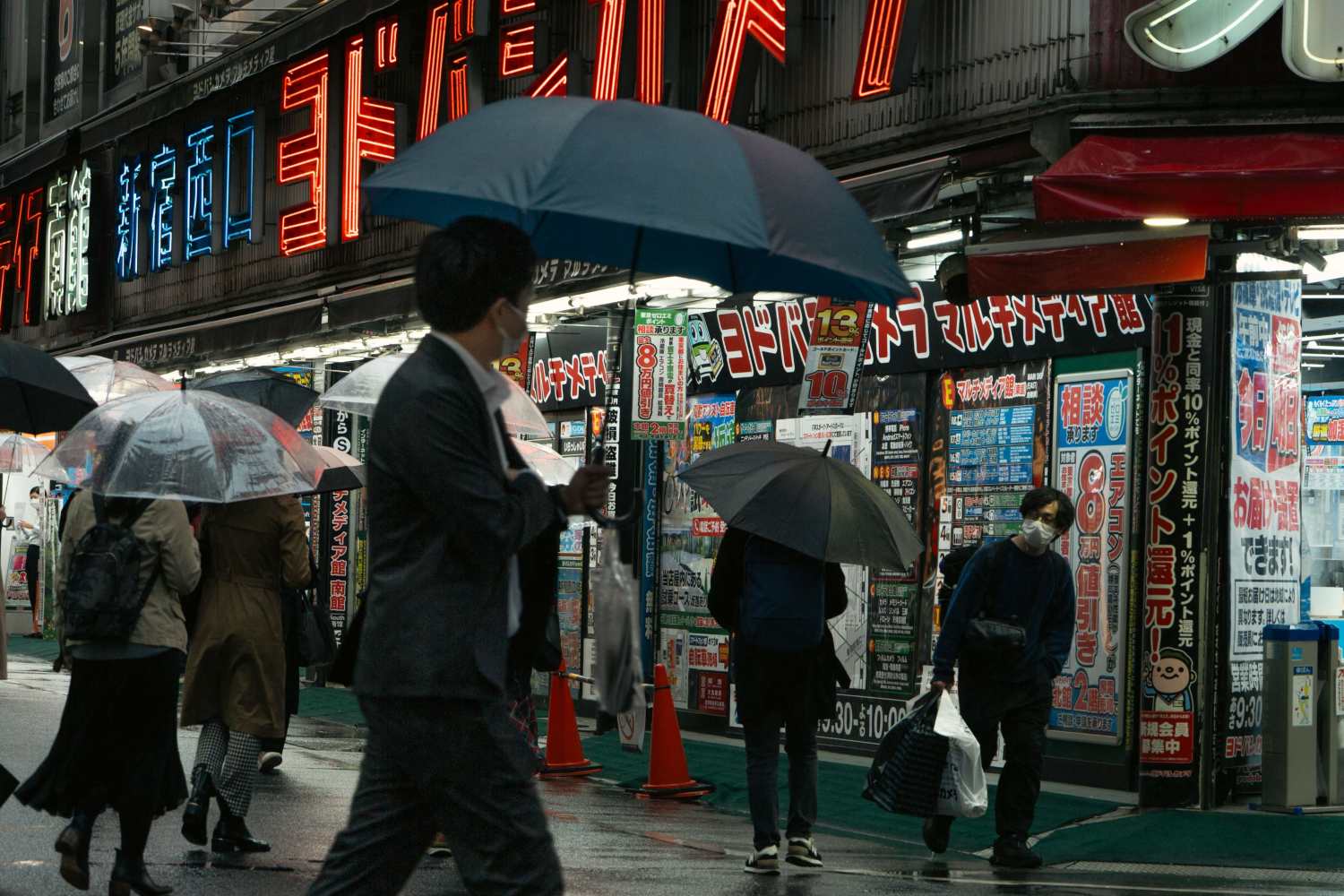
Tokyo has established an incredible and at the same time dramatic meteorological record, recording 37 consecutive days of uninterrupted rainfall starting on August 27th and ending on October 2nd before, finally, a sunny weekend. According to data released by the Japan Meteorological Agency, an event of this magnitude had not occurred since historical records began in 1886, shattering the previous record of 33 days set in 2019.
The critical situation worsened in September, when the observation station in the Chiyoda neighborhood accumulated 629 millimeters of rain, a quantity equal to approximately three times the seasonal average and second only to the historical record of 670.9 millimeters recorded in September 1958. This endless wave of bad weather was triggered by the devastating passages of typhoons Krovanh and Dujuan, the latter responsible for very serious floods, landslides and the tragic loss of 13 lives were lost in surrounding prefectures such as Chiba and Kanagawa, with over 1.9 million people forced to evacuate during the Silver Week holiday period.
Amid daily inconveniences, chaotic transport and paralyzed rail connections
This extraordinary sequence of rains has completely turned the daily life of residents and tourists in the capital upside down, forced to deal with less than 50 hours of sunshine in an entire month. The passage of Typhoon Dujuan on September 21 caused the immediate cancellation of 275 flights operated by Japan Airlines and All Nippon Airways, as well as the total suspension of several railway lines operated by JR East, isolating the capital from neighboring areas.
Local authorities have faced ongoing emergencies, including bank failures around Lake Inbanuma and heavy flooding in the tourist destinations of Kamakura and Hakone. Experts and climatologists attribute this extreme anomaly to the dangerous combination of global warming and the persistent effects of the El Niño phenomenon.
@nightmanjapan Japan Tokyo Shinjuku rain just won’t stop #fyp #japantravel #rain #ambience
♬ the night we met – Money Flip & Willix
The global climate paradox: the dramatic contrast with drought-stricken areas
While Tokyo and the Kanto region drowned under millions of liters of water, the rest of the planet offered a profoundly reversed and dramatically mirrored climate scenario. The El Niño atmospheric phenomenon, indicated by scientists as one of the main drivers of this extreme phase in Japan, continues to plague other geographical areas of the globe with severe prolonged drought, devastating forest fires and devastating water shortages for agriculture. A situation which, as we well know, has also affected our country and the whole of Europe with record temperatures and an almost total absence of rain during the summer. This clear divide highlights the fragility of current environmental balances, where opposite extremes – record torrential rainfall on one side and accelerated desertification on the other – coexist simultaneously, putting the stability of global ecosystems to the test.
