
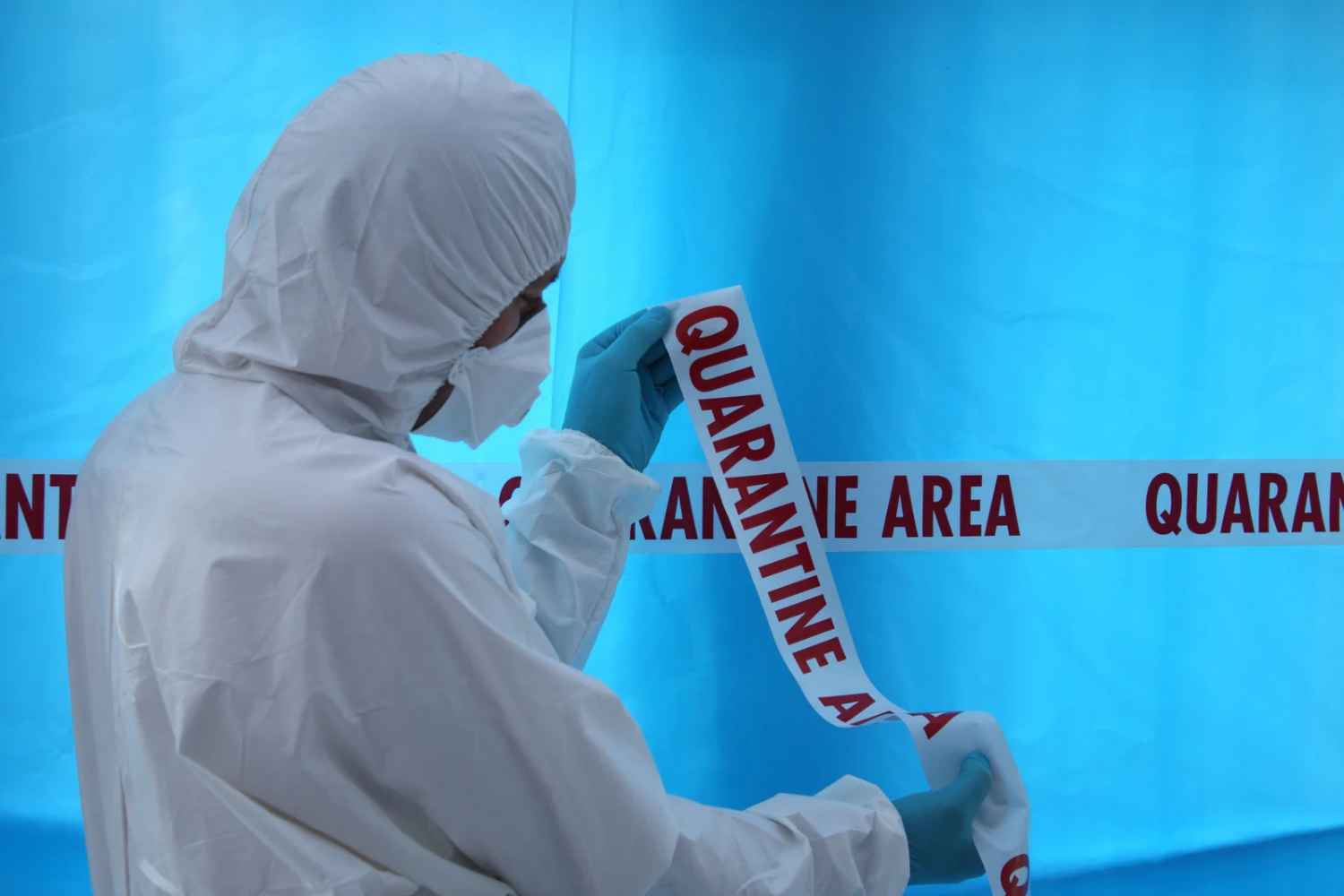
A 28-year-old laboratory technician has died in the Irkutsk region of Siberia after being hospitalized with severe pneumonia. Around his death, however, there still remains a fundamental point to be clarified: exactly what the pathogen involved was.
The woman, identified by Russian media as Darya Shipilova, worked at the Irkutsk Anti-Plague Institute, a facility specialized in the study and control of particularly dangerous infections. The suspicion, raised by local sources and some officials, is that she may have died after accidental exposure to the plague bacterium. Russian health authorities, however, have not yet officially confirmed this reconstruction.
Shipilova was reportedly hospitalized on September 29 in Shelekhov, a city not far from Irkutsk, with rapidly worsening pneumonia. After being transferred to intensive care, she died on the night between 1 and 2 October.
According to what was reported by some regional media, in the previous days the young woman had accidentally broken a test tube containing biological material while working in the laboratory. It is precisely from this episode that the hypothesis of a possible professional contagion arises. At the moment, however, there is no official confirmation either on the accident or on the presence of Yersinia pestis, the bacterium responsible for the plague.
The head of Buryatia, Alexei Tsydenov, had initially said that the woman had died of the plague, citing Rospotrebnadzor and the regional government. The message was then modified with a more cautious wording: the woman “could have died of the plague”.
The position of Rospotrebnadzor, the Russian federal agency responsible for public health, is much more cautious, according to which for now it is a “pneumonia of unclear origin”. A commission tasked with verifying the biological safety of the institute also did not identify accidents or emergencies linked to the handling of pathogens.
The governor of the Irkutsk region, Igor Kobzev, spoke instead of a suspected case of “particularly dangerous infection”, assuring that all the required epidemiological measures have been activated and inviting the population not to panic.
Nearly 200 people under surveillance and hospitals in quarantine
Regardless of official statements, the extent of the precautions taken is significant. Nearly 200 people who may have come into contact with the laboratory technique were placed under medical observation. According to the Russian authorities, they currently have no symptoms and the tests carried out were negative.
The Shelekhov hospital where the woman was admitted was placed under quarantine. Hospitalizations and discharges were temporarily suspended and some laboratory activities interrupted. According to local sources, the restrictions have also been extended to other healthcare facilities in the Irkutsk area, including a children’s hospital and a maternity hospital. In some companies in the region, including a large industrial plant, workers were also advised to use masks.
Some public events have been canceled as a precautionary measure. What makes the matter even more delicate is another piece of information released by the local press: agents of the FSB, the Russian internal security service, are said to have escorted some ambulances involved in the transfer of people undergoing checks.
The presence of the FSB has not been officially confirmed and must therefore be considered with caution. Furthermore, there are no public elements that would allow the matter to be linked to military activities or biological weapons programmes. However, the possible involvement of the security services would indicate that the accident is also followed from a biosafety point of view.
If it were pneumonic plague, how would it be transmitted?
One of the most important aspects concerns the hypothesized form of plague. Plague is an infection caused by the bacterium Yersinia pestis. The best known form is the bubonic one, normally associated with the bite of infected fleas or contact with animals carrying the bacterium.
Pneumonic plague, however, directly involves the lungs and can also be transmitted from person to person through the respiratory secretions of an infected person. It is considered the most aggressive form of the disease and can progress very quickly.
This does not mean, however, that every contact with a sick person automatically leads to contagion. And it is important to underline that the almost 200 people placed under health surveillance in Irkutsk do not correspond to 200 cases of plague: so far there have been no other confirmed infections.
Despite the historical image associated with the Black Death and the epidemics of the past, today the plague is a disease treatable with antibiotics, especially when diagnosed and treated promptly.
Furthermore, the Yersinia pestis bacterium has not disappeared. It still circulates in some natural animal reservoirs in different areas of the world and sporadic cases continue to be recorded, especially in some regions of Africa, Asia and the Americas.
Russian authorities deny an accident at the laboratory
It is precisely on the origin of the infection that the greatest uncertainties remain. The reconstruction of the accidentally broken test tube was reported by local journalistic sources, but was not confirmed by federal authorities. Rospotrebnadzor claims that checks carried out in the Anti-Plague Institute have not identified emergencies or accidents involving biological agents.
Some Russian experts also expressed doubts about the plague diagnosis. Gennady Onishchenko, former head of the same health agency, declared that the infection was “most likely” of another nature.
The epidemiological situation is officially described as stable. However, there remains a clear gap between the caution of the declarations and the measures adopted in the area: hospital quarantines, hundreds of people monitored, health restrictions and strengthened controls.
For the moment there is therefore no confirmation of a plague outbreak in Siberia. There is one death due to a serious respiratory infection, which occurred in circumstances yet to be clarified, and a health system that is treating the case as a possible biological emergency.
The central question remains the same: understanding which agent caused the death of the young laboratory technician and whether there really is a connection with the activity carried out within the Irkutsk Anti-Plague Institute.
