
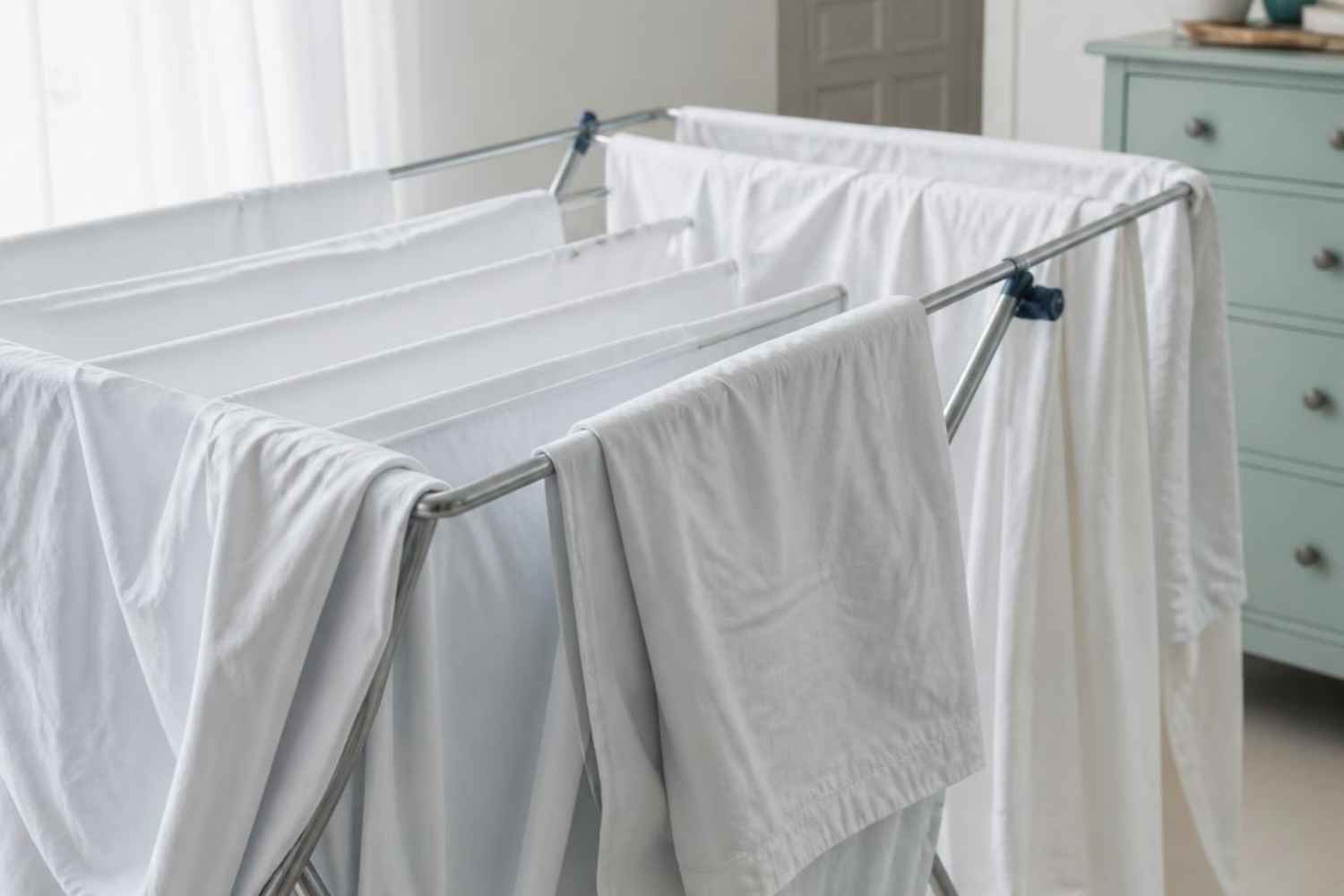
It’s raining outside, the humidity is sky high and on the drying rack there’s a sheet that never seems to want to dry. Familiar scene? It is for many. Yet, a few hours and a dehumidifier are enough to completely reverse the situation, and no, you don’t need any special equipment or a degree in domestic engineering.
With the arrival of the autumn season, hanging laundry outdoors becomes almost impossible, and sheets represent the biggest challenge of all: bulky, thick, slow to dry. In the absence of a dryer, the risk is finding yourself with damp fabrics for hours, or worse, with that annoying smell of mold that creeps into the fibres. But there is a way out, and it’s more accessible than you think.
The dehumidifier: the unexpected ally of laundry in autumn and winter
The dryer is convenient, of course, but it has a cost, both in terms of purchase and energy, that not everyone wants or can bear. The dehumidifier, on the other hand, is an appliance that many families already have at home to combat humidity in the walls, and which also proves to be an extraordinary ally for laundry.
Its operation is simple: it sucks in the humid air of the room, extracts the water and releases warm, dry air. Placed near the drying rack, this process significantly accelerates the evaporation of moisture from the fabrics. The result? Dry sheets in about an hour, costing just a few cents. Studies on living comfort and home humidity management confirm that maintaining a relative humidity rate between 40% and 60% not only improves air quality, but significantly accelerates the drying of fabrics, and the dehumidifier is the most efficient tool for doing this.
It all starts with the washing machine
Preparation is key. Even before hanging, the goal is to eliminate as much water as possible from the fabrics already in the washing phase. An extra spin cycle, just ten minutes, can remove up to 30% of residual humidity, drastically reducing subsequent drying times.
As soon as the wash is finished, immediately remove the laundry from the drum: leaving damp items still encourages bacterial proliferation and generates those bad odors that are then difficult to eliminate. Speed and promptness, in this phase, make all the difference.
The gesture that few people do: shaking the laundry
Before hanging each item, shake it vigorously. It is not a superstitious gesture: separating the fibers of the fabric promotes air circulation and prevents the formation of creases where humidity tends to stagnate. Beaten sheets dry much faster, and are softer too, without the need for fabric softener.
How to Arrange Laundry on the Drying Rack (and Why It Matters)
The geometry of the drying rack also has its importance — and that’s not a joke. The strategic arrangement of the clothes creates the ideal conditions for the dehumidifier to work at its best.
Here’s how to organize the space: place clothes and towels first, evenly distributed on the sides; the sheet will occupy half of the available surface, while the duvet cover will cover the entire structure like a curtain. This configuration traps humid air inside the drying rack, creating a sort of microenvironment that the dehumidifier will empty of humidity in record time.
Where to place the dehumidifier

It’s not enough to turn it on and hope for the best: the position of the dehumidifier also makes a difference. Place it to the side of the drying rack, a short distance away, so that the dry air reaches all the clothes directly. Proximity is the secret: the more dry air is concentrated on wet fabrics, the faster evaporation will be.
After about sixty minutes, the sheet and duvet cover will be dry. The other clothes may take a few more hours, but the bulkiest — and slowest — part will already be solved.
How much does this method really cost?
A mid-range dehumidifier consumes approximately 300-500 watts, which translates to a cost of just 6-10 cents per hour of use (at current energy rates). The dryer, in comparison, consumes an average of 2-3 kWh per cycle, with a cost that can exceed 50-70 cents each use.
If you wash your sheets once a week, the annual savings can reach several tens of euros, not to mention that the dehumidifier, unlike the dryer, also improves the comfort and healthiness of the air in your home, reducing the risk of mold and condensation on the walls. A double benefit, in short.
The method we have shown you combines practicality, savings and common sense. You don’t need expensive investments or complicated tricks: just organize your laundry strategically and let the dehumidifier do its job. The humidity? It’s no longer a problem.
