
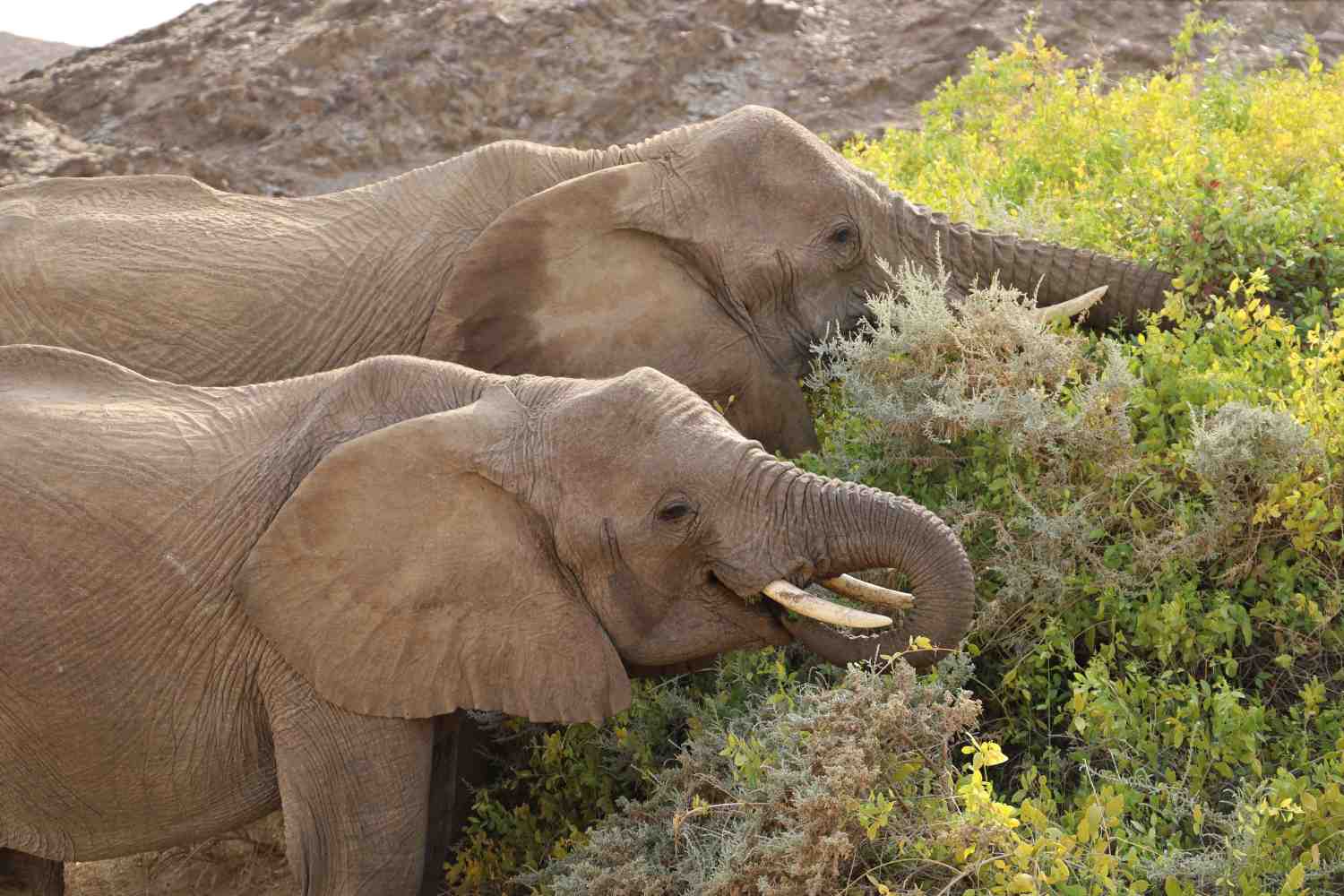
In the wild lands of Mount Elgon, the volcanic massif located on the border between Kenya and Uganda, nature has set up a real open-air hospital ward. A recent study published in the scientific journal Scientific Reports documented how African elephants know how to practice a refined form of self-medication, drawing on a catalog of 35 plant species belonging to 23 different botanical families, as well as 4 types of soil, minerals and clays rich in beneficial properties.
The extraordinary discovery came to light thanks to the precious combination of direct scientific monitoring and deep traditional knowledge gathered by eight local experts from the Sabaot indigenous community, including village elders, forest rangers and a retired ranger. Eyewitnesses have reported observing elephant mothers carefully choosing specific roots and leaves, such as the plant known locally as Angurweet, chewing them and feeding them directly to their calves to treat ailments such as stomach pain.
@Scientific Reports
From animal habits to the interspecific transmission of knowledge and future medicines
The link between pachyderms and the local flora has generated a real cultural and biological exchange between different species over time. Many locals have admitted that past generations have learned to recognize the healing properties of certain plants by observing the medicinal behaviors of elephants, although some species consumed by savannah giants remain toxic to humans.
This complex interaction also opens up fascinating scenarios for modern pharmacology. Scientists are analyzing plant samples selected from animals to identify biologically active substances that could prove fundamental for the medicine of the future. Self-medication is not an exclusive prerogative of pachyderms, as similar phenomena have been documented in other species such as bees, primates and ants, confirming that forests represent an irreplaceable biological heritage that must be protected far beyond the simple conservation of biodiversity.
