
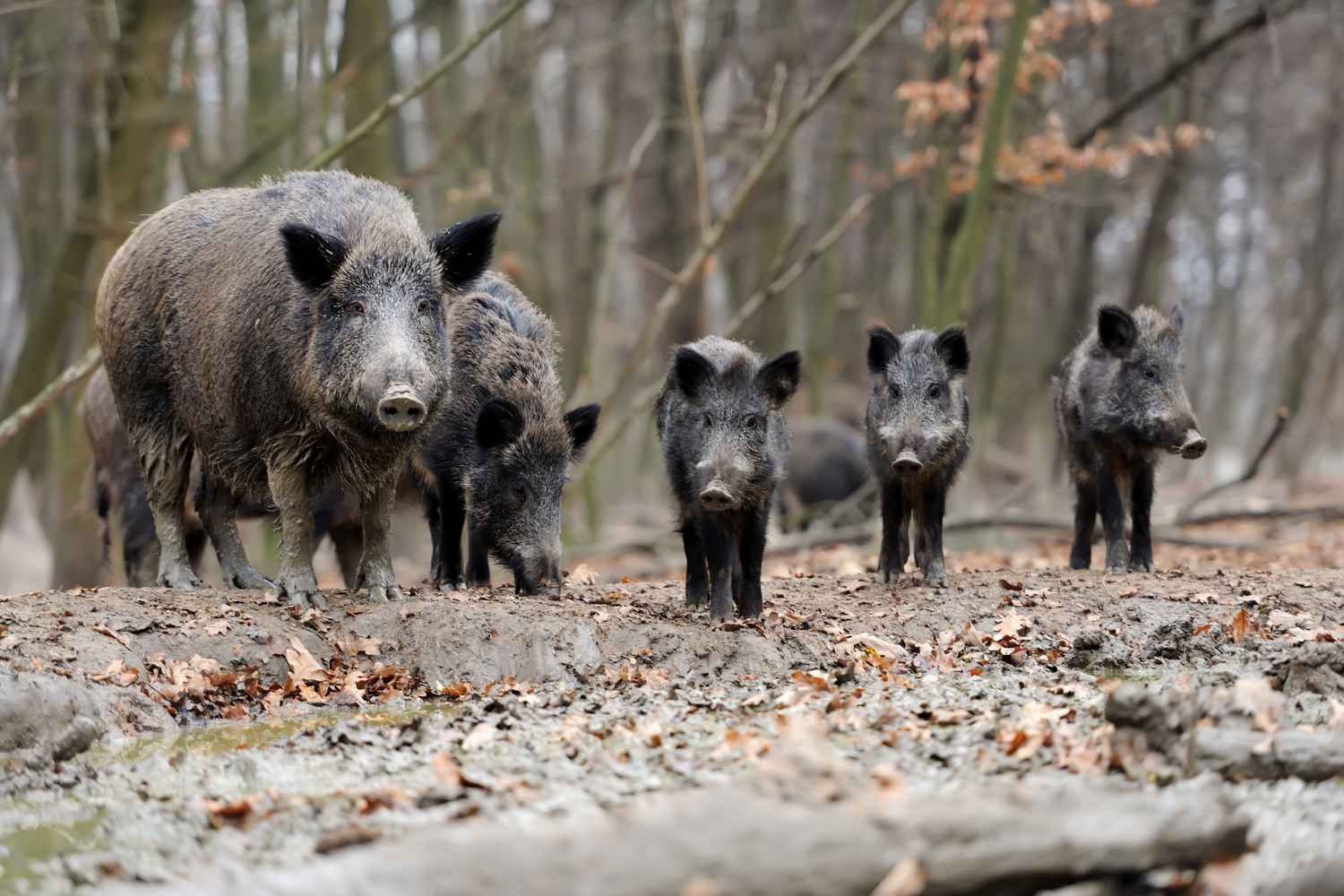
Meeting a wild boar during a walk in the woods can make you feel a little nervous. First a noise appears among the leaves, then a grunt, finally perhaps the dark silhouette of an animal crossing the path a few meters away.
Such scenes have become much more common than they were a few decades ago. Wild boars today occupy a large part of the Italian territory and have also reached urban suburbs, city parks and agricultural areas. According to ISPRA, the minimum size of the Italian population was estimated in 2021 at around 1.5 million animals. The Institute defines them as the most numerous wild ungulate in our country, present from the Alps to Sicily and Sardinia.
Their presence creates concrete problems: damage to crops, road accidents, conflicts in urbanized areas and an increasingly complex coexistence with human activities. ISPRA underlines how the wild boar represents one of the species that have best adapted to territories heavily transformed by man.
An encounter in the woods, however, has very different dynamics from those suggested by certain videos circulating on social media. In most cases the boar looks for a way to get away. The risk increases especially when the animal feels closed off, when the distance becomes too short or when a female perceives danger near her young.
Because in Italy there are so many wild boars
@facebook/COUNT AND HEART IN MOVEMENT
The current diffusion has distant roots and it would be simplistic to attribute it to a single cause. During the twentieth century the Italian landscape changed profoundly. Many countryside and mountain areas have lost inhabitants, woods have regained once cultivated surfaces and numerous territories have become particularly favorable to wildlife.
Added to this process, especially since the 1950s, were massive introductions of wild boars for hunting purposes. ISPRA recalls that many animals arrived from abroad or from Italian farms. Crossbreeding between geographically different populations and hybridizations with domestic forms have profoundly changed the structure of the populations present on the national territory. The great reproductive capacity of the species also favored expansion.
The result is there for all to see: today the wild boar lives in the Apennine woods, in agricultural areas, on the hills, in parks and even on the outskirts of large cities.
If you hear rooting near the trail, the boar probably already knows you’re there
Those who frequent oak and beech forests can easily recognize some signs. The boar uses its snout to move soil, leaves and roots in search of acorns, tubers, larvae and other foods. The ground may appear to be literally turned over. This is where the term “grufolata” comes from.
Sometimes you can hear the animal before you even see it: branches breaking, leaves moving, grunts. The wild boar has a highly developed sense of smell and hearing and, in most encounters, perceives the human presence well in advance. If he has space, he tends to choose distance.
For this reason, during a walk it is advisable to stay on the paths and make your presence perceptible with the normal noise of your steps or voice. The goal is to give the animal enough time to move.
You find yourself in front of a wild boar: the first thing to do is stop
The most delicate moment comes when the distance closes and the animal appears directly on the path. The most useful reaction is simple: stop, observe the situation and give it space.
A sudden rush can increase tension and, above all, offers very little benefit. A boar can reach speeds significantly higher than those of a person. The safest choice instead is to slowly increase the distance, with regular movements, and leave an escape route open for the animal.
If the path allows the boar to enter the forest, the animal has an immediate solution and will most likely use it.
The painting changes when it is between walls, fences, cliffs or other obstacles. A situation like this can transform a simple meeting into a highly stressful condition.
In that case the distance becomes even more important: a raised and stable position, such as a sufficiently high wall, can offer protection if the situation becomes critical.
A female with young requires more space
Between spring and summer you may see small wild boars with their characteristic striped coat. The presence of puppies completely changes the prudence required.
A female may react more decisively if she perceives a threat near her offspring: moving closer to observe better, take a photograph or seek contact unnecessarily increases the pressure on the animal.
The best choice is to widen the distance and give the family all the space they need to move. Another consideration is also valid: if one or more young appear, the mother could be much closer than it seems.
If you are with the dog
A walk with the dog deserves some extra precautions. The wild boar can perceive the dog as a potential predator: a free dog, attracted by the smell or movement of the wild animal, can approach, bark or chase it. From that moment the situation can change in a few seconds.
The leash allows you to maintain control and prevents direct contact. The issue also concerns the safety of the dog itself, an adult boar has mass, strength and tusks capable of causing very serious injuries.
Caution grows even more in the presence of young ones, because the female can interpret the dog’s approach as an immediate threat.
When wild boars learn that there is food near people
An important part of coexistence is played well before meeting on the trail. Accessible waste, bags left outside, food waste and food offered directly to animals create a very simple association: human presence equals food resource.
A wild boar that regularly finds food in inhabited areas loses part of its natural distance from people and returns to the same places. It is one of the mechanisms that favor the stable presence of animals in peripheral neighborhoods and urban centres. Leaving wild animals to their natural resources therefore helps both them and us.
Is the boar really aggressive towards humans?
Its physical strength justifies respect and prudence, but the representation of the boar as an animal that spontaneously seeks confrontation tells only part of the story.
For a wild person, a human being above all represents something to avoid. Defensive behavior becomes more likely when the distance is too short, when there is no escape route, when a dog intervenes or when a female protects her young. The difference may seem subtle, but it is fundamental: a defensive reaction arises from a situation perceived as dangerous. Understanding this principle also changes our behavior. When faced with a wild boar, less heroism and much more distance is needed.
The forest remains their home
The growth of wild boar populations represents a very serious environmental and management issue. ISPRA highlights effects on agriculture, roads, ecosystems and public safety and recalls the need for interventions built on scientific data.
For those who enter a forest, however, there is also a simpler rule: a path crosses the habitat of many wild animals and the wild boar is one of these.
Recognizing the tracks, maintaining an adequate distance, controlling the dog and leaving the animal a clear path almost always allows you to transform a potentially frightening encounter into what it really is: the crossing, for a few seconds, between two species that each prefer to continue on their own path.
