
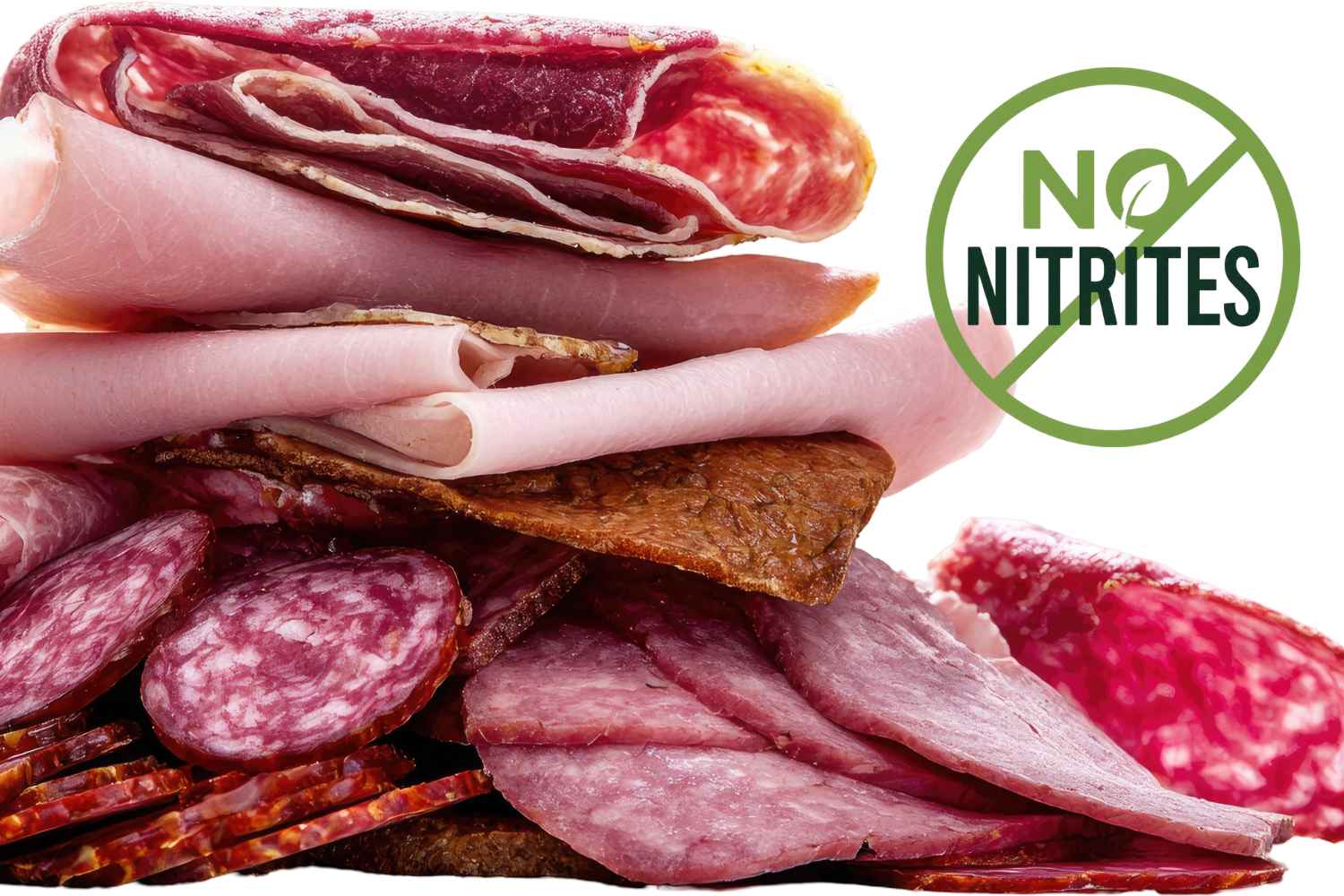
The search for foods with shorter ingredient lists and perceived as more natural is also changing the way we shop. In the United Kingdom, for example, there is a growing demand for bacon without added nitrites, a choice linked above all to concerns about health and the substances used in meat preservation.
This change is reported by the Guardian, which in recent days has reported data on British sales and the moves by supermarkets to respond to customer requests. However, there is an important aspect to consider: there is no evidence that processed meats produced without added nitrites or nitrates are safer than traditional ones.
The boom in nitrite-free cured meats in the UK
The numbers show an increasing interest. According to data from Worldpanel by Numerator, spending on nitrite-free bacon in the UK reached £34.8m in the 52 weeks to 6 September 2026, up 11.4% on the previous year. Purchased volumes also increased by 8%, reaching 2.2 million kilograms.
The movement is opposite to that recorded for traditional bacon, for which in the same period spending decreased by 9.2% and volumes by 4.9%. The market for nitrite-free products still starts from a smaller base, but the trend is pushing retailers to broaden their offering.
Waitrose, for example, has doubled its range of nitrite-free products in the last year, recording an increase in sales of more than 34%. According to the British newspaper, sales of British roast and honey hams have grown by more than 70% since their launch in May, while those of smoked bacon have increased by 22%.
Tesco has also moved in this direction: since 21 September, two new Denhay products have arrived in 570 stores, a smoked bacon and a non-smoked one without added nitrites, both in 200 gram packs at the price of 4 pounds.
Behind this evolution are the demands of consumers, who are increasingly attentive to labels and ingredients.
The data concerns the British market and does not demonstrate that the same trend is also occurring in Italy. The question, however, interests anyone who finds themselves in front of a package that promises to do without these additives.
Nitrites: why they are used and what the risks are
Nitrates and nitrites are substances used in the production of various cured meats and processed meats, including bacon, ham and cured sausages. They help preserve the product, limit the microbiological risk, and maintain the characteristic pink color and flavor of seasoned meats.
Their function is not just aesthetic. As the Food Standards Agency (FSA), the British food safety agency, explains, these additives help prevent the growth of dangerous bacteria such as Clostridium botulinum, responsible for botulism, a potentially lethal disease. For this reason, when they are eliminated, it is necessary to resort to alternative methods that guarantee adequate conservation.
Health concerns also arise from the possibility that nitrites and other compounds present in foods participate in the formation of nitrosamines, some of which are known for their carcinogenic potential. These substances can form under certain conditions during digestion and also following cooking processes at high temperatures.
The picture is more complex than it might seem. The Food Standards Agency points out that there is no definitive evidence that nitrates and nitrites, taken individually, are directly responsible for cancer. The formation of nitrosamines, some of which are carcinogenic, depends on various factors, including the type of food and the cooking methods.
This doesn’t mean processed meats are risk-free. The International Agency for Research on Cancer (IARC), part of the World Health Organization, classifies them as human carcinogens based on evidence of their link to colorectal cancer. It is important to point out, however, that this classification concerns processed meats as a whole, not just nitrites.
According to the World Cancer Research Fund, consuming about 50 grams of processed meat per day is associated with a 16% increase in the relative risk of colorectal cancer. This data does not mean that 16% of those who consume this quantity will develop the disease, nor does it demonstrate that the risk depends exclusively on nitrites; in fact, different compounds and mechanisms can be involved in processing and cooking.
The FSA also reminds us that the majority of nitrates consumed in the diet come naturally from vegetables, particularly green leafy ones. In these foods, however, there are also vitamin C, polyphenols and fibre, substances that can help limit the formation of nitrosamines.
Cured meats without added nitrites: are they really a better choice?
This is precisely where you need to pay attention to the promises of the packaging. The words “no added nitrites” alone are not enough to demonstrate that bacon or ham is healthier or safer.
The Food Standards Agency explicitly states that, given the current state of knowledge, there is no evidence that processed meats produced without nitrate or nitrite additives are safer. In fact, their absence does not eliminate all the factors that make processed meats a food to be consumed in moderation.
Furthermore, it is important to read the list of ingredients carefully. Some products may use plant-based ingredients that naturally contain nitrates in place of conventional additives. To understand what really characterizes a product, therefore, it is not enough to stop at the writing highlighted on the packaging.
Price is also not a reliable indicator of greater healthiness: nitrite-free alternatives may cost more for reasons related to production, storage, ingredients or commercial positioning, without this automatically demonstrating a health advantage.
Rather than relying on a single wording, it is useful to consider the place that these foods occupy in the diet. The FSA’s indications, in line with those of the British health service NHS, invite us to reduce the consumption of red and processed meat when it is high: those who eat more than 90 grams per day should reduce to no more than 70 grams.
Ultimately, choosing products without added nitrites may be a personal preference, but it is not a guarantee of greater safety. To reduce the risks associated with nutrition, the central point remains not to consider bacon, ham and other cured meats as foods to be consumed frequently, even when the packaging highlights the absence of certain additives.
