
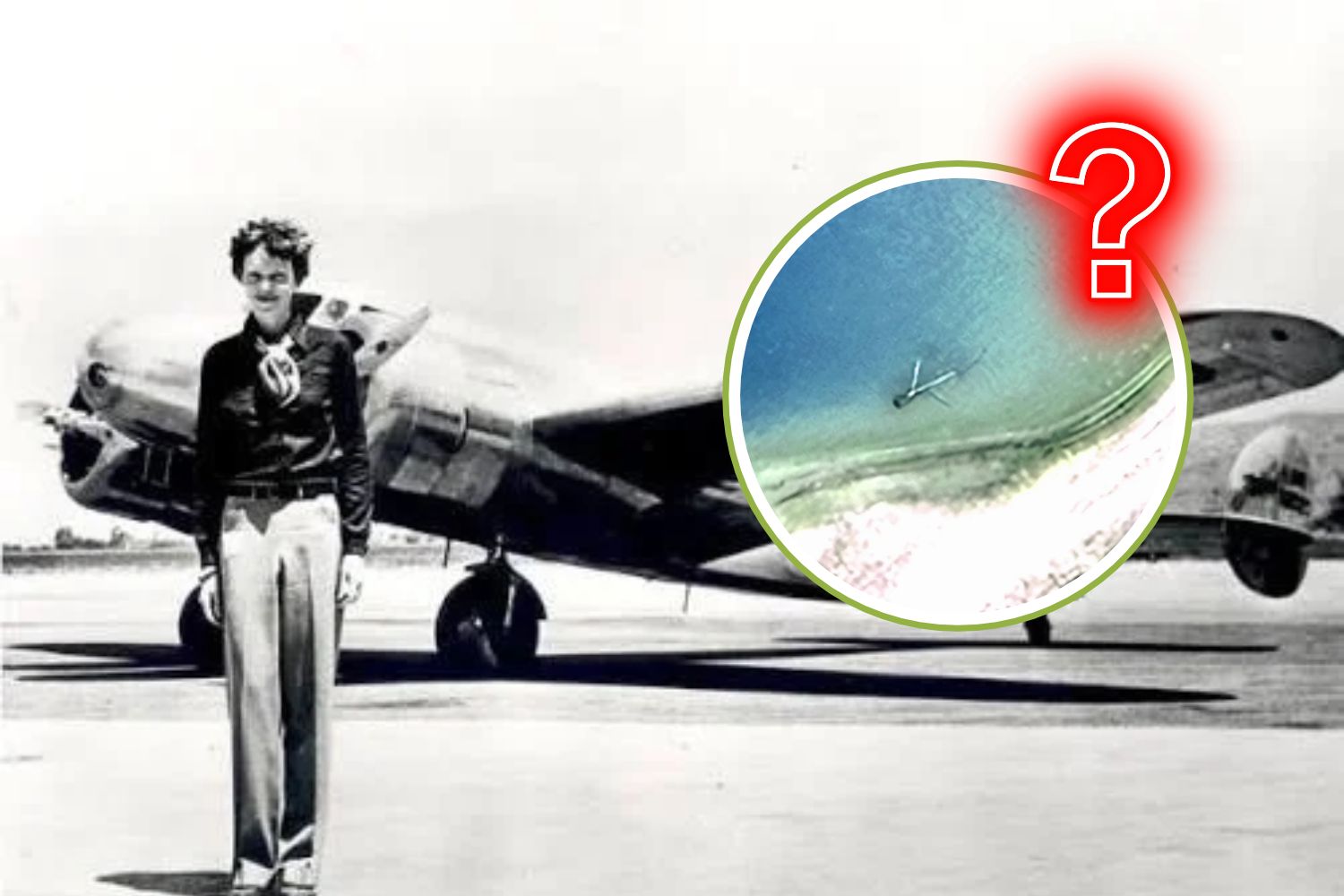
Since Wednesday 14 October 2026, a magnetometer and sonar have been combing the bottom of the Nikumaroro lagoon, an uninhabited atoll in Kiribati in the South Pacific. Under a few meters of water and a layer of sediment there is a shape that has been appearing in satellite images for years. They called her Taraia Object and an expedition of 17 people wants to understand if it is what remains of the Lockheed Electra 10-E of the famous aviator Amelia Earhart, who disappeared into thin air in 1937. Or something much less legendary.
According to updates from Purdue University, the group began search operations after five days of sailing from Tarawa. The magnetometer is used to identify ferrous components, such as cables and steel parts also present on an aircraft built mainly in aluminium; side-scan sonar searches for shapes hidden beneath the sediment. If interesting targets emerge, researchers can use a water probe and small dredge to free them without starting an extensive excavation right away.
@Wikimedia Commons
The Taraia Object has been appearing in images for years
The shape was spotted in 2020 by Michael Ashmore in an Apple Maps satellite image. Since then theArchaeological Legacy Institutewhich is leading the expedition together with the Purdue Research Foundation and Purdue University, collected more images of the spot.
In the documentation published by the Archaeological Legacy Institute, the object appears in satellite photographs starting from 2015, shortly after the passage of Cyclone Pam, which may have removed part of the lagoon’s sediments. In the following years the outline becomes progressively less defined. The organization also claims to have recognized a possible trace in the same point in aerial photographs from 1938 and a luminous reflection in a video shot in 2001. These are interpretations of the institute, still without archaeological confirmation.
The dimensions and shape, according to the expedition researchers, would be compatible with part of the fuselage and tail of the Electra. The location is next to the Taraia peninsula, just east of the passage that connects the lagoon to the ocean.
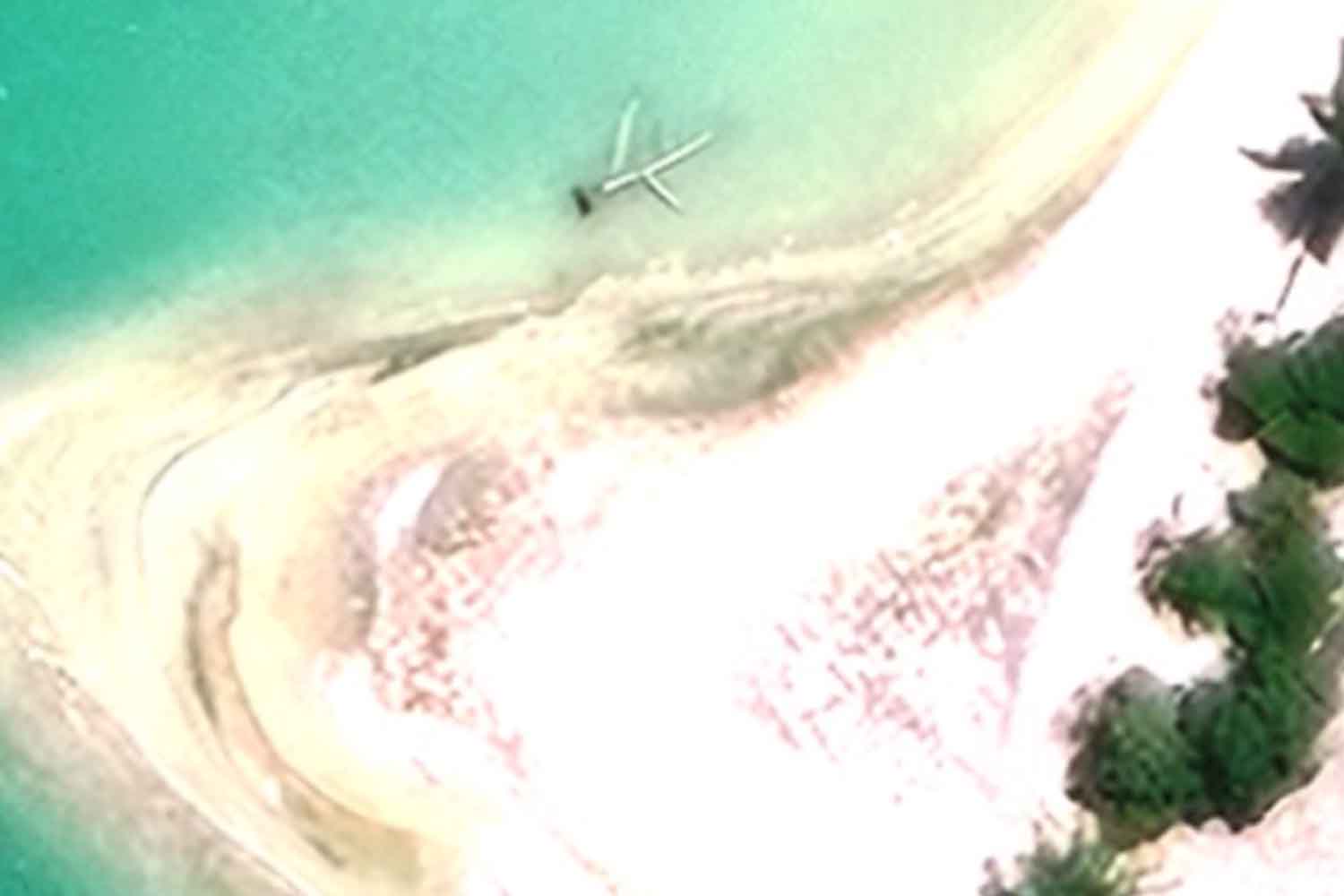
©Rick Pettigrew, Archaeological Legacy Institute
How the plane would have arrived in the lagoon
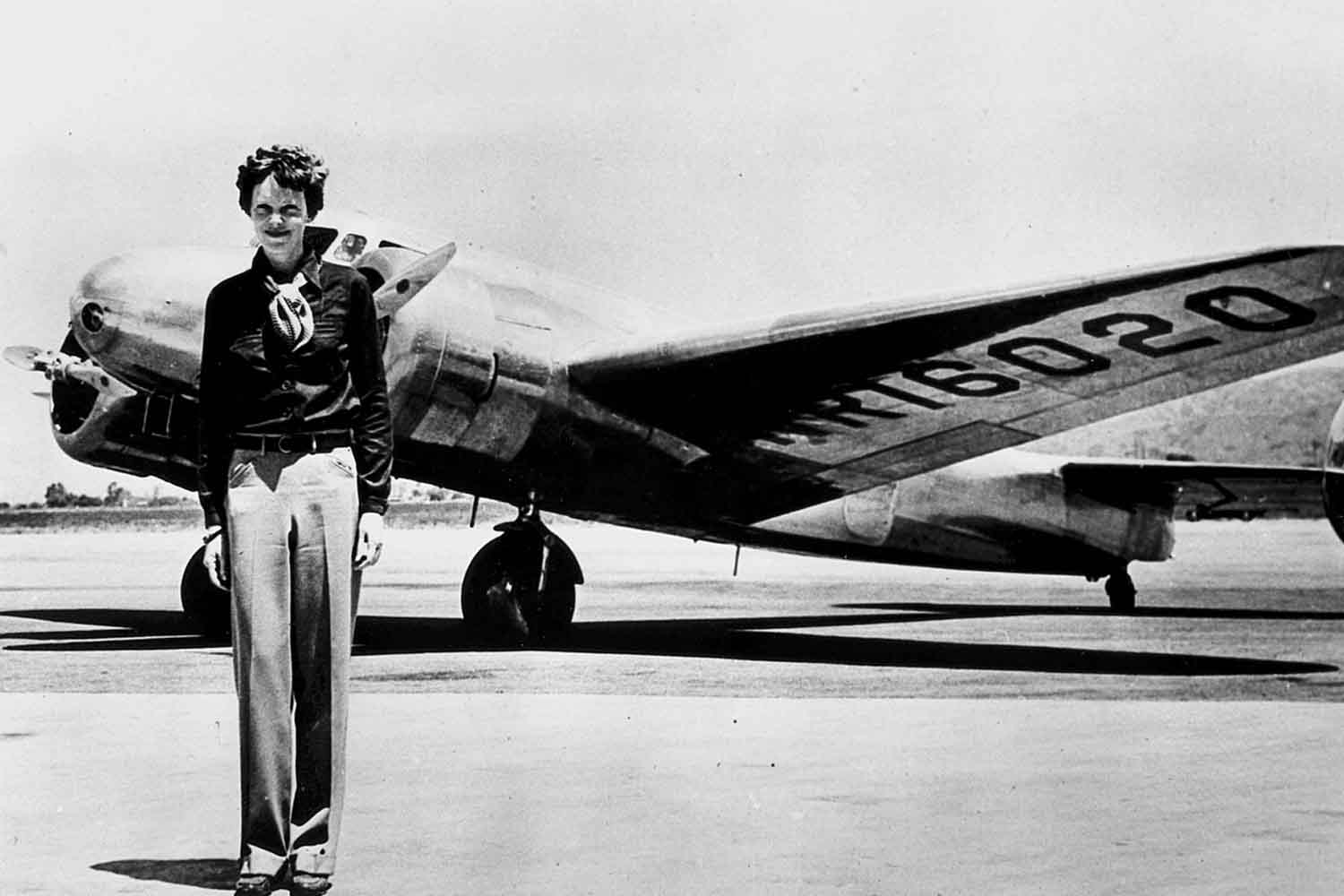
Amelia Earhart and navigator Fred Noonan disappeared on 2 July 1937after taking off from Lae, New Guinea, headed to the tiny island of Howland. Earhart was attempting to travel around the world. She had already become one of the most famous aviators of the twentieth century: in 1932 she was the first woman to fly solo over the Atlantic and in 1935 the first person to fly alone from Hawaii to the US mainland, as the Smithsonian’s National Air and Space Museum recalls.
The hypothesis the expedition is working on holds that Earhart and Noonan, unable to find Howland, reached Nikumaroro, about 640 kilometers to the southeast, and managed to land on the reef.
In the reconstruction of the Archaeological Legacy Institute the Electra would have remained on the reef for a few days, long enough to allow the sending of radio messages, and then been dragged by waves and tide. Wings, engines and undercarriage would have detached; the central part of the fuselage, made more buoyant by the now empty tanks, could have crossed the passage towards the lagoon and stopped right near Taraia.
It is a scenario reconstructed starting from currents, photographs and other clues. No one has yet proven that this happened. One of the most historically accepted explanations for the disappearance remains that Earhart and Noonan failed to find Howland, ran out of fuel and ended up in the ocean.
The alternative hypothesis
The Taraia Object has a decidedly cumbersome opponent: a trunk. The TIGHAR group, which for decades searched for Earhart’s traces on Nikumaroro and organized numerous expeditions to the atoll, concluded in 2021 that the silhouette visible in the images was most likely a felled coconut palm. After the 2015 cyclone many trees were uprooted and dragged towards the lagoon; furthermore that same area had already been checked in 2001 with metal detectors.
The Archaeological Legacy Institute rejects this interpretation. According to his analyses, the palm trees fallen into the water appear long, thin and dark, while the Taraia Object would be thicker, would have very reflective surfaces and would maintain a position compatible with the traces identified in images from different eras. The two readings are poles apart. Fortunately, this time someone went there with the tools to check.
@Wikimedia Commons
The bones found in 1940 did not close the case
Nikumaroro had already entered the Earhart mystery long before the satellite images. In 1940 they were recovered on the island thirteen human bonesthen sent to Fiji and subsequently lost.
The analysis carried out at the time attributed them to a man. In 2015 Pamela Cross and Richard Wright re-examined the available documentation and concluded that the old identification remained, in their opinion, the most solid: the remains probably belonged to a robust middle-aged man. Three years later Richard Jantz, an anthropologist at the University of Tennessee, came to the opposite conclusion. In his study published on Forensic Anthropology compared the old bone measurements with estimates of Earhart’s body proportions and found that the aviator was more similar to the remains of 99% of the individuals in the reference sample.
The study therefore supports the Earhart hypothesis, but works on it historical measurements and estimates derived from photographs: The original bones are no longer available and no modern test or DNA analysis can close the discussion.
Meanwhile, the giant coconut crabs continue to roam the atoll: the team encountered at least four of them on the first day on land. TIGHAR has also tested in the past how quickly these animals and other crustaceans can consume and disperse animal remains, but those tests certainly don’t prove that happened to Earhart. The crabs, for once, can keep out of the interrogation. The expedition had five days to identify the Taraia Object. If aeronautical aluminum, shapes and rivets compatible with the Lockheed Electra appear under the sediment, it will be necessary to move on to a much larger archaeological excavation. If wood appears, Nikumaroro will have returned at least one response. After 89 years, that would already be a lot.
