
A white Tesla goes up a ramp, continues upside down, detaches itself from the structure, rotates in the air and returns on four wheels. Shortly afterwards it takes flight again and passes a queue made up of Cybercabs, Cybertrucks, Semi, Model Y and Model 3. It is the demonstration with which Tesla finally unveiled the new Roadster, on the night between 15 and 16 October, at the SpaceX test site in McGregor, Texas.
Calling it a “flying car”, however, still requires a few centimeters of caution. What Tesla showed was a vehicle capable of performing short controlled maneuvers in the air thanks to cold gas thrusters and an intake system that even allows it to stick to an upside-down surface. A little cross between supercar, very angry vacuum cleaner and aerospace technology. However, the new Roadster shows something that, until yesterday, belonged above all to the promises of Elon Musk.
Ten thrusters and hundreds of liters of compressed air
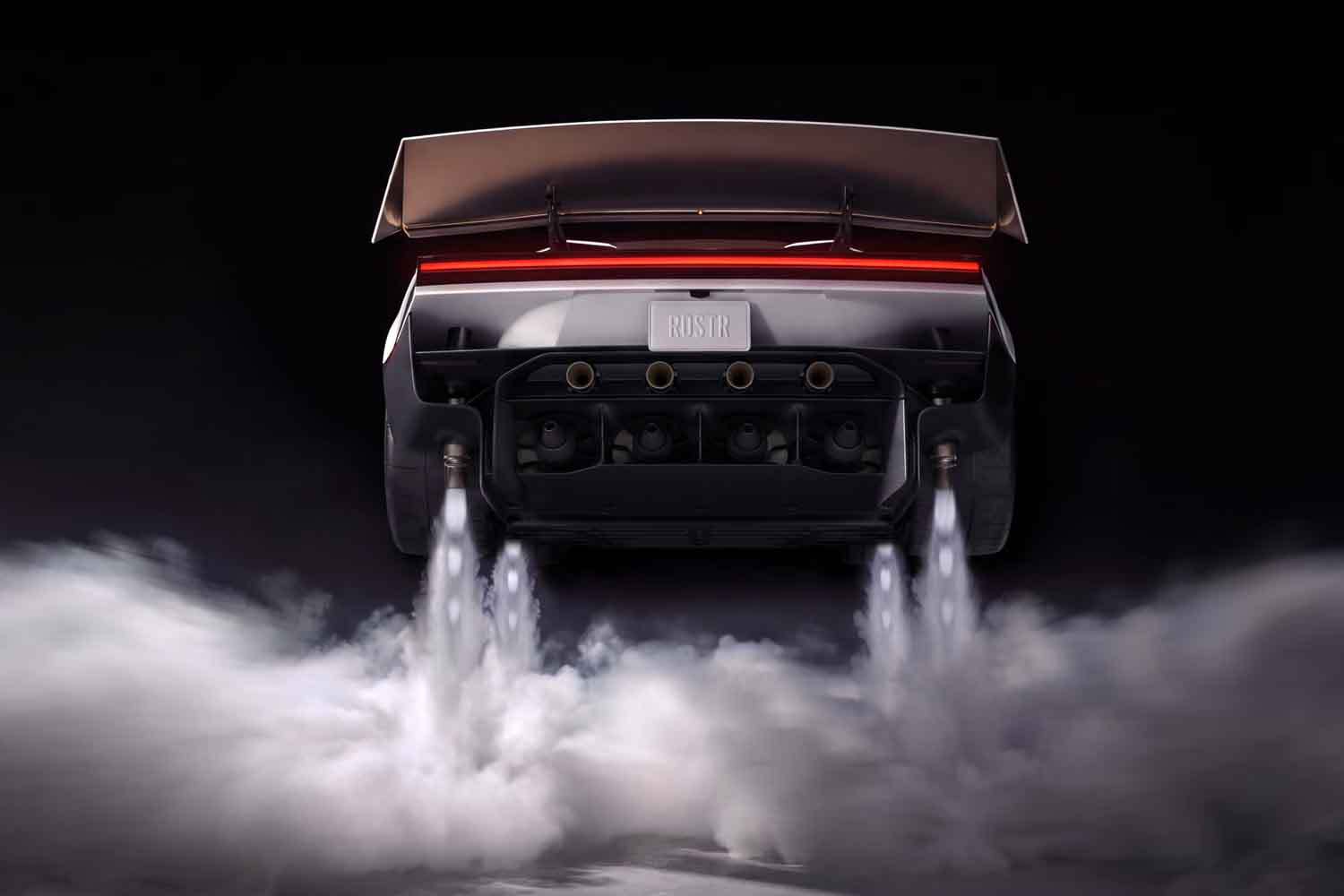
The system developed by Tesla technicians together with SpaceX uses cold gas thrusters. No rocket-like flames under the bumper: the idea involves compressed air stored at very high pressure and then quickly expelled to generate thrust.
As explained during the presentation by Tesla vehicle engineering manager Lars Moravy, the most extreme configuration uses ten thrusters connected to approximately 600 liters of compressed air. The tanks are carbon fiber reinforced high-pressure containers, distributed in the available spaces inside the car.
The thrusters are used for acceleration, braking and control of the car during aerial maneuvers. The intake system, however, does another job: it artificially increases grip on the ground and, in the demonstration, allowed the Roadster to travel along a part of the ramp completely upside down. Then the jets of air arrive and the part begins where a normal B license suddenly seems like a small thing.
Tesla also claims acceleration from 0 to 60 miles per hour, approximately 97 km/h, in less than a second for the version equipped with thrusters and a speed of over 230 miles per hour, over 370 km/h. During the event the vehicle actually showed acceleration under one second, although this is still a demonstration organized by the manufacturer and not an independent test.
Three Roadsters, and the one that “flies” also loses a seat
The new range announced by Tesla includes three configurations. The Performance is described as the most road-going version, with two seats and active aerodynamics. The Thrust adds rear thrusters and focuses above all on performance. Then there’s the Rocket: a single seat, ten thrusters and what Tesla calls a complete flight system. The latter will be available by invitation only and may not be offered in all regions.
Here too it is important to clearly distinguish the words from the wheels and the wings which are not yet there. Tesla demonstrated jumps, spins and short phases in the air controlled by thrusters. He did not present a car capable of taking off from Rome and landing in Milan over the ring road. The approval and use of similar systems on public roads also remain to be clarified. The deposits required are already very earthly: 50 thousand dollars to reserve the Performance and 250 thousand for the Thrust. Tesla has not yet announced the final price of the cars.
The flight lasts a few seconds, the wait almost eleven years
Then there is the calendar. The second generation Roadster was first shown in 2017 and Tesla had targeted 2020 for deliveries. That prototype also promised about 620 miles of range, almost 1,000 kilometers.
The presented Roadster is now credited with more than 300 miles, so more than 480 kilometers, and production is expected to start in 2028. Almost eleven years after the first presentation of the model and eight after the date initially indicated for the arrival on the market.
The new Roadster has therefore accomplished something that until a few hours ago seemed like one of the usual Muskian exaggerations: it actually took off from the ground, rotated and put its wheels back on the asphalt using a technology developed together with SpaceX. Now probably the most difficult maneuver remains: transforming that demonstration into a car that can be produced, homologated and delivered to customers. For that, Tesla has set 2028. The flight, at least, has already arrived.
