
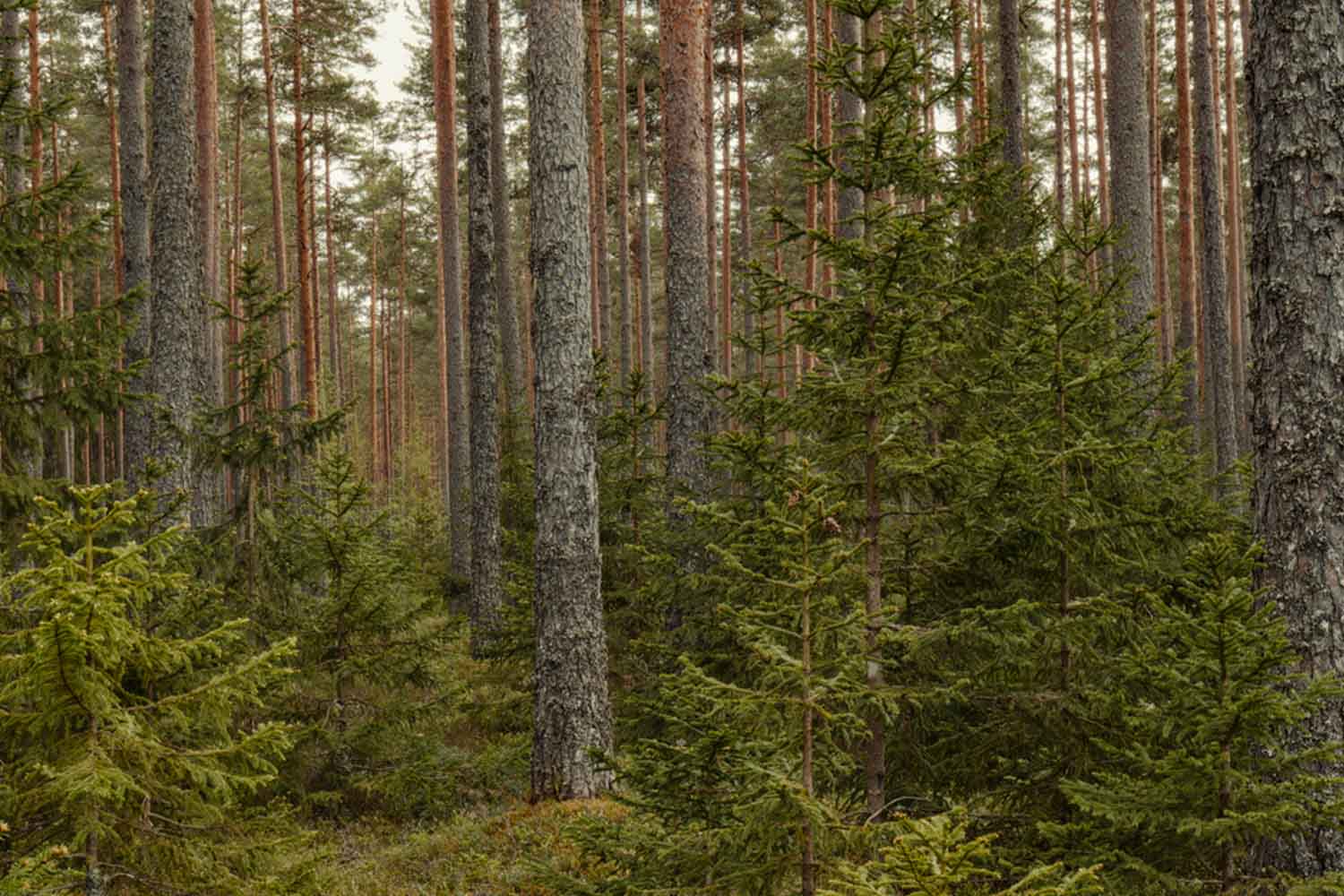
What would Florence be without the forests that have helped build it for centuries? The beams of its basilicas, the scaffolding used to build Brunelleschi’s Dome and even the ceilings of Palazzo Vecchio tell a story that begins very far from the city center, among the woods of the Casentino and Apennines.
An ancient bond that today takes on a new meaning, because protecting forests does not only mean conserving trees and biodiversity, but also defending water resources, counteracting the effects of the climate crisis and supporting mountain communities.
It is from this awareness that the Florence Charter for Forests was born, the programmatic document presented these days by FSC Italia on the occasion of its 25 years of activity, during the event Common roots – A pact between communities and forestshosted in Palazzo Vecchio.
An agreement that brings together public bodies, universities, environmental associations and businesses to bring the responsible management of forestry assets back to the center of the country’s environmental and economic policies.
What does the Florence Charter for Forests provide?
The objective is to recognize the value of forests not only for the wood they produce, but above all for the benefits they offer to the community: they absorb and store CO₂, protect the soil from erosion, help regulate the water cycle and safeguard a fundamental part of biodiversity.
The document provides voluntary and differentiated commitments for those who choose to join. Public administrations are called to integrate ecosystem services into territorial planning and to encourage sustainable and traceable purchases. Parks and protected areas will have to promote the active conservation of habitats, while universities and research centers will contribute with studies, evaluation tools and training. Furthermore, companies are asked to guarantee greater traceability of forestry raw materials, while associations and citizens will be able to contribute through awareness initiatives and informed consumer choices.
Among the first signatories are the Regions of Tuscany, Campania and Sardinia, the Municipality of Florence, the FAI, the Italian Alpine Club, Slow Food Italia, Federparchi, ASviS, the University of Florence and FederlegnoArredo, together with numerous other scientific and institutional entities.
As Giuseppe Bonanno, director of FSC Italia, recalled, it is essential that even those who live far from forests recognize their value, because essential resources such as water, biodiversity and carbon storage depend on forests.
The challenge of forest protection
The Charter does not introduce new legal obligations, but represents a collective commitment that must be translated into concrete actions. For this reason, a periodic discussion table is planned between the signatories, with a first meeting within twelve months, to evaluate progress and share good practices. Meanwhile, the document remains open to new accessions by institutions, organizations and citizens who share its principles.
The real challenge, however, will be to transform these commitments into measurable results, guaranteeing adequate resources and tools to those who deal with forest management on a daily basis, especially in the inland and mountain areas most exposed to depopulation.
A forest is not just a group of trees, but is also and above all water, biodiversity, protection of the territory, work and the future, and defending it also means taking care of the communities that depend on that heritage.
The Charter can be consulted on the official FSC Italia website
