
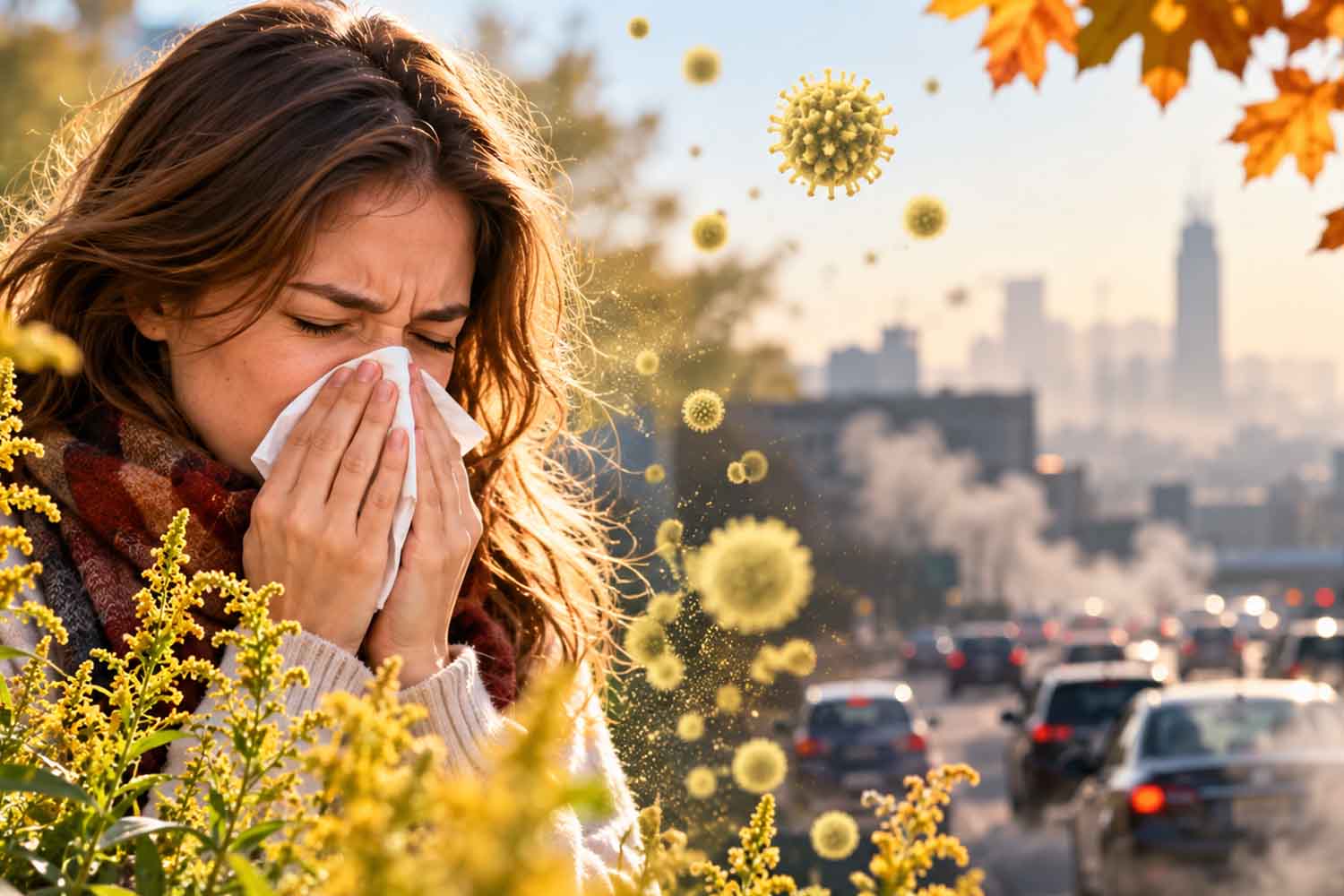
In Legnano, in the Milan area, warmer years were associated with longer pollen seasons for ragweed and urticaceous plants. For grasses, however, the heat tends to bring forward the start of the season. These are the results of almost thirty years of measurements conducted in Lombardy, where the increase in temperatures is also changing the calendar of the plants responsible for numerous respiratory allergies.
This is documented by a study published in Scientific Reportsconducted by researchers from ATS Milan, the University of Milan-Bicocca and the Finnish Meteorological Institute. And there’s another complication: Some research shows that air pollution can change pollen, making it more allergenic. For allergy sufferers, therefore, the problem concerns both the period of exposure and the characteristics of the air they breathe.
In Lombardy the heat is changing the pollen season
The researchers analyzed the pollen concentrations recorded by the Legnano aerobiological station between 1995 and 2022, comparing them with temperatures, precipitation, humidity and solar radiation. The area is particularly affected by ragweed, a highly allergenic plant that releases pollen between late summer and autumn.
The results show that higher temperatures are associated with longer seasons for ragweed and nettles, while for grasses and nettles warm weather is linked to an earlier start. Mugwort behaves differently: high temperatures and solar radiation tend to delay the end of the season, while rain and humidity can bring it forward.
Using these relationships to develop future scenarios, the researchers estimated that over the next sixty years the grass pollen season could start about 12-15 days earlier and the urticaceous pollen season 13-16 days earlier. For ragweed, rising temperatures could extend the pollen release period by about a week. They are projections based on climate trends observed in the area, with responses that can change from one species to another.
There is also an interesting detail. In the Milan area, interventions to contain ragweed and the spread of Ophraella communaa small beetle that feeds on the plant, contributed to reducing pollen concentrations. In short, heat matters a lot, but plants don’t just read the thermometer.
In the United States, pollen seasons have already changed
The phenomenon has also been observed on a much larger scale. A study published in Proceedings of the National Academy of Sciences analyzed data from 60 monitoring stations in North America, collected between 1990 and 2018. In that period, pollen seasons began to start earlier by about 20 days, lengthening by about 8 days, while overall pollen quantities increased by 21%.
Through climate models, the authors estimated that warming caused by human activities contributed about half to the changes in the pollen calendar and about 8% to the increase in concentrations. A subsequent analysis published in 2026 by Climate Central examined fall temperature trends in 202 U.S. cities. In 177 cities the frost-free period lengthened, on average by eleven days compared to 1970. In 67 cities the increase reached at least two weeks.
For ragweed, which can continue to release pollen until the first hard frosts, this means potentially having more time available. A single plant can produce up to a billion pollen grains, transported by the wind even over long distances. The analysis measures frost-free days, while the 2021 study directly documents changes in pollen seasons – two different data points that help understand how warming is affecting allergen exposure.
Smog can make pollen more allergenic
Pollen produced by ragweed growing near a busy road may have different characteristics than that of the same plant in a green area. Some studies collected in a scientific work published in the journal Allergysigned by fourteen German experts, detected greater quantities of allergens in pollen coming from areas exposed to traffic.
Among the proteins involved is Amb a 1, the main ragweed allergen. In samples from busy areas, IgE antibodies from allergic people bound more strongly to pollen, indicating a greater ability to provoke an allergic response in tests.
Another experiment conducted on plants exposed to nitrogen dioxide, a pollutant also produced by the combustion of fuels, observed changes in pollen proteins and an increase in its allergenicity in the laboratory. Traffic can therefore contribute to the problem in two ways: through pollutants that directly irritate the respiratory tract and through the changes that these can cause in allergens.
The intensity of the symptoms then depends on individual sensitivity and the quantity of pollen inhaled. The interaction between climate change, pollution and allergies has also been addressed by the World Health Organization, which in 2025 dedicated a specific document to its effects on health.
What to do if allergies continue into autumn
For those who continue to sneeze when summer is already over, knowing the pollen in your area can help manage exposure. In Italy it is possible to consult the bulletins of the POLLnet network, which collect the findings of pollen and fungal spores, including those of Alternariaanother important respiratory allergen.
Starting therapies early, when prescribed by your doctor, can also help. A randomized clinical trial published in 2025 on Frontiers in Allergy involved 120 people allergic to mugwort in China. Among 107 participants with complete data, those who started a combined nasal treatment about two weeks before the pollen season experienced less intense symptoms on average than those who started after their complaints worsened.
The Asthma and Allergy Foundation of America also suggests keeping windows closed on days with high concentrations and avoiding bringing pollen into the bedroom through shoes, clothes and hair.
These are useful measures to reduce individual exposure. The environmental problem, however, remains: warmer seasons can prolong the presence of some pollens, while pollution can make them more allergenic. Allergy sufferers can check the bulletins and follow the appropriate treatments. To reduce smog and contain global warming, interventions on a completely different scale are needed. Handkerchiefs alone can’t do much.
