
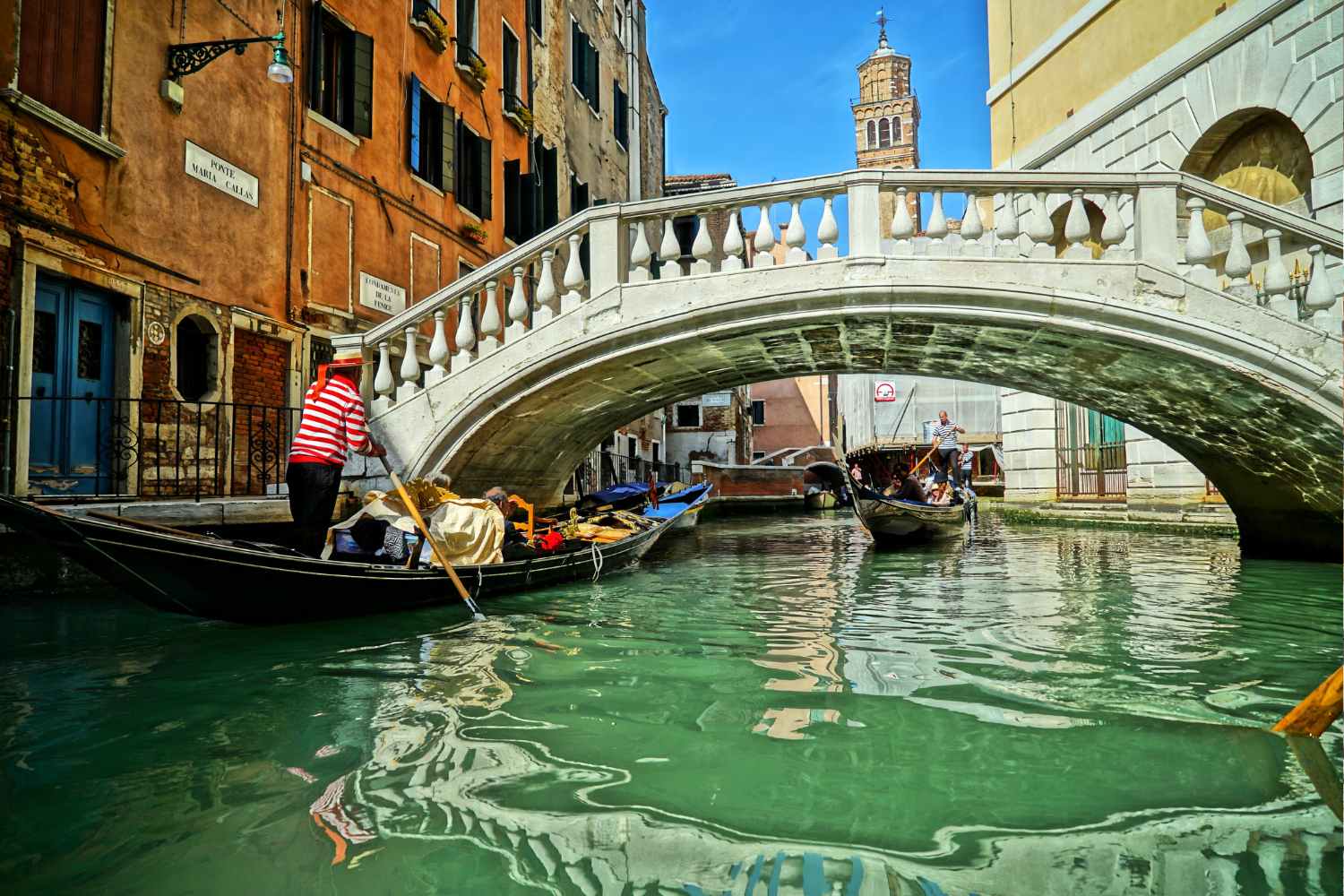
When we think of cities with multiple bridges, we imagine large rivers crossing historic centers, monuments overlooking the water, and passageways connecting separate neighborhoods from one bank to the other. It happens in Rome with the Tiber, in Florence with the Arno or in Turin with the Po. But the Italian city that has the greatest number of bridges has a rather unusual characteristic: it is not crossed by any river.
This is Venice, of course, with its 435 bridges distributed across calli, campielli and canals. An architectural heritage that has no equal in our country and which tells of the extraordinary relationship between the lagoon city and water.
Yet Venice is not the only Italian city where bridges represent much more than simple infrastructure. From Chioggia to Comacchio, passing through Ragusa and Verona, there are places where these crossings have become an integral part of the urban identity.
Venice is the city with the most bridges in Italy: it has 435
The historic center of Venice stands on over one hundred small islands, separated by a dense network of canals. For centuries travel took place mainly on water, but over time bridges have become indispensable for connecting the different areas of the city.
Today there are 435, including private ones, a number that makes Venice a unique case in the Italian panorama.
The most famous is undoubtedly the Rialto Bridge, completed in 1591 based on a design by Antonio da Ponte. With its characteristic stone structure and the shops that run through it, it is one of the most recognizable monuments in the city.
Equally famous is the Bridge of Sighs, built at the beginning of the seventeenth century to connect the Palazzo Ducale to the New Prisons. The name, according to tradition, recalls the sighs of the inmates who crossed that passage before being locked up in the cells.
Then there are the Accademia Bridge, the Scalzi Bridge and the Constitution Bridge, designed by the architect Santiago Calatrava and inaugurated in 2008.
A curiosity that surprises many visitors concerns the Grand Canal: despite being the main Venetian water artery, it is crossed by only four bridges. To go from one bank to the other, in different points of the city, it is still possible to use the traditional gondola ferries.
But the charm of Venice is also hidden in the smaller bridges, those that connect little-frequented streets and which often retain names linked to popular history. This is the case of the Ponte delle Tette, whose name refers to the presence, in past centuries, of prostitutes in the area.
The other Italian cities with famous bridges: from Florence to Rome
@Pixabay
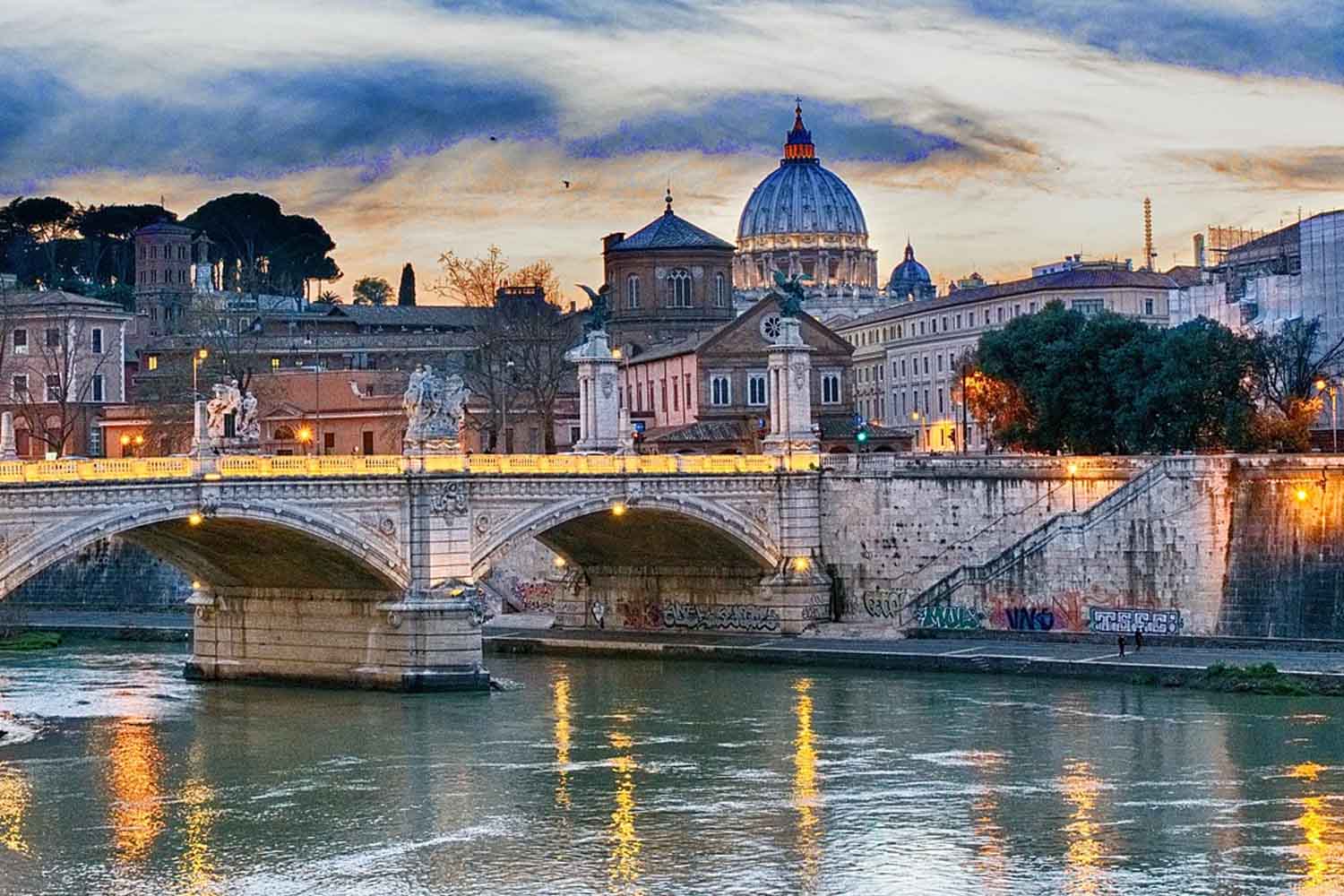
If Venice dominates in terms of number of crossings in the historic center, other Italian cities boast bridges of enormous historical and architectural value.
In Rome, for example, the Tiber is crossed by numerous bridges that tell over two thousand years of history. Among the best known is Ponte Sant’Angelo, built by the emperor Hadrian in the 2nd century AD to connect the city to his mausoleum, today Castel Sant’Angelo.
The Milvian Bridge is one of the oldest crossings in the capital, also famous for the battle of 312 AD between Constantine and Maxentius. Ponte Sisto, built in the fifteenth century, connects the historic center to the Trastevere district, while the modern Ponte della Musica represents one of the most recent architectural interventions.
Florence also owes an important part of its beauty to the bridges over the Arno. The most famous is Ponte Vecchio, which survived the destruction of the Second World War, when the other historic city bridges were blown up by retreating German troops.
In addition to Ponte Vecchio, Ponte Santa Trinita, famous for its Renaissance elegance, Ponte alla Carraia and Ponte alle Grazie deserve attention.
In Turin, however, it is the Po that punctuates the urban landscape. The Vittorio Emanuele I Bridge, located near the church of the Gran Madre di Dio, is one of the city’s symbols. But there are also the Umberto I Bridge and the Isabella Bridge, which connect neighborhoods and green areas along the river.
Chioggia and Comacchio: the small Italian cities built on water

It’s not just big cities that boast picturesque bridges. Some smaller localities have developed a relationship with water that is reminiscent, at least in part, of that of Venice.
This is the case of Chioggia, in Veneto, often nicknamed little Venice. Its historic center is crossed by canals and bridges that connect the different areas of the town. Along the Canal Vena there are nine bridges, including the Vigo Bridge, recognizable for its stone staircase and panoramic position over the lagoon.
Another example is Comacchio, in the province of Ferrara. The town, born on a group of small islands, still retains a network of canals that cross the historic center.
The most representative monument is the Trepponti, built in 1634. Despite its name, the structure has five staircases that converge in a single point above the water. In the past it represented one of the main entrances to the city, when connections took place mainly through canals.
Comacchio is one of the most interesting testimonies of how Italian urban planning has adapted to the presence of water for centuries, transforming a natural element into an architectural feature.
From Verona to Ragusa, the bridges that tell the history of the cities
Verona also has crossings of great historical interest. The Ponte Pietra, which crosses the Adige, dates back to Roman times and is considered one of the oldest monuments in the city. Severely damaged during the Second World War, it was subsequently rebuilt using, where possible, the original materials recovered from the river.
Not far away is the Scaligero Bridge, built in the 14th century next to Castelvecchio. With its characteristic arches and fortified structure, it is one of the most significant examples of medieval architecture in Verona.
In Pisa, however, the Ponte di Mezzo represents one of the symbolic places of the city. Every year it hosts the Gioco del Ponte, a historical re-enactment that pits the teams from the neighborhoods on the two banks of the Arno against each other.
Going south, we find Ragusa, also known as the city of three bridges. The nickname refers to the Ponte Vecchio, also called Ponte dei Cappuccini, the Ponte Nuovo and the Ponte Giovanni XXIII.
In this case, unlike Venice, the bridges were not built to cross canals, but to overcome the deep valleys that characterize the Ragusa area, facilitating connections between the different parts of the city.
But which is the city with the most bridges in the world? The record is in Germany
The 435 bridges in Venice represent a notable number, but are far from the world record. The record holder is generally considered to be Hamburg, Germany, where there are estimated to be between 2,300 and 2,500 bridges, depending on the classification criteria.
The German city is located along the Elbe River and has a complex network of canals, port basins and waterways. This particular geographical conformation has made it necessary to build thousands of crossings, including road, railway and pedestrian bridges.
Among the best known ones are the Köhlbrandbrücke, an imposing cable-stayed bridge that crosses part of the port, and the Zollenbrücke, dating back to 1663.
Amsterdam, in the Netherlands, is also famous for its network of canals and the approximately 1,500 bridges that characterize its landscape. Berlin is another European city with a particularly high number of crossings, thanks to the presence of the Spree and numerous canals.
However, it must be considered that there is no perfectly homogeneous classification. Some cities only count bridges over waterways, while others also include viaducts, overpasses and rail infrastructure. This is why the numbers are not always directly comparable.
Regardless of the rankings, bridges represent one of the most fascinating elements of the urban landscape. They tell how cities have developed, how they have overcome natural obstacles and how they have found new solutions to connect people and places.
And Venice, with its 435 bridges and no river crossing the historic center, probably remains the most extraordinary Italian example of this relationship between architecture and territory.
