
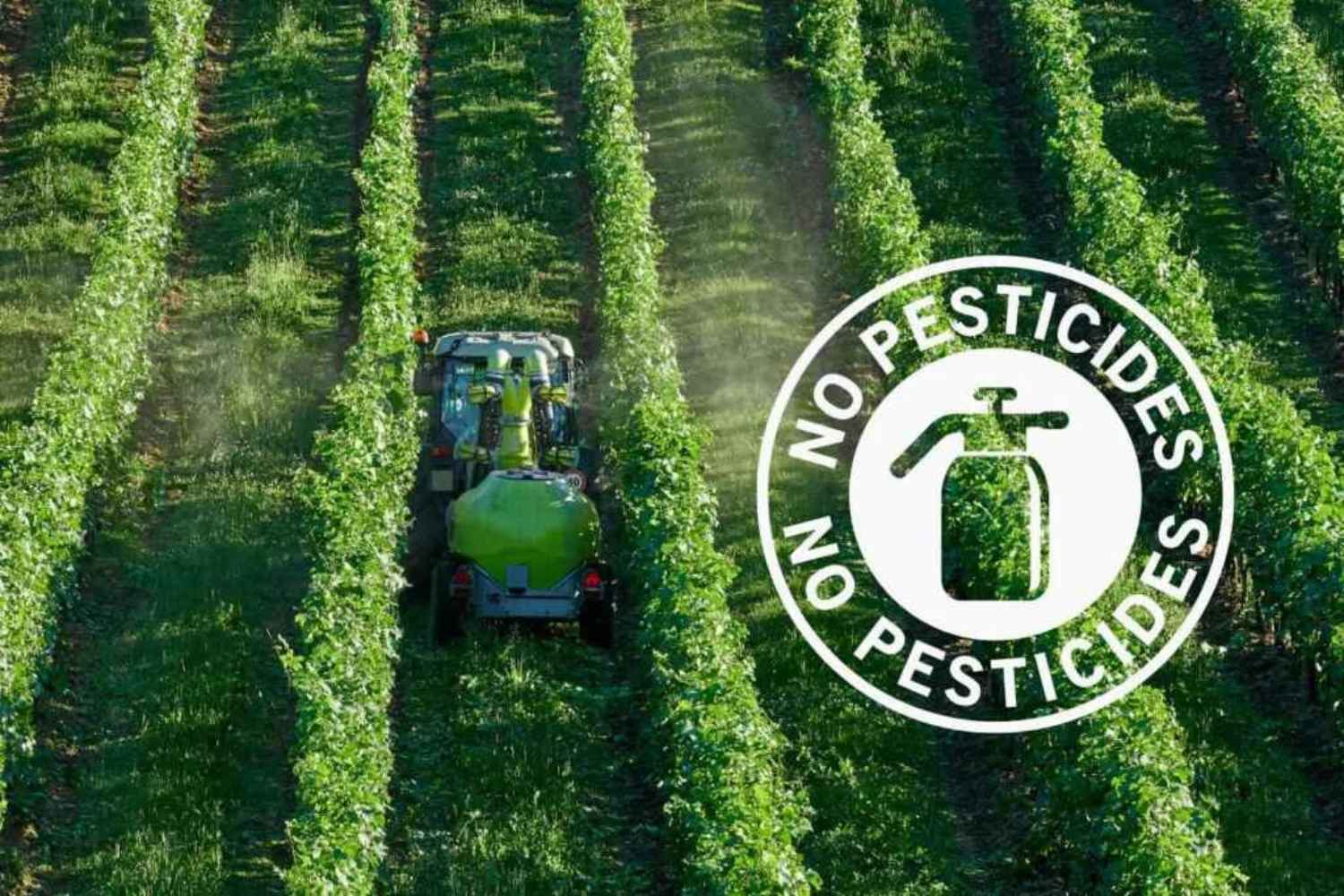
How willing are we to accept the use of pesticides in agriculture and what aspects should be prioritized when deciding whether to allow them? It is from these questions that a new survey carried out by YouGov and promoted by PAN Europe together with various European environmental organizations starts.
The survey involved 7,000 adults in seven countries: France, Germany, Ireland, Italy, Poland, Romania and Spain. Approximately 1,000 citizens were interviewed in each state, with samples designed to represent the nation’s adult population.
The results are particularly interesting because they show what citizens’ expectations are regarding European policies on pesticides. And the message coming from Italy is quite clear: the protection of health and the environment comes before production needs and the possibility of keeping chemical substances on the market without periodic checks.
Pesticides, what Italians think
The most striking data concerns Italy itself. According to the survey, 76% of respondents are in favor of completely eliminating chemical pesticides, either through a gradual process or as soon as alternatives become available.
Going into detail, 52% would like this elimination to happen immediately, while 24% would prefer to proceed when alternative solutions are available.
Then there is another significant result: only 6% of Italians support indefinite authorizations for pesticides. A possibility that is instead foreseen by the European Commission’s reform proposal.
A precise position also emerges on the frequency of checks, 61% of those interviewed would in fact like active substances to be subjected to more frequent safety reviews compared to the current interval of 15 years.
The survey also asked which aspects should be most important when deciding whether to authorize a pesticide. For Italians, the priority is human health, indicated by 74% of those interviewed. This is followed by the protection of water resources (48%) and the protection of biodiversity (39%).
However, the needs related to agricultural production are much lower: only 6% consider crop yields as a priority, while 10% indicate food prices.
An orientation which, according to the promoting organizations, does not change substantially even considering the voters of the Italian right-wing parties, namely Lega, Forza Italia and Fratelli d’Italia. The request to protect health, therefore, also emerges beyond political affiliations.
There is also opposition to unlimited authorizations in Europe
The Italian results are part of a trend that concerns all seven countries involved. Depending on the state, between 68% and 80% of respondents support the complete elimination of chemical pesticides, while between 50% and 72% would like more frequent safety checks than currently required.
Human health is considered the main priority by 68-76% of citizens, followed by the protection of water and biodiversity.
An interesting aspect of the PAN Europe report also concerns political preferences. Support for open-ended authorizations does not exceed 10% among voters of different European political groups. The percentage drops to 5% among voters of parties belonging to the European People’s Party (EPP) and to 7% among those from the European Conservatives and Reformists (ECR) area.
What the Omnibus Pesticide Proposal is and what it would change
At the center of the debate is the Food and Feed Safety Omnibus proposal, presented by the European Commission in December 2025. It is a package of changes to the rules on food and feed safety which also affects the European regulation of plant protection products.
Among the most relevant changes is the possibility of granting authorization to active substances used in pesticides without a set deadline. Currently, however, the authorizations must be periodically re-evaluated, generally every 15 years, to verify that the safety requirements are still respected.
The proposal also provides for changes to the exemptions that allow certain substances to be kept on the market, even in the presence of critical issues related to their dangerousness. These include pesticides that can disrupt the endocrine system and those that contaminate groundwater. There is also the possibility of extending the stay on the market of some products for up to three years after the revocation or non-renewal of approval, including some pesticides classified as carcinogenic.
According to PAN Europe, eliminating periodic checks would mean weakening an important tool for identifying new risks and intervening on substances that, over time, prove problematic. The organization recalls that since 2011, the year the European regulation on pesticides came into force, 54 harmful substances have been banned thanks to the reevaluation system.
The “polluter pays” principle and the request of the associations
There is another element that emerges from the report: citizens are not only asking for stricter rules on pesticides, but also greater economic responsibility on the part of those who produce them.
In fact, among the indications collected by YouGov, support for the “polluter pays” principle emerges: the costs of damage caused by pesticides should fall first and foremost on the industry that produces them, rather than on taxpayers or farmers.
It is an important issue because the impact of chemical agriculture does not only concern those who directly use these products in the fields, but can also affect the quality of water, ecosystems and people’s health.
In light of the results, PAN Europe, Lipu, Greenpeace and WWF ask European parliamentarians not to approve the changes proposed by the Commission and to reject the Omnibus in its current formulation.
The appeal is addressed to all MEPs, with particular reference to the distance that the survey highlights between the positions of some political groups and those of their voters. According to the organizations, there is in fact no significant support, even among conservative voters, for the possibility of authorizing pesticides without time limits.
Citizens want a complete elimination of pesticides. They want public and environmental health to come first, and for industry to pay for the damage caused by pesticides – said Angeliki Lysimachou, Head of Science and Policy at PAN Europe.
The associations therefore ask Italian and European representatives to listen to the indications emerging from the investigation and the concerns already expressed by scientific and medical organizations, avoiding weakening the guarantees provided by the current legislation.
The survey naturally does not constitute a referendum on the Omnibus proposal, but it provides an indication of citizens’ preferences regarding some of its most controversial measures. And, at least as far as Italy is concerned, the result is clear: the majority of those interviewed would like fewer pesticides, more frequent checks and greater attention to health and the environment.
