
The climate crisis runs faster than political decisions. And as temperatures continue to rise, extreme weather events become increasingly destructive and the world remains deeply dependent on oil, gas and coal, governments are coming back to the same table to discuss how to contain global warming.
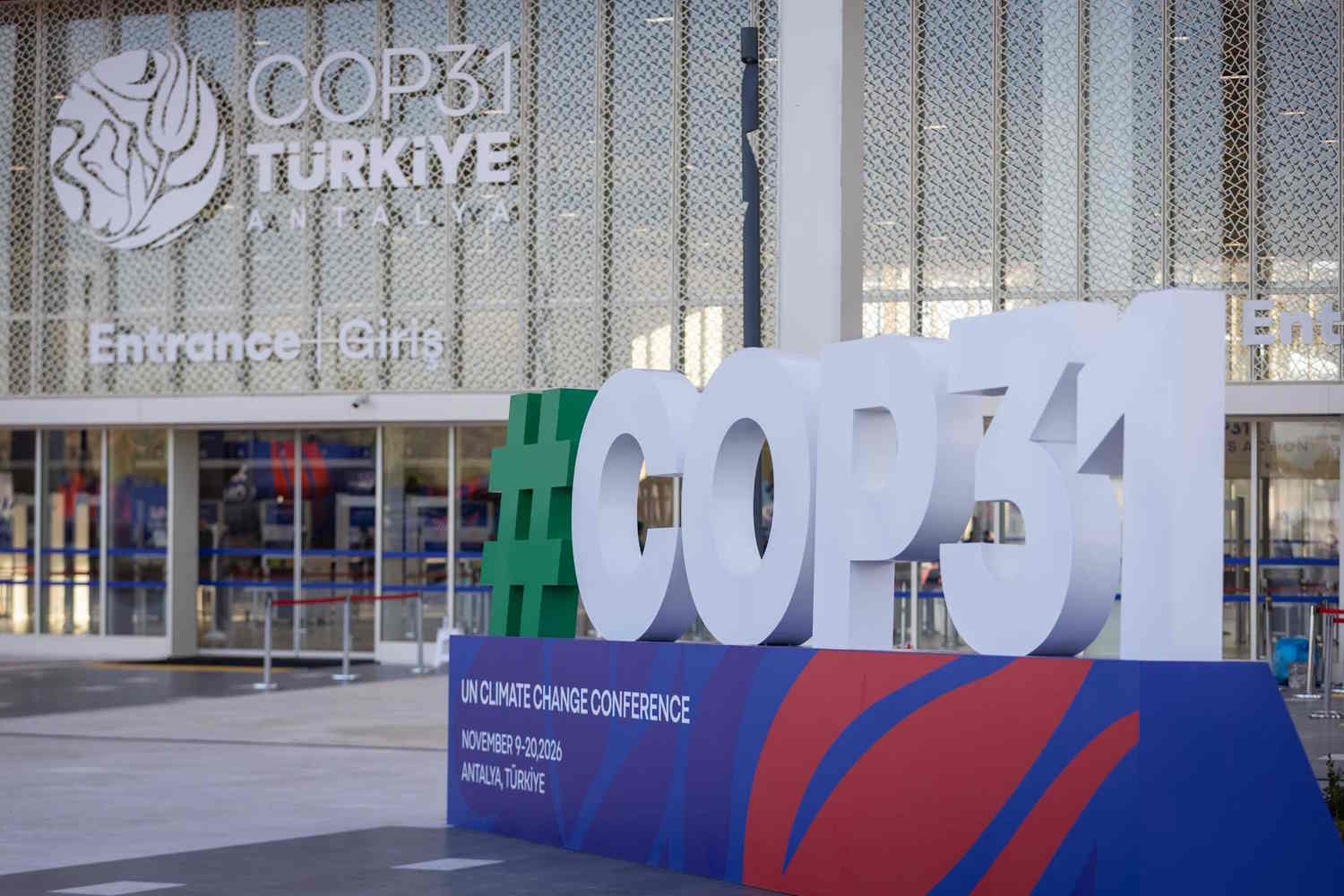
COP31, the 31st Conference of the Parties to the United Nations Framework Convention on Climate Change (UNFCCC), opens today, 9 November, in Antalya, Turkey, scheduled until 20 November.
The appointment comes ten years after the entry into force of the Paris Agreement, at a delicate moment for international climate diplomacy: wars, geopolitical tensions and energy crises are progressively taking away space from the environmental debate, just as the consequences of climate change become increasingly evident. And not only that: the absence of the United States will above all weigh on the negotiations. For the second consecutive year, in fact, the Trump administration will not send any official delegation to the UN climate conference. Democratic parliamentarians, governors and local American administrators will still be present in Antalya.
In any case, what makes the comparison urgent are the data from the 2026 Emissions Gap Report of the United Nations Environment Program (UNEP). Even considering current national climate commitments, the planet remains on a warming trajectory of around 2.6-2.7°C by the end of the century. A prospect that is far from the objective of limiting the increase in temperatures to 1.5°C compared to pre-industrial levels.
The 1.5°C threshold risks being exceeded, what does this mean?
According to UNEP, exceeding the 1.5°C threshold in the next decade is now foreseen by climate scenarios. The issue, therefore, is no longer just avoiding any overshoot, but limiting its extent and duration as much as possible. Scientists talk about overshoota condition in which the global average temperature temporarily exceeds a certain threshold before eventually falling back below. But that return would not automatically erase the damage caused in the meantime: the loss of ecosystems, the effects on biodiversity and the melting of glaciers can have irreversible consequences or last for centuries.
To contain warming, drastic reductions in global greenhouse gas emissions are needed and part of the desirable return below 1.5°C would also depend on the ability to remove carbon dioxide from the atmosphere, through natural systems and dedicated technologies. Solutions which, however, have physical, economic and technological limits and cannot replace the immediate cut of emissions.
The exit from fossil fuels
The central issue of the negotiations concerns (once again) the progressive abandonment of coal, oil and gas. At COP28 in Dubai in 2023, countries recognized for the first time, in a shared decision, the need for a transition away from fossil fuels in energy systems.
Three years later, the most important question remains open: how to transform that indication into credible national plans, capable of intervening on both the production and consumption of fossil energy.
The Brazilian presidency of COP30 presented two new international roadmaps: one dedicated to the transition away from fossil fuels and the other to the fight against deforestation by 2030.
The energy document proposes to accompany the progressive decline in the production and demand of fossil fuels with investments in clean energy, infrastructure and energy security. But these are voluntary instruments, not obligations agreed between all governments. Which is why COP31 will now have to demonstrate that it can produce a change: the transition from announcements to the definition of deadlines, investments and national policies.
Electrification
Alongside the exit from fossil fuels, COP31 focuses on another objective: accelerating the electrification of the world economy. The Turkish presidency has launched the 35-by-35 Global Electrification Pledge, an initiative that aims to increase the share of electricity in global final energy consumption from the current level of just over 20% to 35% by 2035.
The principle is relatively simple: replace, where possible, combustion-based processes with electric technologies powered by renewable sources. From heat pumps to electric vehicles to the electrification of industrial processes, switching to electricity can enable significant reductions in energy consumption and emissions.
According to data reported by the German Federal Environment Agency (UBA), renewables now represent around 33% of global electricity production. In overall energy consumption, however, the picture is very different: fossil fuels still cover 79% of global needs, while renewable sources stop at 18.5%.
The financing
Another decisive chapter concerns climate financing. At COP29 in Baku in 2024, Governments agreed on a new global financial goal: to mobilize at least $300 billion per year by 2035 for developing countries, with developed countries called upon to play a leading role.
We talked about it here: COP29: economic aid to developing countries for the climate increases to 300 billion dollars (but not enough)
The same agreement envisaged a broader effort to reach at least $1,300 billion annually by 2035, through public and private resources. Now, in Antalya, the discussion will focus on how to actually make these funds available, how to distribute them and above all how to facilitate access to financing by the most vulnerable countries.
The theme is intertwined with that of losses and damage (loss and damage), i.e. the consequences of the climate crisis that cannot be avoided through adaptation measures.
Nepal is one of the most dramatic cases highlighted ahead of the conference. The devastating flood caused by the calving of an ice mass in August 2026 caused, according to estimates reported in the COP31 preparatory briefing, over 1,500 victims and thousands missing. Reconstruction costs could reach $5 billion, about a tenth of the national GDP.
The Nepalese case highlights one of the main climate injustices: countries that have contributed the least to historical emissions can find themselves incurring enormous human and economic costs, often without having the necessary resources to deal with them.
Adaptation and resilience
Reducing emissions remains essential, but is no longer enough to protect populations from the effects of global warming that is already underway. For this reason, COP31 will also have to address the issue of adaptation: from the management of water resources to the protection of cities from heat waves, up to early warning systems and infrastructure safety.
The 59 indicators for adaptation approved at COP30 in Belém in 2025 will also be at the center of the negotiations. These are tools designed to help States evaluate progress towards the global adaptation objective set by the Paris Agreement, but the methods of application and measurement require further study.
The issue is anything but secondary: without shared indicators and adequate funding, it becomes difficult to understand whether the interventions implemented are truly reducing the vulnerability of populations. The risk is to continue to spend ever greater resources to manage emergencies, rather than investing to prevent them.
Also oceans, forests and biodiversity in the negotiations
A coalition of over 100 countries is calling for the oceans to find greater space in various areas of negotiation, from the reduction of emissions to the resilience of coastal communities.
The Turkish presidency is working on a possible one Antalya Oceans Declaration and a package of initiatives dedicated to marine protection, offshore renewable energy and the decarbonisation of maritime transport.
Particular attention will be paid to Pacific island states, for which rising sea levels represent a direct threat to the availability of fresh water, infrastructure and the very habitability of some territories.
Forests also return to the center of the agenda, with the aim of strengthening the conservation of ecosystems, combating deforestation and increasing funding for countries that safeguard large forest assets.
A geopolitical COP: the role of Europe, China and Australia
COP31 takes place in a context of strong geopolitical tensions. Its organization also reflects a diplomatic compromise: Turkey hosts and chairs the conference, while Australia leads the negotiations, with particular attention to Pacific countries. Both, however, maintain interests linked to fossil fuels.
For the European Union it will be a test of credibility: it will have to translate its diplomatic and financial role into concrete commitments. Also central is China, a large emitter but protagonist of clean technologies. Italy will be called to clarify its position on the energy transition and on the exit from fossil fuels.
What COP31 will really have to achieve
What we all know, despite ourselves, is that the Antalya Conference is not starting from scratch. International commitments exist, technologies to reduce emissions also exist and scientific knowledge indicates with ever greater precision which interventions are necessary. What continues to be missing is a speed of implementation that is compatible with the severity of the climate crisis.
COP31 will be assessed above all on its ability to produce concrete results: progress in transitioning away from fossil fuels, investments in electrification, resources accessible to the most vulnerable countries and effective tools for measuring the results of climate policies.
The distance between the Paris Agreement targets and current emissions is still enormous and the possible exceeding of the 1.5°C threshold makes any further delay more difficult to catch up. Will governments be willing to adopt concrete solutions with the necessary speed?
