
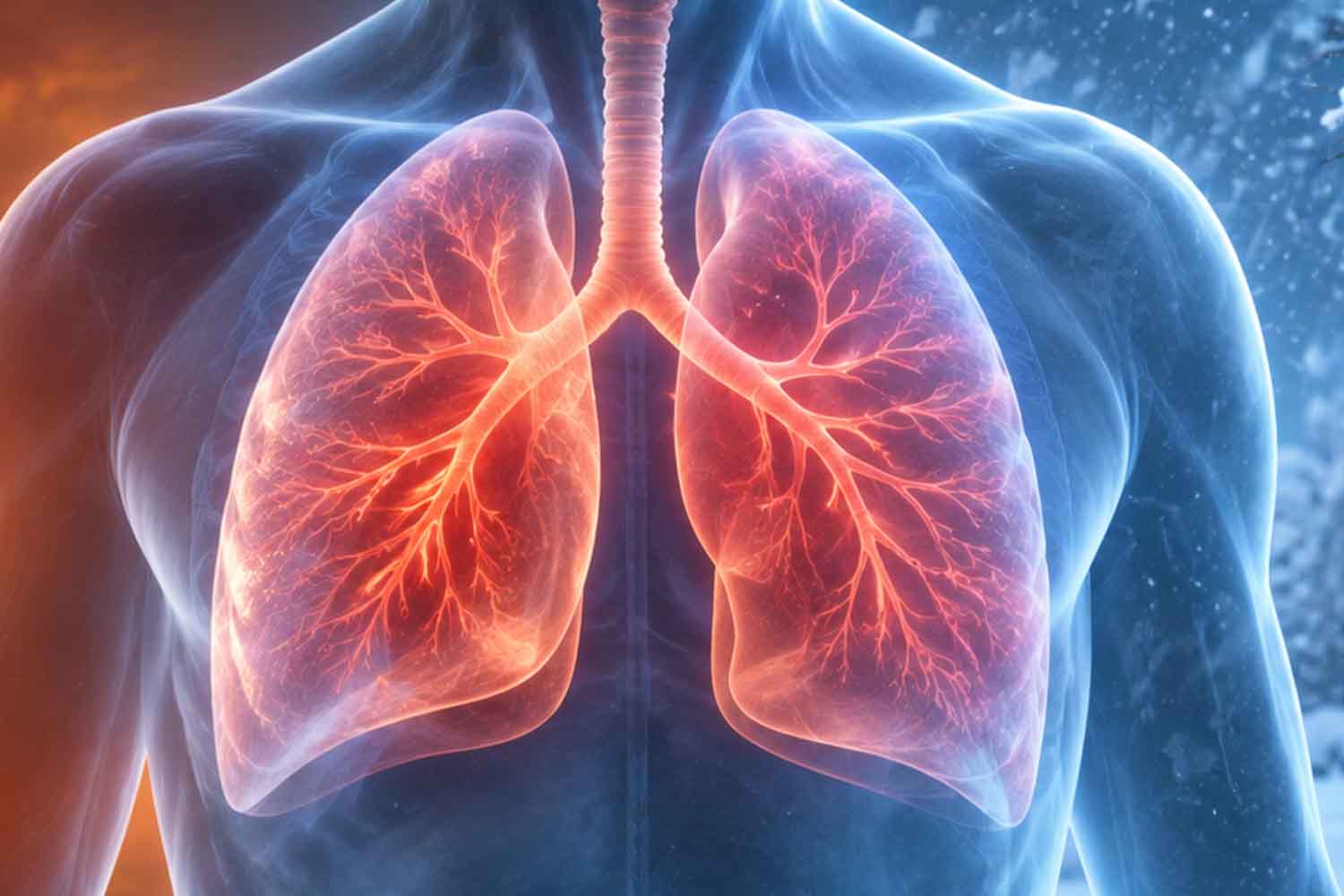
Five consecutive days of intense heat or cold, even without record-breaking temperatures, are associated with a higher incidence of chronic lung disease. This is suggested by a study conducted in China on 9,458 middle-aged and elderly people, followed over the course of several years. During the observation period, 1,562 participants reported a new chronic lung disease, equal to 16.51% of the sample. The research, published on Scientific Reportswas conducted by a group of scholars from the Qinghai Provincial People’s Hospital, who analyzed health data collected in China between 2011 and 2020, comparing them with meteorological conditions.
The most interesting result concerns temperatures. The strongest associations were not necessarily observed during the most extreme episodes: in some analyses, relatively less intense, but prolonged waves showed higher values. A detail that shifts attention from individual climate records to what happens when heat or cold persists for several days.
Less extreme waves can take a toll on lung health
To arrive at these results, the researchers examined 50 different indicators of exposure, combining the intensity of temperatures with the duration of the episodes, from at least one day up to at least five consecutive days. All 50 indicators were statistically associated with a higher incidence of chronic lung disease.
But comparing the different thresholds came a surprise. For cold spells lasting at least five days, those identified through a relatively less extreme threshold recorded an odds ratio of 1.34, versus 1.13 for episodes defined through the more stringent threshold.
A similar trend also emerged for heat: 1.32 versus 1.20, again considering exposures of at least five days. The odds ratio measures the strength of a statistical association compared to a reference condition, without directly representing the individual probability of becoming ill.
According to the authors, these data suggest that less extreme temperature waves, precisely because they can occur more frequently, could contribute to a greater overall health burden than exceptional episodes. The research therefore invites us to consider the duration and repetition of exposures, as well as their intensity. In short, the thermometer only tells part of the story. Even the calendar might have something to say.
Cold weather is associated with greater risk in rural areas
Another finding concerns where the participants live. The study found that the association between cold spells and new chronic lung diseases was stronger among residents of rural areas than those living in cities. It was the only difference between the subgroups analyzed that retained statistical significance after corrections applied by the researchers.
Possible explanations involve living conditions, the availability of heating and the different possibilities of protecting oneself from low temperatures. The study, however, did not determine which of these factors contributes most to the outcome. For heat, however, no equally robust differences emerged between urban and rural residents. The researchers also observed that the associations with the cold followed, for some thresholds, a non-linear trend, while those with the heat were more regular.
Extreme heat and cold: what other studies say about respiratory diseases
The relationship between extreme temperatures and lung health had already emerged in numerous studies, including outside China. And the consequences observed are very concrete: hospital admissions, worsening of respiratory diseases and mortality. In Spain, a study published onEuropean Journal of Preventive Cardiology analyzed health and meteorological data from 48 provinces between 2004 and 2019, finding associations between high or very low temperatures and various respiratory problems. During periods of intense heat, the risk of hospitalization for pneumonia, acute bronchitis and chronic obstructive pulmonary disease (COPD), a disease that makes it progressively harder to breathe, increased.
Cold weather showed a particularly strong association with hospitalizations for COPD: comparing extremely low temperatures with those considered optimal, the estimated relative risk reached 1.885, almost double. Even in England, the heat was associated with an increase in respiratory hospitalizations. Research published in BMJ Open analyzed over 4 million hospitalizations recorded in the summer months between 2008 and 2019.
Comparing the highest summer temperatures with the median ones, the researchers found a relative increase of 8% in the risk of hospitalization for COPD and 7% for pneumonia. Older people were generally more vulnerable. Another Chinese research, published on Ecotoxicology and Environmental Safetyinstead examined over 2.26 million COPD deaths recorded between 2013 and 2019.
The analysis associated heat waves lasting at least two days with a relative increase in COPD mortality risk of 21.28%. For cold waves, defined through a different temperature threshold, the estimated increase was 10.09%. These are studies conducted on different populations and with different methods. However, they document a relationship between extreme temperatures and respiratory health that concerns both the immediate consequences and those observed over the years.
What happens to the lungs when temperatures persist
The cold can irritate the respiratory tract and cause the bronchi to narrow, making it more difficult to breathe, especially for those who already suffer from lung diseases. Intense heat, however, subjects the body to thermal stress which can aggravate pre-existing respiratory conditions. Then there is air pollution, which can interact with weather conditions and contribute to worsening air quality.
The World Health Organization reports that high temperatures can aggravate several chronic diseases, including respiratory ones, and that the elderly are among the most vulnerable people. Furthermore, with climate change, heat waves are becoming more frequent and intense. However, the cold continues to represent a health risk, especially for those who live in poorly insulated homes or have insufficient heating.
The research published on Scientific Reports adds an element to the knowledge already available: while many previous studies have focused on hospitalizations and mortality, this investigation considered the appearance of new chronic lung diseases during a prolonged observation period.
The researchers used five surveys from the China Health and Retirement Longitudinal Study, with a median observation period of seven years. The associations remained consistent even across different statistical models. Since this is an observational study, further research will be needed to verify whether these associations are also present in other populations.
Alarms for record temperatures are not enough to protect health
Weather warnings rightly draw attention to particularly high or low temperatures. But to understand the possible impact on respiratory health in the long term, according to the authors of the Chinese study, less exceptional episodes must also be considered.
It is a perspective that is included in the guidelines updated in 2026 by WHO Europe on health prevention plans for heat waves, which recommend identifying the most exposed populations, improving warning systems and strengthening the capacity of health services to deal with extreme events. It matters how hot or cold it is, of course. But it also counts for how many consecutive days you remain exposed and how many times these conditions recur over time.
The authors therefore invite the development of prevention strategies that consider cumulative exposure and differences between populations, with particular attention to older people and the most vulnerable territories. A record-breaking day ends up in the newspapers. Five consecutive days of intense heat or cold, perhaps without any record, risk going almost unnoticed. In data on lung health, however, they can leave a signal.
