
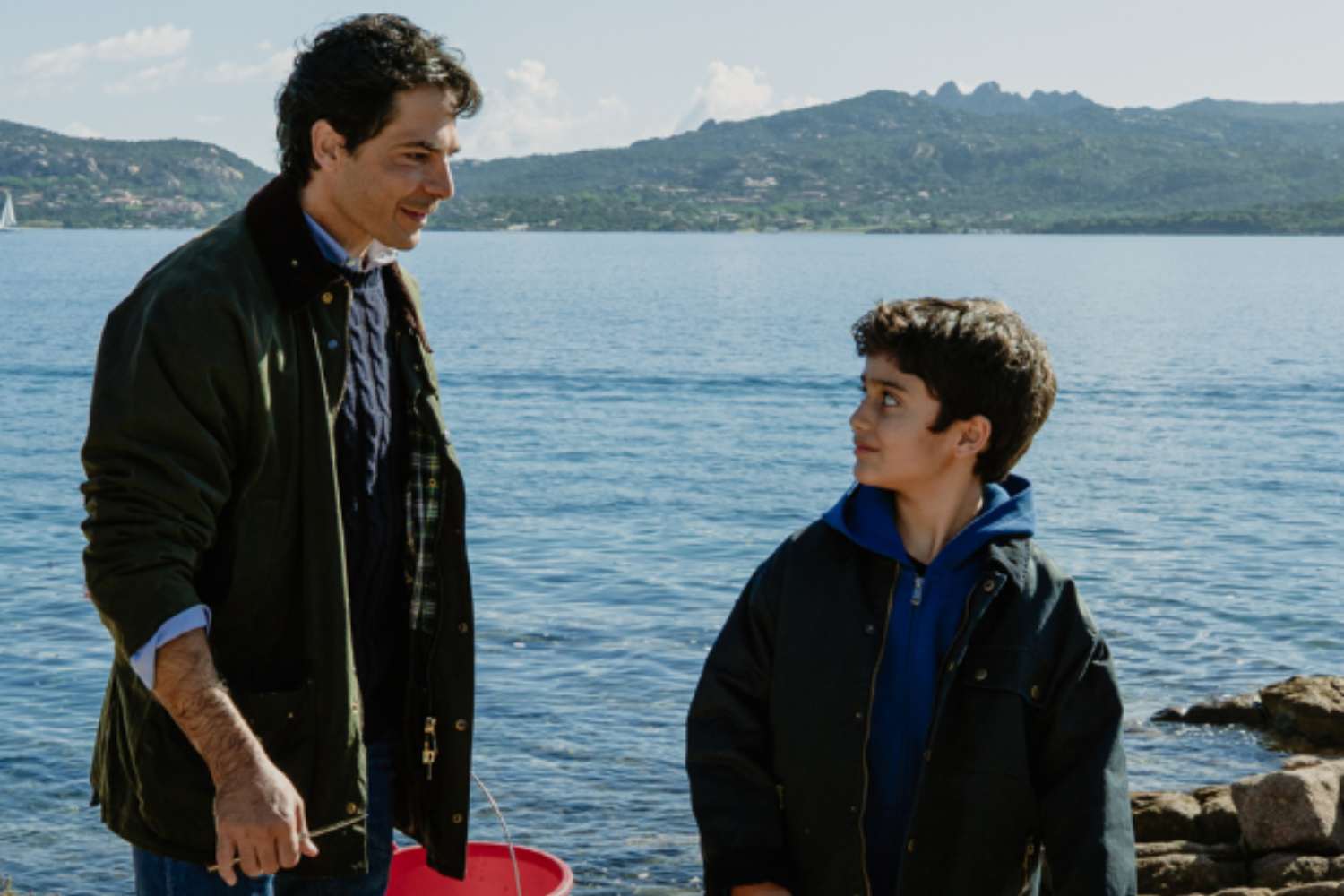
The crime news of our country harbors deep wounds that time struggles to heal. One of these will be at the center of a new eagerly awaited Rai TV series entitled 177 days. Farouk’s kidnapping which brings to mind the collective drama experienced between 1992 and the middle of the same year, when the whole of Italy remained in suspense over the fate of a child: little Farouk Kassam. The drama is divided into 3 evenings broadcast on Rai 1 starting from Monday 16 November, with a double appointment which will continue on Tuesday 17 November to tell the first phases of this dramatic page in national history without filters.
View this post on Instagram
The true story of Farouk and the nightmare that stopped Italy
It all began on 15 January 1992 when the quiet of the Costa Smeralda in Sardinia was shattered by a criminal raid inside the home of the Kassam family. Farouk, just 7 years old, was torn from his parents’ affection by a group of bandits under the astonished eyes of his mother and little sister Nour. The story, taken from the book My Son Farouk. Anatomy of a kidnapping written by Fateh Kassam with Marco Corrias, it reconstructs an odyssey that lasted exactly 177 days of imprisonment until the little boy’s release.
The emotional impact on the country was devastating: for the first time a child ended up at the center of the ruthless logic of the anonymous Sardinian company, even going so far as to tragically cut off an ear flap to force the ransoms. The mobilization was total and involved the highest levels of the institutions, the heartfelt appeal of Pope John Paul II, the secret services, the historic invitation to solidarity launched on television by Sergio Zavoli with the white sheets displayed in the windows and the controversial mediation of the former Scarlet Pimpernel Graziano Mesina.
View this post on Instagram
The plot and narrative structure of the series in three evenings
The co-production signed by Rai Fiction and Bim Produzione, directed by Carlo Carlei, divides the story into 6 episodes. The narrative develops like an impressive choral fresco that combines true crime, detection story and family drama. The child’s parents move at the center of the scene: the father Fateh, played by Marco Bocci, a young entrepreneur of Belgian and Pakistani origins who manages the hotel Lights of the Bay and rejects the submissive codes of blackmail, and the mother Marion, played by Antonia Desplat, a woman of extraordinary empathy who is the author of the courageous appeal to the mothers of Orgosolo during Easter.
Alongside the family’s pain, the screenplay written by Lea Tafuri, Antonio Manca and Vincenzo Marra explores the hunted work of the investigators, with the head of the flying squad Franco Orazi played by Domenico Diele and the carabiniere Fabrizio Argiolas played by Mauro Addis. A key role in the historical reconstruction also belongs to the press of the time, told through the characters of the journalists Valeria Loi and Marco Uras, played respectively by Rosa Diletta Rossi and Enrico Inserra, witnesses of investigative journalism divided between ethics and reporting rights while the ruthless gang led by the criminal Matteo Boe, played by Giacomo Fadda, weaved its web in the shadow of Barbagia.
View this post on Instagram
The locations between the landscape contrasts of Sardinia and Campania
The visual reconstruction of an event so deeply rooted in the territory required extensive scouting and filming work that lasted approximately 12 weeks. The production chose to divide the sets between two Italian regions to capture the perfect geographical and emotional authenticity of the story. Sardinia acted as a natural stage for the exteriors linked to the original story, moving between the tourist and exclusive coast of Olbia and Cannigione in Gallura – very close to Porto Cervo where the kidnapping took place – and moving into the rugged mountainous hinterland of Nuoro and Orgosolo, historical symbol of Barbagia banditry.
The strong dualism between the sunshine of the coast and the impenetrable closure of the Sardinian mountains is intertwined with the sequences shot in Campania. To optimize the complex production machine and recreate the investigative and urban environments necessary for the story, the crew worked intensely in the provinces of Naples, Caserta, Salerno and Benevento. This double geographical soul gives the viewer a total immersion in a bygone era, turning the spotlight back on a page of news that has forever marked Italian judicial and social history.
View this post on Instagram
