
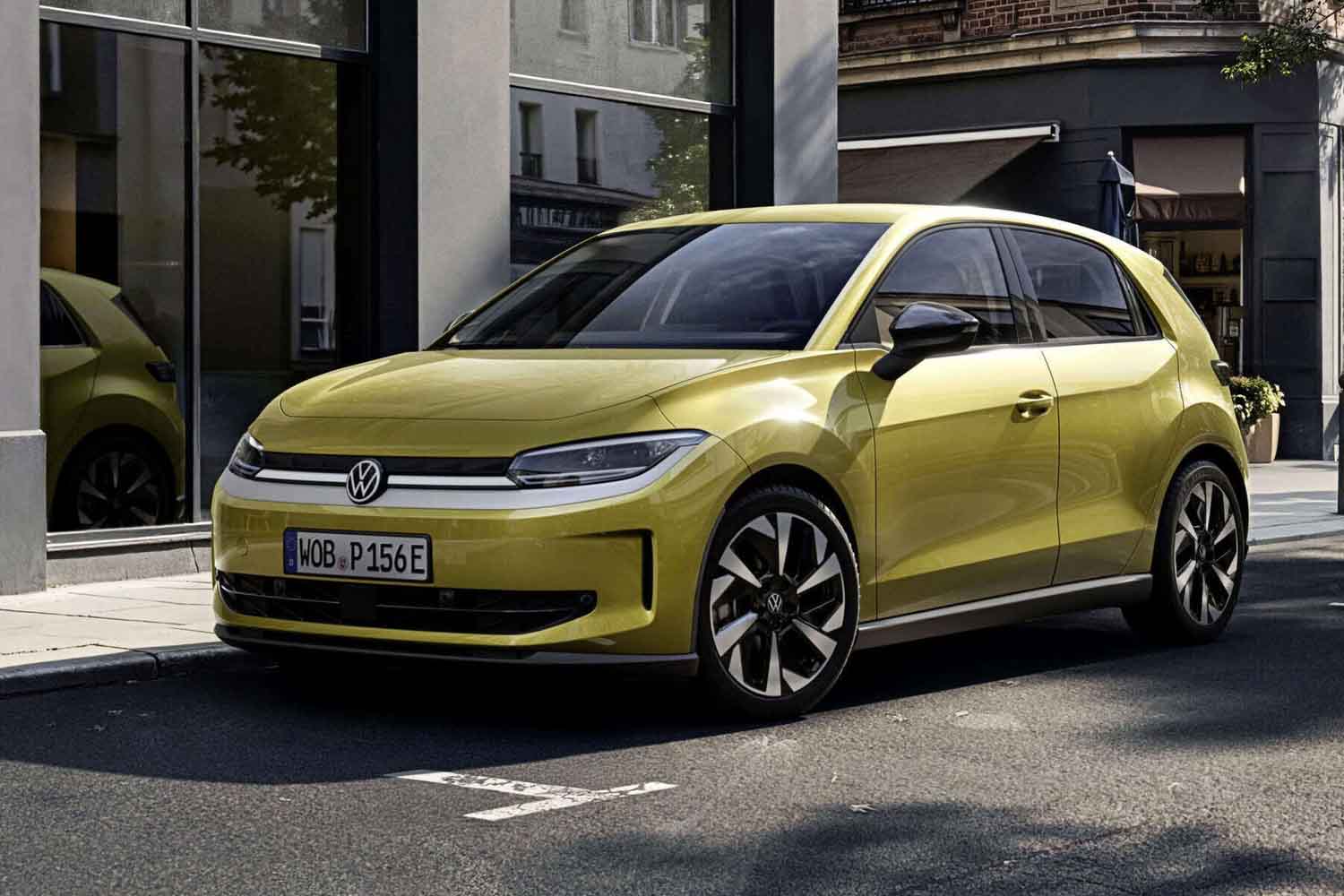
Anyone who orders the cheapest version of the new Volkswagen ID. in Germany Polo, the one worth 24,995 euros, could find themselves waiting up to 21 months before receiving it. For the more expensive GTI, however, estimates speak of around seven months. The small electric car created to make battery-powered mobility more accessible is collecting many more orders than expected. And the queue, curiously, becomes longer precisely for those who spend less.
According to information gathered by the German automotive press, the orders from the ID. Polo almost doubled in just two months, going from around 30 thousand in mid-September to almost 60 thousand in November. A growth that would have surprised even Volkswagen, forced to review a production planning that was evidently too prudent. The longest waits mainly concern the Trend version, the one with the lowest entry price.
Volkswagen ID. Polo: economical electric cars are more popular than expected
The ID. Polo was designed to conquer a market segment in which electric cars still struggle to establish themselves: that of accessible small cars, designed for daily travel, without SUV dimensions and prices. Volkswagen opened orders for the 52 kWh battery versions at the end of April 2026, and then kept the promise of a more economical model. In fact, the ID arrived on July 16th. Polo Trend with 37 kWh battery, available in Germany starting from 24,995 euros.
The engine develops 116 HP and the declared autonomy reaches 334 kilometers according to the WLTP cycle. Enough, at least on paper, to accompany most motorists on their daily journeys. Fast charging also allows you to go from 10 to 80% of the battery in approximately 23 minutes, using a direct current column with power up to 90 kW.
And the public responded. Already in July, when the economical version had just arrived on the market, Volkswagen had announced that it had collected 25 thousand orders for the ID alone. Pole. The group’s new urban electric vehicles had overall exceeded 70 thousand. Numbers which, evidently, would have deserved some more attention in the planning of the factories.
Those who choose the cheapest Volkswagen have to wait longer
The situation becomes particularly interesting when looking at the differences between the trim levels. According to estimates collected in Germany, the ID. Polo Trend could require up to 21 months of waiting, while for the sporty GTI version we are talking about about seven months. In short, those who spend more could receive the car much sooner.
This difference could be explained by Volkswagen’s choice to give production priority to the versions with higher profit margins, especially the better equipped ones. An understandable decision from a commercial point of view, a little less exciting for those who have chosen the small electric one precisely because it is cheaper.
A manager of the group, interviewed by the German press, admitted that the company planned production with excessive caution. Volkswagen also expected that between 90 and 95 percent of customers would choose leasing, while the actual share would be close to 50 percent. In other words, many more drivers than expected want to buy their own ID. Polo, rather than using it through a leasing contract.
Even the larger battery, 52 kWh, would have met with success beyond expectations. And there is another rather curious detail: according to information collected from the company, around 90% of buyers would have chosen to add the 810 euro removable tow hook. Volkswagen would therefore find itself dealing with customers willing to buy the car directly and, often, spend a little more to customize it. Meanwhile, the less profitable versions would end up at the back of the production schedule.
Almost 150 thousand orders for the new Volkswagen urban electric vehicles
The success of the ID. Polo is part of a larger project. The German group has developed a new family of compact electric cars, which also includes Volkswagen ID. Cross, CUPRA Raval and Škoda Epiq.
Four models built on a common platform, designed to offer more accessible electric alternatives compared to larger cars. Customer interest is already evident in the official data. Volkswagen has announced that its family of urban electric vehicles has collected almost 150 thousand orders in total.
The two compacts, ID. Polo and CUPRA Raval are produced in the Spanish plant in Martorell, while ID. Cross and Škoda Epiq are made in Pamplona. The group has chosen to share over 80% of the components and technologies between the four models, a solution that allows it to contain industrial costs. Now, however, demand seems to be running faster than production.
The growing popularity of compact electric cars also comes at a delicate moment for Volkswagen, which is engaged in a profound industrial reorganization and in the search for greater profitability. The cheapest versions have reduced margins and, for a manufacturer that must contain costs, every car produced must contribute to the economic results. Hence the possible choice to favor the most profitable setups, even at the cost of lengthening the wait for those who want to spend less.
How much does the Volkswagen ID. Polo in Italy?
Also for Italian motorists the new ID. Polo represents one of the most interesting proposals in the compact electric segment. On the official Volkswagen Italia website, the Trend version is offered with a commercial offer starting from 24,900 euros, a price very close to the German one. The actual cost depends on the commercial conditions applied and any optional extras. The entry-level version is equipped with a 37 kWh battery, while the higher versions can offer greater ranges, up to over 450 kilometers declared according to the WLTP cycle.
As regards delivery times, the expectations of up to 21 months reported in the German press refer to the German market. In Italy, availability also depends on dealer assignments and configurations ordered. The response of European motorists, however, is difficult to ignore. Volkswagen offered an electric small car at a price closer to that of traditional cars and found itself with orders higher than expected.
An encouraging sign for a market in which the purchase cost continues to hold back many potential customers. Now the German company will have to find a way to satisfy demand, especially that of the more accessible version. Because proposing an electric for 25 thousand euros is a good step forward. Having to wait until 2028 to put it in the garage, decidedly less so.
