
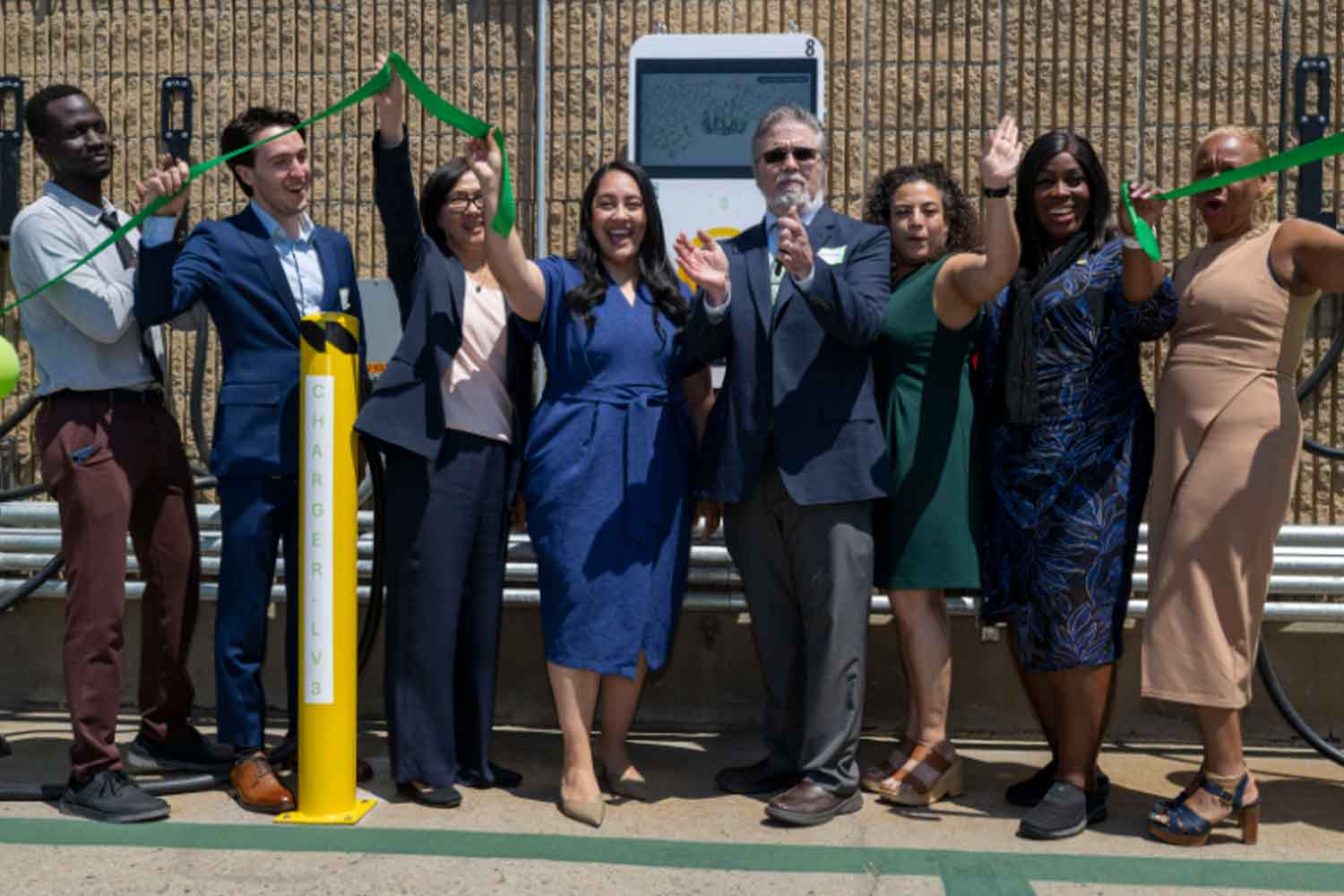
Forty-five electric school buses, around 800 children taken to school and good news for one of the New York neighborhoods most affected by air pollution. What was, at the time of its inauguration, the largest fleet of electric school buses in New York State entered service in the South Bronx. And the choice of location has a particular meaning: here childhood asthma is a health problem that accompanies entire generations.
The project, presented by Con Edison, involves GVC, a family company that has been transporting children with special educational needs for over thirty years. To replace the old buses powered by fossil fuels, 45 electric vehicles and 23 double socket charging stations have arrived.
An investment that also concerns those who will never get on those school buses. The company’s depot is located along Zerega Avenue, in a road corridor of approximately 3.2 kilometers from which thousands of vehicles depart every day: approximately 2,000 school buses and 3,000 medium and heavy commercial vehicles. A concentration of traffic that has consequences far beyond the noise of the engines.
In the Bronx, childhood asthma has been a decades-long problem
The South Bronx has been living with high levels of pollution for years, including major roads, industrial activities and heavy traffic. According to the New York City Department of Health, in 2023 the Bronx had approximately 240 emergency room visits for asthma per 10,000 children between the ages of 5 and 17, compared to 144 for the entire city.
Numbers that make the replacement of diesel buses even more important. Electric motors, in fact, do not produce exhaust gases during circulation, eliminating at the source local emissions of nitrogen oxides and fine particulate matter, substances that can aggravate asthma and other respiratory disorders.
According to Con Edison estimates, the new fleet will avoid the emission of approximately one million pounds of carbon, equivalent to approximately 450 tons, each school year. The benefits also concern noise, a particularly important aspect for small passengers with sensory sensitivities.
Christian Martinez, a GVC driver and father of a child with autism, says the switch to electric has made trips quieter and more comfortable. A difference which, according to his experience, is especially noticeable in children who are more sensitive to the noises and smells of old engines.
The fleet transports around 800 children, with an average of 18 small passengers per trip in early childhood services. Approximately 4,100 individual student trips are made within a week.
An investment that starts from the electricity grid
To put the buses on the road it was also necessary to intervene on the infrastructure. Con Edison adjusted the electricity supply to the depot and awarded GVC an incentive of $450,000 to support the installation of charging systems.
The New York School Bus Incentive Program also contributed to the financing, supported through environmental funds from the State of New York, which helped the company purchase 20 electric buses and install the 23 charging stations.
The project is part of a larger program to electrify heavy transport in the Zerega Avenue and Hunts Point area. The objective is to make it possible to replace other vehicles, progressively lightening the burden of waste on an already particularly exposed community.
And where are we in Italy with electric school buses?
Electric school buses are also starting to find space in Italy, although through smaller local initiatives. In Modena, for example, three electric school buses with 44 seats each entered service in September 2025, intended for primary and secondary school students. The project required an investment of approximately 854,000 euros, financed largely by the Ministry of the Environment.
In Puglia, however, the Region has allocated 4 million euros for a program which involves the purchase of 32 electric school buses for the Municipalities. A measure that aims to renew the vehicles used to transport students.
The Bronx project, however, adds an interesting criterion to the electricity transition: starting from neighborhoods where reducing pollution is also a health necessity. Because a school bus is used to take children to school, of course. But it would be better if during the journey they didn’t have to breathe the exhaust of the one in front of them.
