
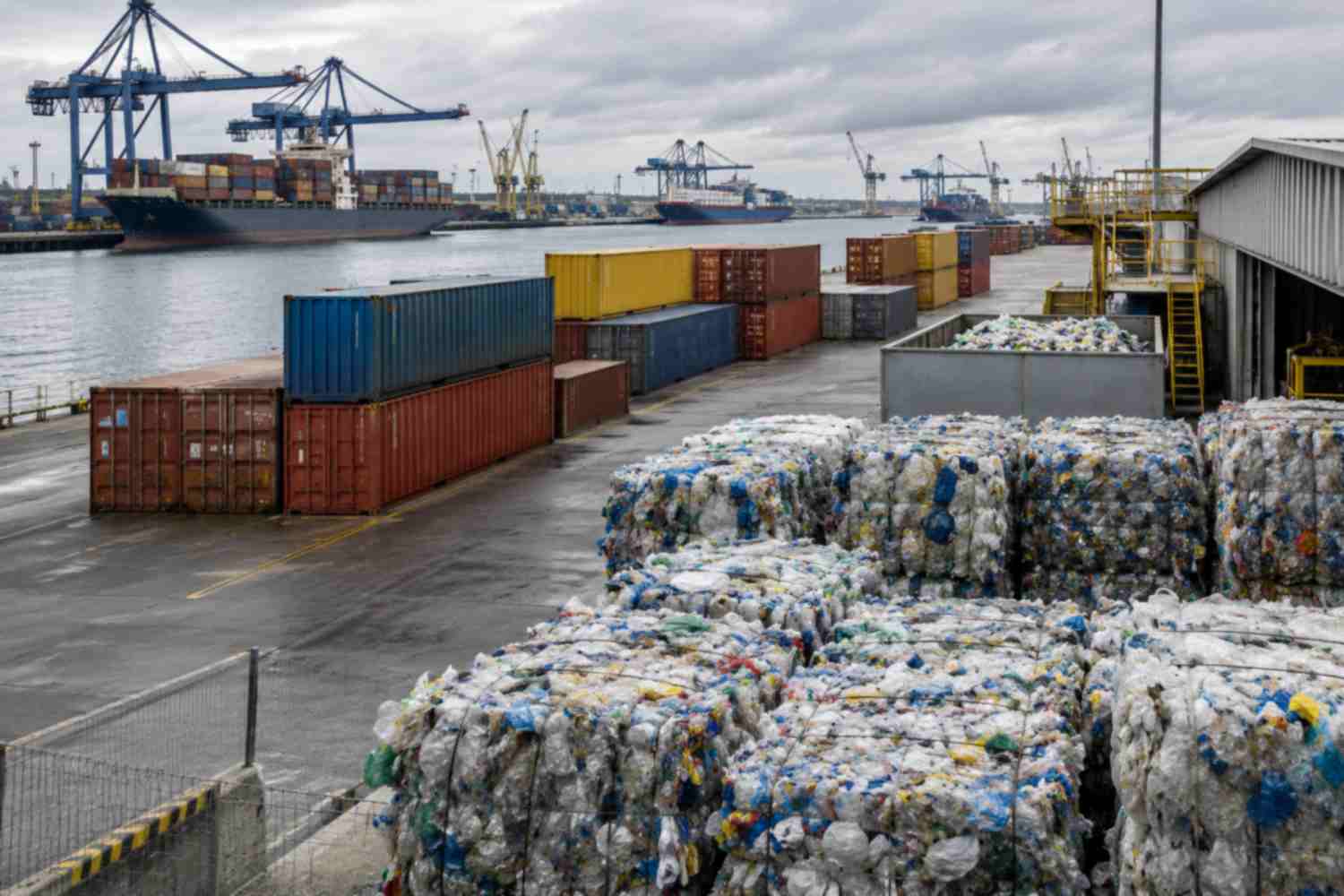
From 21 November 2026, the European Union will ban the export of plastic waste to countries that are not part of the OECD, the Organization for Economic Co-operation and Development. A decision that interrupts a consolidated practice: shipping part of the plastic discarded in Europe to states that often have to deal with insufficient waste management systems and serious pollution problems. From Saturday, for these destinations, containers will have to stop. And Europe will have to take greater responsibility for the waste it produces.
This was announced by the European Commission, which on 20 November 2026 confirmed the entry into application of the ban provided for by the new regulation on waste shipments. The measure is part of a broader strategy to combat plastic pollution, strengthen the circular economy and promote responsible management of materials, both within the Union and in international trade. The objective is to prevent the environmental burden of European waste from continuing to be transferred elsewhere, perhaps where the consequences risk being much more serious.
Every year Europe produces 40 million tonnes of plastic waste
The numbers explain the scope of the decision. Every year the European Union produces around 40 million tonnes of plastic waste and exports between one million and one and a half million. A relatively small quantity compared to the total, but which still represents a huge flow of materials destined to travel outside European borders. In 2025, about half of plastic exports ended up in OECD countries, while the other half reached states that are not part of the organization.
The main destinations include Malaysia, with 276 thousand tonnes, Indonesia, with 215 thousand, and Vietnam, with 137 thousand. Countries that from November 21st will no longer be able to receive plastic waste exported from the European Union. However, the main recipient remains Turkey, which imported around 510 thousand tonnes in 2025. Ankara is part of the OECD and therefore is not covered by the ban, although shipments will continue to be subject to stricter controls. The Commission has already published an assessment on the sustainability of exports to Turkey.
The incorrect management of plastic waste represents one of the most serious forms of environmental pollution. When adequate facilities, control systems and material recovery facilities are lacking, plastic can accumulate in illegal landfills, be burned outdoors or disperse into the environment. And the consequences fall on the territories and the people who live there, even when that waste was produced thousands of kilometers away. For the European Commission, exporting plastic to countries where its management can cause serious environmental damage does not represent a sustainable solution.
The ban will remain in place until at least 2029
The measure is part of the European regulation 2024/1157 on waste shipments, which came into force on 20 May 2024. The measure introduces stricter controls on international waste movements and new responsibilities for exporters. The ban will also concern non-hazardous plastic intended for recycling and will remain in force until at least 21 May 2029. After that date, non-OECD countries will be able to request to be authorized again to receive certain categories of plastic waste, demonstrating however that they have plants and systems capable of treating it in an environmentally correct manner.
Exports to OECD countries will remain possible, but the European Commission will continue to monitor them, verifying above all that the recipient states of large quantities of plastic have the necessary structures to manage it without causing environmental damage. The regulation also provides for further restrictions, starting from 21 May 2027, for other categories of waste exported to non-OECD countries. In some cases, specific authorizations will be possible, subject to the ability of the recipient countries to guarantee sustainable management of the materials received.
Europe will have to deal more with its plastic
The ban also represents a boost for the European recycling sector, called to manage a greater quantity of materials that until now could have been exported. The Union aims to strengthen plants, recover more resources and encourage the reuse of plastic in industry. Already in December 2025, the Commission presented new measures to support the European market for recycled plastic, encouraging investments and the development of technologies capable of increasing the recovery capacity of materials.
Preventing exports, of course, will not make waste disappear. Plastic will continue to be produced, used and discarded, and materials that can no longer be shipped to non-OECD countries will have to find other destinations. Adequate plants, efficient collection systems and a greater capacity to transform waste into new resources will therefore be needed. A responsibility that Europe intends to take on also to reduce the environmental pressure on the countries that, up to now, have received part of its waste.
The decision is also part of the European Union’s commitment to a global treaty against plastic pollution, which addresses the problem throughout the entire life cycle of products, from production to waste management. An objective that requires international collaboration, because the plastic dispersed in the environment certainly knows no national borders.
From 21 November, therefore, Europe begins to close one of the routes through which it exported part of its plastic waste. Those who can no longer leave will have to be managed within the Union. Plastic remains, as does the responsibility to deal with it. And this time it won’t be enough to send it to the other side of the world.
