
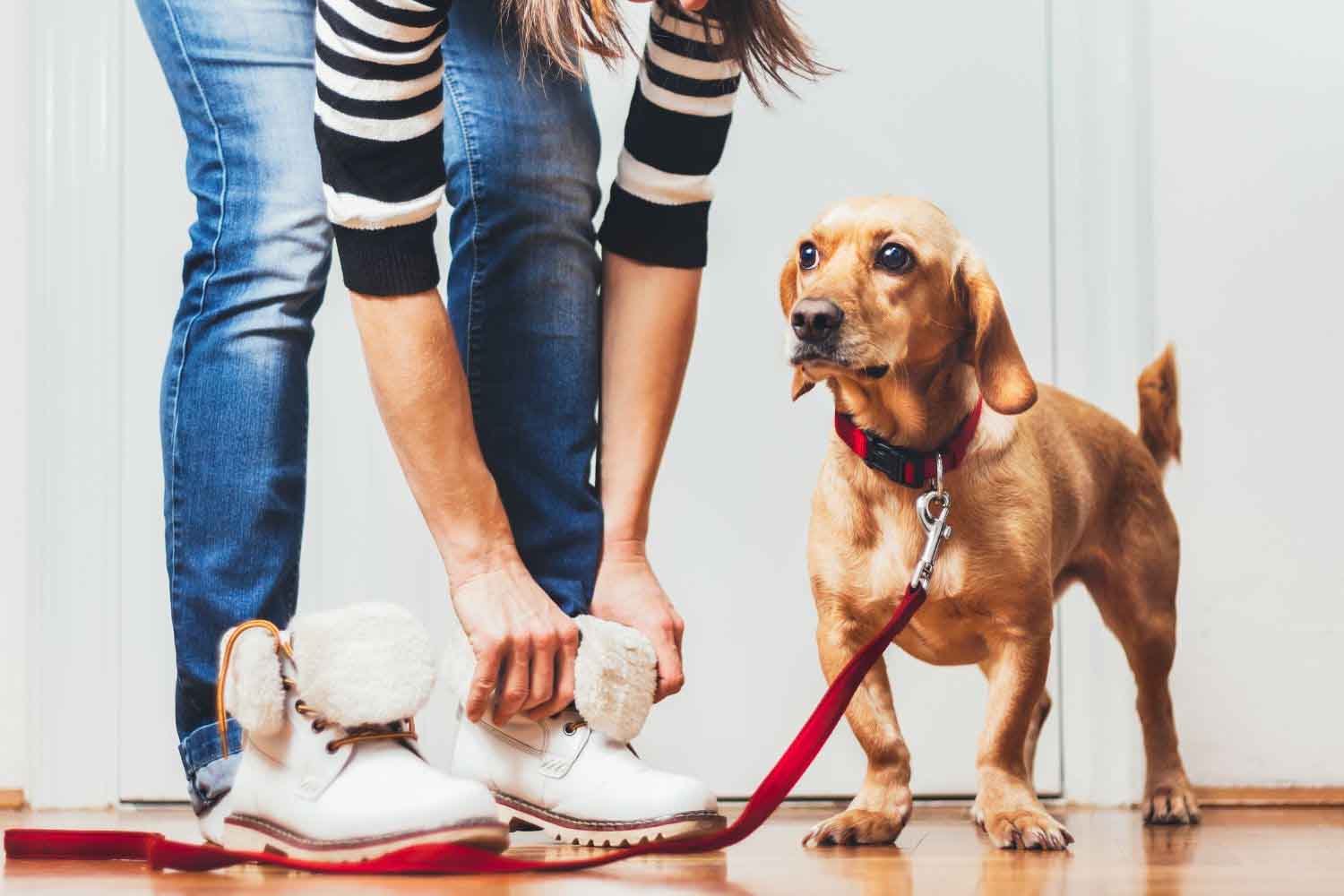
The dog sees a pigeon, suddenly changes direction and the arm of the person holding the leash follows it. Shoulders, back, wrists and legs find themselves managing movements that are anything but programmed. To better deal with these stresses, yoga teacher Amber Burke suggests a 10-minute routine that combines mobility, balance and muscle strengthening exercises, to be performed before going out with your four-legged friend.
The sequence takes place mainly standing, without the need for a mat. For some movements, even a leash is enough, as long as it is disconnected from the dog. The objective is to work on the parts of the body most involved during walks, especially when the animal is large, particularly lively or has the habit of pulling.
Taking the dog out is also a physical exercise
Walking with a dog can be a good opportunity to stay active. Research by the University of Liverpool, published on Scientific Reportsexamined the exercise habits of 191 dog-owning adults and 455 non-dog-owning adults living in a British community.
Owners were about four times more likely to achieve the guideline-recommended 150 minutes of physical activity per week. However, this is an observational study: the result describes an association and does not demonstrate that adopting a dog automatically makes you more active.
The walk also carries some risk, especially when the leash is suddenly pulled. A study by Johns Hopkins University, published on Medicine & Science in Sports & Exerciseanalyzed leashed dog walking-related injuries recorded in U.S. emergency rooms between 2001 and 2020.
The national estimate reaches 422,659 adults treated for injuries over a twenty-year period. In 55% of the cases examined, people had injured themselves by falling after being pulled by the dog or tripping over the leash. Common injuries included finger fractures, head trauma, and shoulder sprains or strains.
These numbers are for hospital admissions in the United States and do not indicate the likelihood of each owner being injured. Above all, the study did not evaluate whether practicing yoga before the walk could prevent such accidents.
Exercises for shoulders and arms
The first part of the routine is dedicated to the shoulders, which are continually stressed when walking a dog on a leash. We begin with a variation of the mountain pose, or Tadasana. Standing, with your feet hip-width apart and your arms alongside your body, bend your elbows and gently bring your shoulders back and down, bringing your shoulder blades together. You hold the position for a few breaths, then relax the muscles.
The next movement involves grabbing a band, or a leash, behind your back. With your hands spaced about shoulder-width apart and your arms extended, perform small lifts upwards, without forcing. It serves to involve the muscles that stabilize the shoulder blades and to mobilize the upper part of the body.
To further open the shoulders you can use the same accessory in front of the chest. Holding it with both hands, slightly wider than shoulder width apart, you slowly raise your arms above your head and, if mobility allows, just behind. Then you return to the starting position. It is a movement to be performed particularly gradually, avoiding pushing the joints beyond their limits.
We then move on to the crossed arm stretch. Cross your forearms in front of your chest, at elbow level, and delicately try to move your hands away in opposite directions. After a few breaths the crossing is reversed. A useful job for mobilizing the back muscles of the shoulders, often kept in tension during a walk.
@AI generated
Balance and legs: exercises to better manage changes in direction
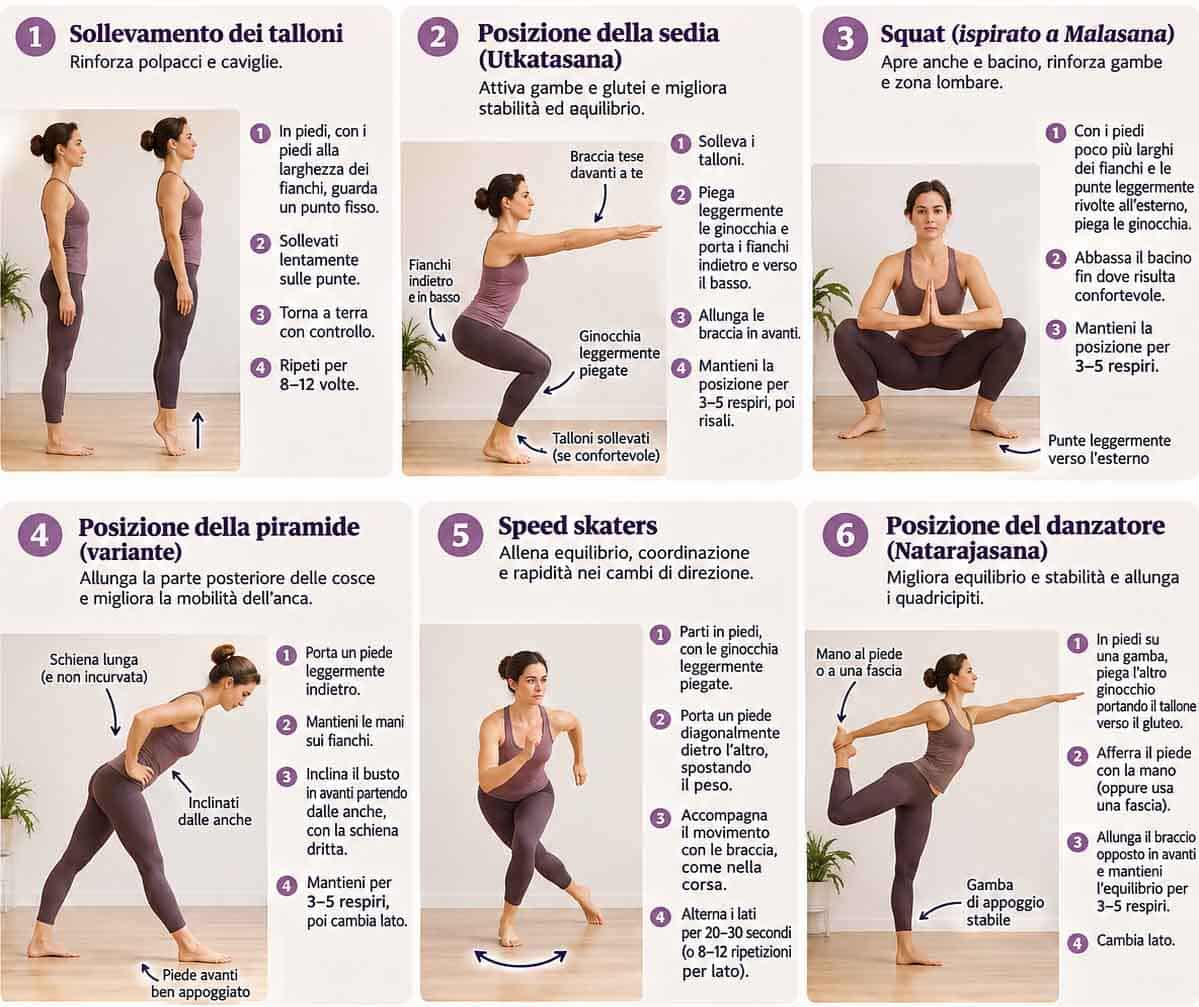
From the shoulders we move on to the ankles, because a bumpy pavement, perhaps accompanied by a jerk, is enough to lose balance. The first exercise consists of lifting the heels. You remain standing, with your gaze turned towards a fixed point, and slowly rise onto your toes before returning to the ground. The movement is repeated a few times, trying to keep the ankles aligned.
The next variation adds the chair position, or Utkatasana. Lift your heels, bend your knees slightly and bring your hips back and down, stretching your arms forward. You hold the position for a few breaths before going back up, leaning on a stable support if necessary.
Then comes the yoga pose-inspired squat Malasana. With your feet slightly wider than your hips and your toes turned slightly outward, bend your knees and lower your pelvis as far as is comfortable. Those who have knee or hip problems can choose a shallower descent.
The work continues with a variation of the pyramid position, dedicated above all to the back part of the thighs. Place one foot slightly back, keep your hands on your hips and tilt your torso forward starting from the hips, avoiding forcibly rounding your back. After a few breaths you change sides. To practice changes of direction, introduce the speed skaterssmall lateral movements in which one foot is brought diagonally behind the other, while the arms accompany the movement. You alternate sides at a speed appropriate to your abilities.
Finally, a variation of the dancer’s position, or Natarajasanacombines balance and stretching of the quadriceps. Standing on one leg, bend the other knee, bringing the heel towards the buttock. A band passed around the foot can help maintain the position, while those who need more stability can lean on a wall with one hand. There is no need to turn these movements into an endurance test. Balance is trained progressively, without seeking the most difficult position at all costs.
@AI generated
Hands and back also need attention
Anyone who accompanies a dog every day knows well the sensation of having fingers contracted around the leash, especially when the animal tends to pull. To mobilize your hands and wrists, interlace your fingers in front of your chest and rotate your palms outwards, slowly extending your arms. If comfortable, they can also be raised above your head. A concrete precaution concerns the way to hold the leash. A study published on hand and wrist injuries suggests avoiding wrapping it around your fingers or hand: a tug could cause significant trauma.
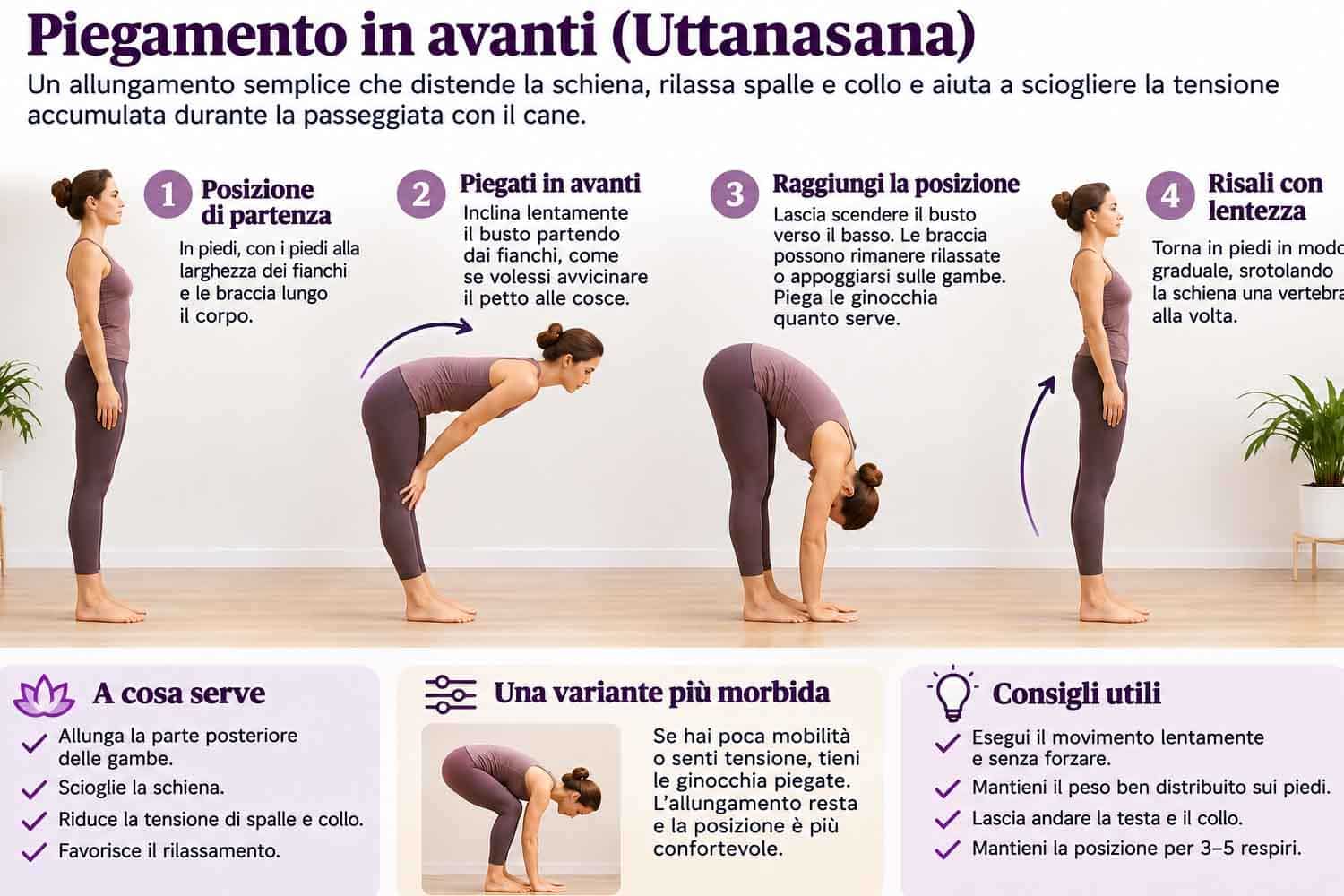
To conclude the active part of the routine, you perform a forward bend from a standing position, or Uttanasana. With your feet hip-width apart, slowly tilt your torso downward, bending your knees as necessary. The arms can remain relaxed and the head follows the movement without being forced. The ascent must be equally gradual.
@AI generated
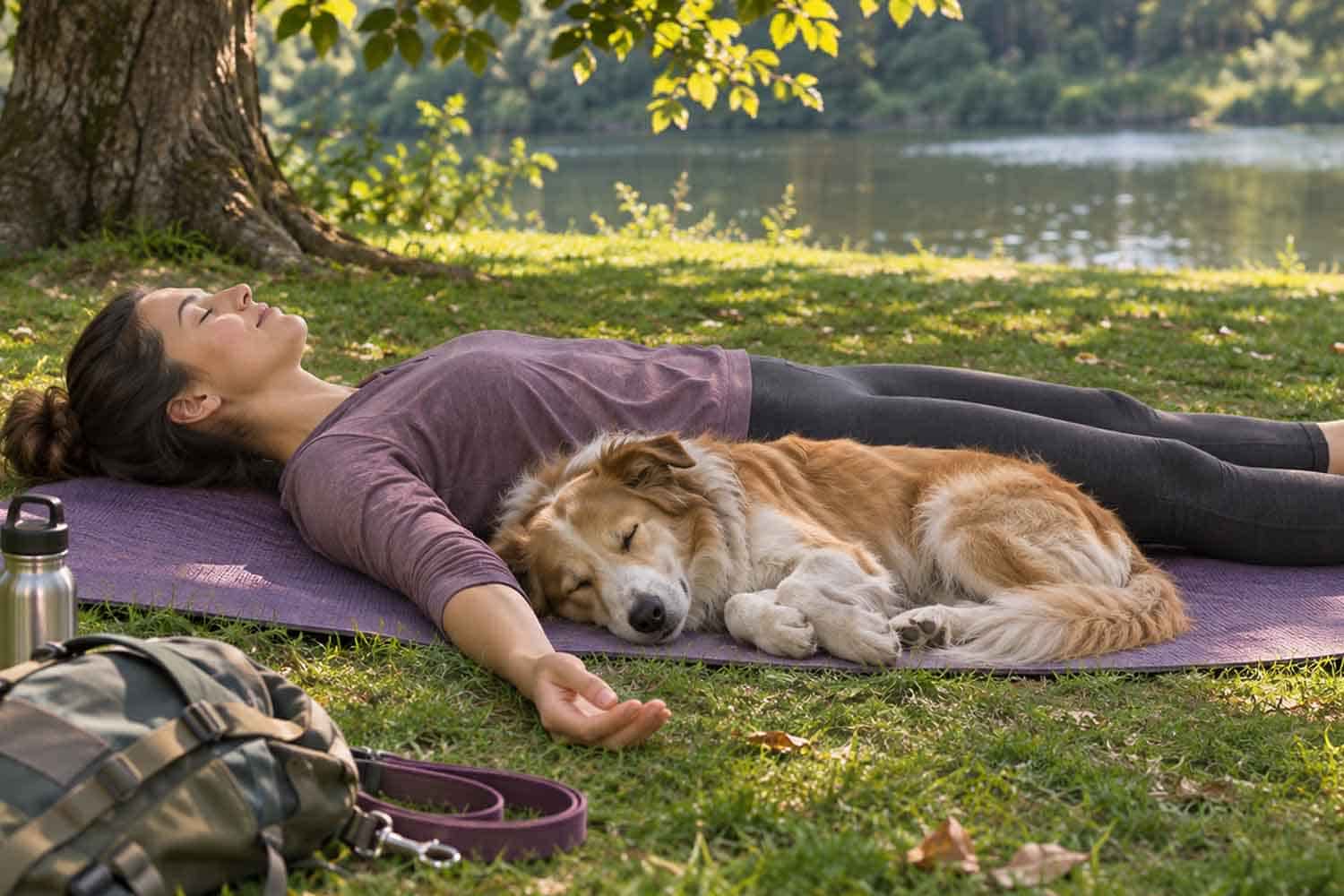
After the walk, the sequence also includes a few minutes of Savasanathe relaxation position lying on your back, with your arms resting comfortably and breathing naturally. The dog can participate in the rest time. Provided that he has finished his activities and decided to grant a truce.
@AI generated
Can ten minutes of yoga really prevent injuries?
Working on mobility and balance can be useful in general physical preparation, but this particular sequence of exercises has not been validated by clinical studies on the prevention of injuries during dog walking. The American Heart Association recommends performing stretches slowly, painlessly, and preferably with muscles already warmed up. For this reason, before starting, it is advisable to dedicate a few minutes to light movements. More intense static stretches can be reserved for the end of the activity.
The routine can be adapted to individual abilities, reducing the range of movements or choosing only certain positions. If you have joint problems, balance difficulties or persistent pain, it is best to consult a healthcare professional before trying it.
For those who take the dog out every day, dedicating a few minutes to the shoulders, back and legs can become a useful habit to combine with walks. Then you have to go out anyway. And remember that, no matter how much you train, a squirrel always retains a certain power over the day’s program.
