
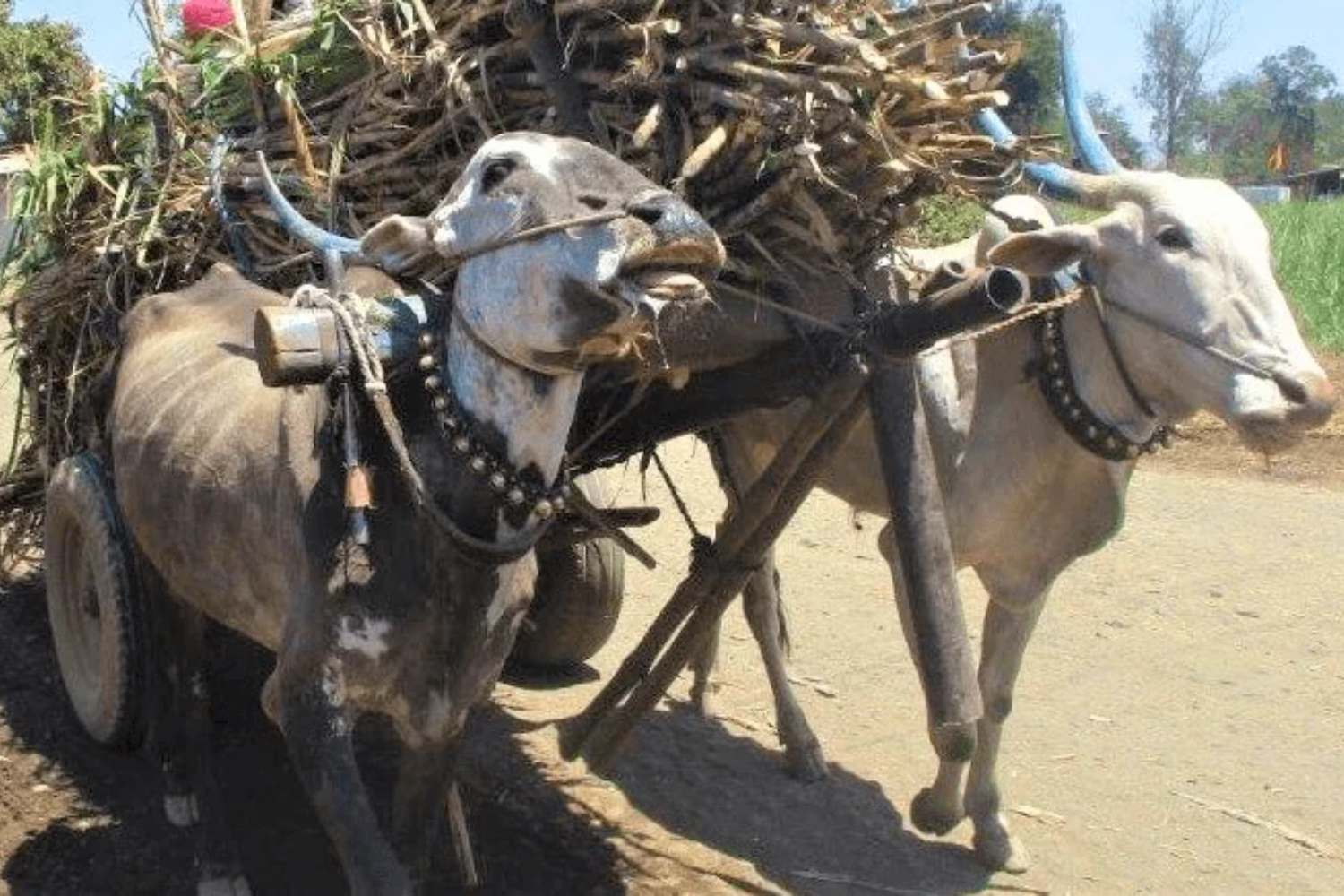
A tough legal and media battle pits PETA and PepsiCo over the origin of the sugar used in the company’s drinks. According to complaints from the animal rights organisation, bottling partners and suppliers active in the Indian state of Maharashtra – as well as entities located in Asia, South America and North Africa – resort to brutal methods on draft animals.
According to activists, the bulls would be forced to work from dawn until after dusk, beaten with sticks and whips while pulling carts illegally overloaded with up to 4 tons of sugarcane. Reports describe animals suffering from swollen joints, severe lameness, painful abscesses, muscle tears, infections from thick cords threaded through their nostrils, and bloody wounds from thorn devices attached to their necks or yokes when they turn their heads, eventually dying of exhaustion.
View this post on Instagram
For PETA, these conditions contradict Indian laws and the company’s own Global Animal Welfare Policy, as denounced by founder Ingrid Newkirk:
Bulls are sentient beings who are exploited to death for the sugar in Pepsi sodas, and PepsiCo has the power to end this suffering right now. PETA calls on PepsiCo to respect the animal welfare policies it advertises to shareholders and the public, and to engage in mechanization of its partners and supply chain that will spare bulls a life of misery and abuse.
The lawsuit in New York and the protests between Purchase and India
After submitting an initial resolution on November 18, 2025 on behalf of a shareholder – also supported by over 50,000 signatories – aimed at obtaining an independent report on the supply chain, PETA accused company leaders of attempting to exclude the proposal from the annual meeting in violation of Rule 14a-8 of the Exchange Act.
PETA Foundation lawyers then filed a lawsuit in the U.S. District Court for the Southern District of New York on February 20, 2026 against PepsiCo, Inc., as explained by General Counsel Asher Smith:
If PepsiCo doesn’t want to face questions about whether it’s adhering to the animal welfare policy it promotes, there’s a simple solution: It can make sure its products aren’t produced on the backs of mistreated bulls. PETA is pushing PepsiCo to produce a simple report on how it is, or isn’t, addressing cruelty in its supply chain.
The legal action led to a vote at the meeting on May 6, 2026 at the headquarters in Purchase, New York – a day marked by the arrest of 6 activists (5 protesters dressed as bulls with their shoes sealed in concrete blocks) – and then to the billboards installed by PETA India on May 29, 2026 in Gurgaon (Southern Peripheral Road near Vatika Chowk) and in Hyderabad (Outer Ring Road near PepsiCo Global Business Services) with the slogan
Stop sugar cruelty to animals.
View this post on Instagram
The new resolution of November 19, 2026 after 87 million votes
At the annual meeting at the beginning of the year, the shareholders’ proposal had received 87,251,346 votes in favour, but according to the animal rights organisation, the company has not taken any concrete action. For this reason, on November 19, 2026, PETA once again filed a shareholder resolution on behalf of two PepsiCo investors, once again calling for greater transparency on animal welfare throughout the supply chain.
To underline the weight of the result obtained and the urgency of a change of direction, the president of PETA, Tracy Reiman, intervened:
Ignoring more than 87 million votes calling for greater transparency is both a failure of PepsiCo to address serious animal welfare issues in its supply chain and a slap in the face to its shareholders. PETA calls on PepsiCo to modernize and spare bulls a lifetime of suffering by switching to mechanization that prevents suffering and is more efficient and cost-effective for workers.
View this post on Instagram
The eco-tractor alternative proposed by Animal Rahat
At the center of PETA’s requests remains the mandatory adoption of mechanization, a transformation already started in 2011 by the Indian charity Animal Rahat. Thanks to his Sugarcane Industry Mechanization Project, a third of Maharashtra’s sugar production has already been mechanized and over 100,000 bulls have been retired from working in the fields. In fact, a single eco-tractor can transport from 8 to 18 tons of sugar cane per single trip, replacing more animals and guaranteeing farm owners greater operational efficiency and better earning opportunities.
