
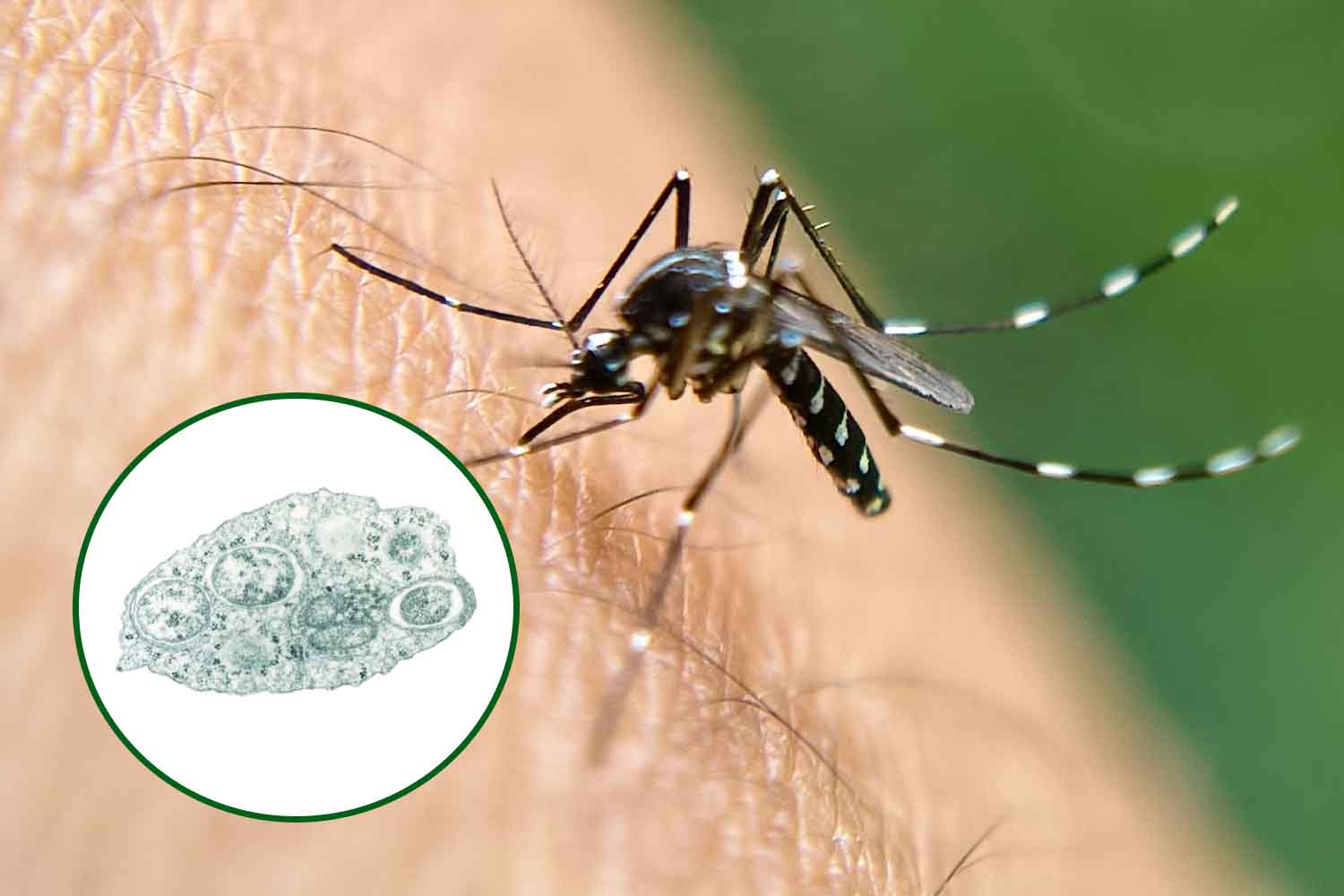
To combat diseases transmitted by mosquitoes, in Brazil they have seen fit to release more mosquitoes. And it worked. These are not the genetically modified ones released by the Bill and Melissa Gates Foundation. In Belo Horizonte, a city of around three million inhabitants, the release of specimens carrying a bacterium called Wolbachia reduced dengue infections by 68.5% and chikungunya infections by 73.3% among children involved in a four-year trial.
All this while Brazil faced, in 2024, the worst dengue epidemic ever recorded in the country. The results of the research, called EVITA Dengue, were presented on November 21, 2026 at the annual congress of the American Society of Tropical Medicine and Hygiene, in the United States, and represent an important step forward in the biological fight against insect-borne diseases.
A natural bacterium to fight dengue
Wolbachia is a fairly common bacterium in nature: it lives in the cells of about half of insect species, including butterflies, moths, beetles and fruit flies. Among the species that do not normally host it, however, there is theAedes aegypti, the mosquito most responsible for the transmission of dengue in tropical regions.
Researchers at the World Mosquito Program exploited a particular characteristic of this bacterium: once introduced into the mosquito’s organism, Wolbachia hinders the multiplication of viruses, making the insect less capable of transmitting them through bites.
The most interesting part comes with egg laying. Female carriers of the bacterium pass it on to their offspring, thus allowing Wolbachia to spread among the local population. As generations pass, an ever-increasing proportion of mosquitoes can acquire this characteristic without the need to continue releasing new ones. No genetic modification of insects: a biological mechanism already present in nature is exploited. Mosquitoes continue to live and reproduce, while their ability to transmit diseases to humans decreases.
The Brazilian experiment involved over 5,700 children
For the EVITA Dengue trial, researchers divided Belo Horizonte into 58 areas identified around primary schools. In 29, mosquitoes carrying Wolbachia were released, while in the other 29 only the usual insect control measures were maintained, also applied in the areas affected by the release.
5,757 children aged between 6 and 11 years old at the time of enrollment participated in the trial. Through blood tests, the researchers were also able to identify infections that had not caused obvious symptoms. The mosquitoes, carrying a strain of the bacterium called wMel and adapted to local conditions, were released between January 2021 and May 2022. Wolbachia continued to circulate in the insect population for over three years.
As explained by Yale University, among the institutes involved in the research, the intervention maintained its effectiveness even during the great epidemic of 2024. For the Zika virus, however, the infections recorded were too few to measure the effectiveness of the method. The Brazilian result adds to that obtained a few years earlier in Yogyakarta, Indonesia, where a trial published in 2021 in the New England Journal of Medicine had documented a 77.1% reduction in symptomatic dengue cases.
The possibility of containing the spread of these diseases through a lasting biological intervention could also contribute to reducing the use of insecticides, with environmental as well as health benefits.
Dengue has also arrived in Italy, but with another mosquito
Brazilian research also closely affects our country. According to data from the Istituto Superiore di Sanità, from January 1st to November 10th 2026, 381 cases of dengue were confirmed in Italy, 76 of which were indigenous. In other words, 76 people contracted the infection directly on Italian territory.
In 2024, the largest dengue outbreak ever observed in continental Europe occurred in Italy, with almost 300 indigenous cases.
Temperatures favorable to the proliferation of insects and international movements of people facilitate the circulation of viruses once associated mainly with tropical regions. With one difference compared to Brazil: in our latitudes the main vector of dengue is Aedes albopictus, or the well-known tiger mosquito.
This is a different species from the one used in the Brazilian experiment, which also already naturally hosts Wolbachia. A possible use of the same strategy in Italy would therefore require specific research.
How to protect ourselves from mosquitoes without abusing insecticides
A good part of prevention starts from balconies, terraces and gardens. In fact, the tiger mosquito only needs a rather modest amount of water to reproduce: even that which is forgotten for a few days in a saucer. Among the recommendations of the Istituto Superiore di Sanità include the systematic elimination of stagnant water, emptying buckets and watering cans, frequent replacement of water in pet bowls and covering containers intended for collecting rainwater.
To protect yourself from bites it is advisable to use mosquito nets, wear light clothing that covers arms and legs and, when necessary, apply repellents following the instructions on the packages. Also pay attention to daylight hours: the tiger mosquito is particularly active during the day. Meanwhile, the Brazilian experiment offers us an interesting perspective for the future of health prevention. In Belo Horizonte the mosquito release ended in May 2022. During the 2024 epidemic, Wolbachia was still at work.
