
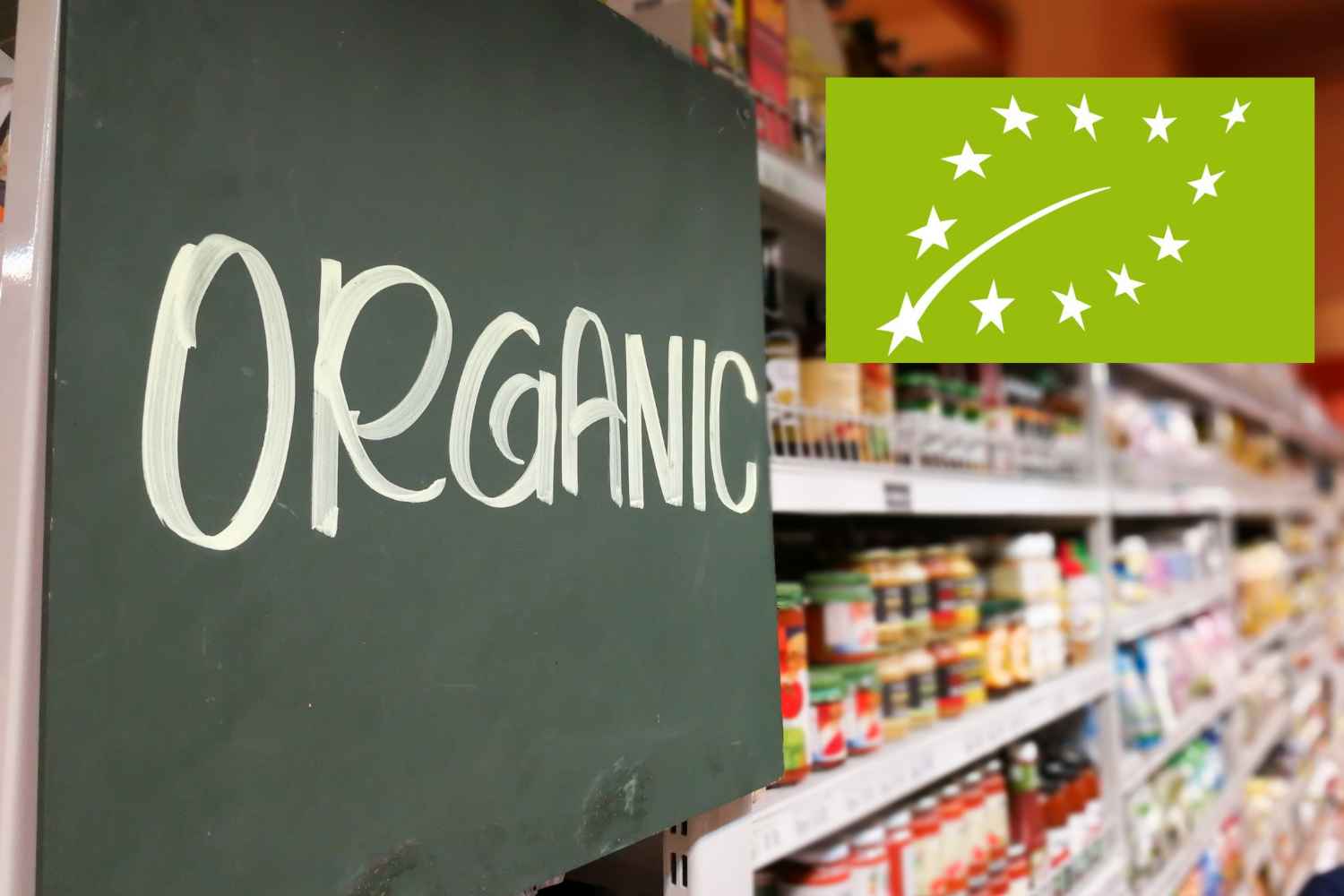
An important novelty for European organic, and also for those who choose what to put in their cart every day. The European Parliament has approved new rules for the production, labeling and marketing of organic foods, introducing more rigorous conditions for products arriving from non-EU countries and wanting to display the European organic logo. The objective is to protect consumer confidence, but also to ensure fairer conditions of competition between European farmers and those of third countries.
The issue is anything but secondary. Until now, in fact, some imported organic products could enter the European market on the basis of the recognition of equivalence of the rules of the country of origin. This meant that their production and control systems were considered sufficiently similar to the European ones, but not necessarily identical and, above all, not required to comply with every single requirement foreseen in the Union.
A situation that inevitably raised questions about the real comparability of the guarantees offered to consumers and the equal conditions for those who produce organically in Europe, including Italy.
European organic logo, what changes for imported products
The most significant innovation concerns the famous green logo with the leaf made up of white stars, the organic symbol of the European Union that we find on the packaging of certified foods.
With the new provisions, products coming from non-EU countries whose organic production systems are recognized as equivalent to European ones will be able to continue to be marketed in the Union with the organic wording and, when applicable, with the logo of the country of origin. To also use the EU organic logo, however, recognition of equivalence alone will no longer be sufficient: they will have to comply with further specific production and control requirements established by the European Union.
This is the fundamental difference. A product can be considered organic according to the rules of its own country and meet the requirements to be sold as such in Europe, but this does not automatically mean that it can boast the European organic label. To display that symbol it will have to offer additional guarantees, in line with some principles and criteria that characterize the EU production model, for example regarding soil management, animal welfare and transformation methods.
The distinction serves to protect the meaning of a label which represents a precise guarantee for consumers. The European logo should not be perceived as a simple graphic symbol that generically identifies an organic product, but as certification of compliance with certain standards. If the rules applied to those producing in the Union are more stringent than those required of those exporting from third countries, it is important that this difference is not hidden behind the same brand.
The agreement also intervenes on a derogation initially proposed by the European Commission, which would have allowed the use of the EU organic logo on products containing less than 5% of ingredients coming from third countries that do not comply with the additional requirements required for the use of Euroleaf. The Council and Parliament have decided to eliminate this possibility: there will therefore be no minimum threshold below which the presence of non-compliant ingredients can be considered irrelevant for the purposes of using the European brand.
A question of competition, as well as transparency
The reform also has particular importance for Italian and European farmers. Those who produce organic products in the EU must comply with community regulations, undergo the required controls and bear the costs associated with certification and production obligations. Allowing products made according to only equivalent rules to use the same logo, without further guarantees, would risk creating a competitive imbalance.
In other words, a European manufacturer could be required to comply with more demanding requirements than a foreign competitor, despite finding itself on the market with products bearing the same symbol. A situation that does not only concern commercial correctness, but also the recognition of the work and investments of those who choose to cultivate and breed according to European standards.
The European Commission, in the revision proposal, recalled the need to guarantee fair competition between products that fully comply with EU standards and those that follow systems recognized as equivalent. The revision approved by Parliament also aims to strengthen this protection, while safeguarding consumer confidence in the organic label.
More space for small producers, less bureaucracy for certification
The revision also introduces some simplifications for small businesses that sell bulk organic products, such as fruit and vegetables, directly to consumers. For these entities, the possibility of being exempt from certification procedures is already foreseen, but until now the limits were rather restrictive.
With the new rules, the annual sales volume threshold will rise from 5,000 to 10,000 kg, while the turnover threshold will go from 20,000 to 40,000 euros. The two conditions must be respected in order to benefit from the exemption. The turnover limit will be calculated on the annual average of the last five years. The agreement also provides, under certain conditions, to extend this possibility to small online retailers selling pre-packaged organic products.
The intent is to lighten the administrative burdens for small businesses, without giving up the guarantees necessary to maintain trust in organic certification.
The agreement also provides temporary flexibility for the use of non-organic protein feed for poultry and pigs, as well as for juvenile fish used in aquaculture. These are specific exceptions, which will be progressively eliminated as part of the transition to the new provisions.
To avoid problems in the transition phase, products already labeled according to the rules currently in force will be able to continue to be marketed until stocks are exhausted. The agreement also includes transitional provisions to ensure continuity and legal certainty for imported organic products and international trade while the new rules come into force.
When will the new rules come into force?
The European Parliament gave the final green light to the text on 24 November 2026, with 486 votes in favour, 39 against and 140 abstentions. The agreement was reached on 20 October by the negotiators of the Parliament and the EU Council, but the process is not yet fully concluded, as formal approval from the Council is missing.
After this step, the regulation will have to be published in the Official Journal of the European Union and will enter into force the day following its publication. It is therefore not yet possible to indicate a certain date of application of the new provisions.
The reform also comes at an important time for international organic trade: the recognition of equivalence of the production systems of 11 non-EU countries, including Argentina, Canada, New Zealand and the United States, would have expired on 31 December 2026. The agreement extends its validity until 31 December 2036, avoiding interruptions in trade and giving greater certainty to operators.
For those who believe in organic farming and also choose it to support an agricultural model that is more attentive to the environment and animal welfare, this change therefore represents a significant step. For a label to truly guide purchasing choices, it must first of all be clear and reliable and the European organic label must be able to guarantee recognizable standards, without creating disparities between those who are called upon to respect them.
