
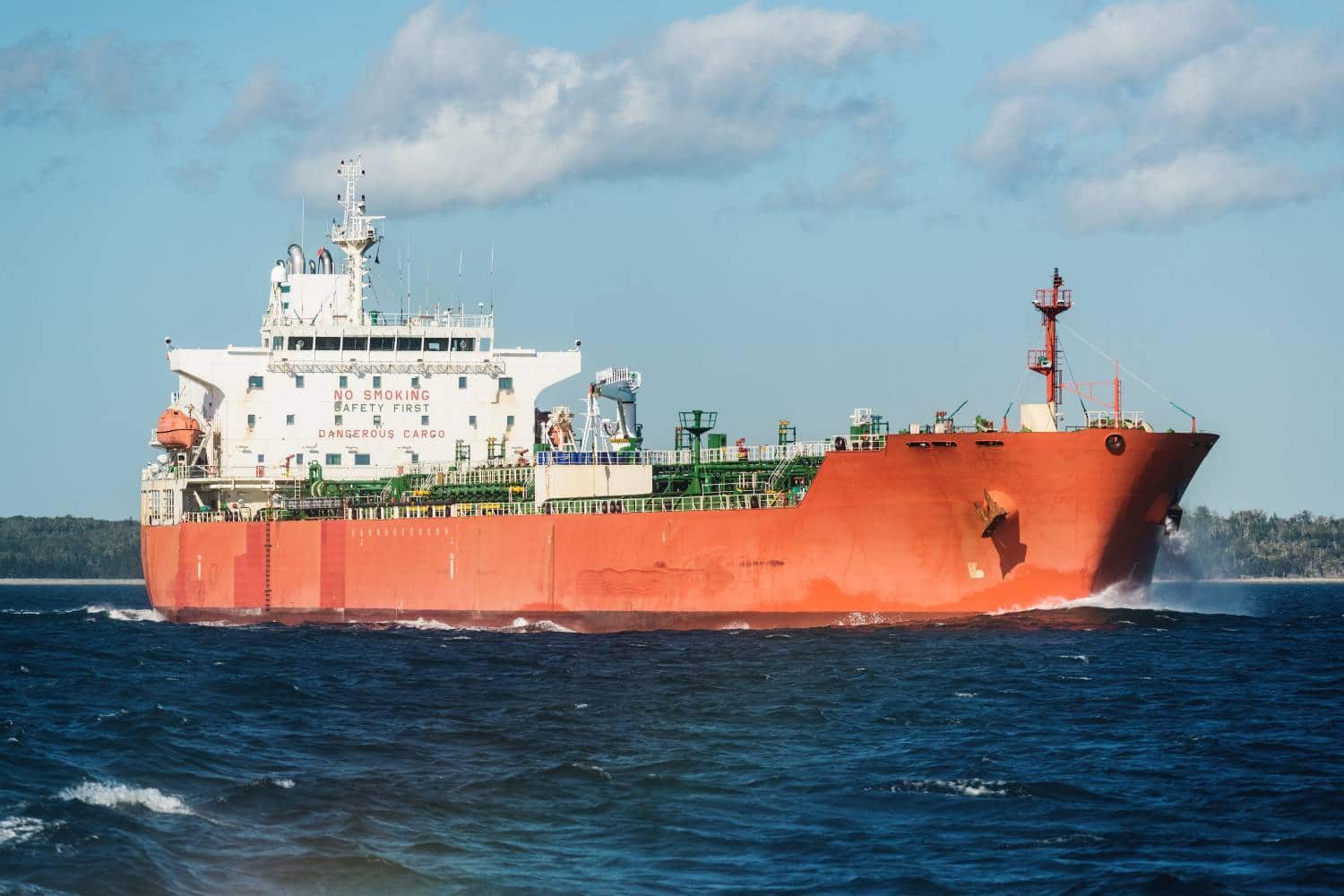
A ship loaded with thousands of tons of diesel has sunk in the Mediterranean waters, off the coast of the Balearic Islands. It happened on the night of Thursday 26 November 2026, about 25 nautical miles north-east of Ibiza. The death toll is one sailor and six minor injuries, while concern is growing about the environmental consequences of the shipwreck: yet another marine disaster is feared. The vessel, the Med Emre, is a 120 meter long tanker used for the transport of chemical products, flying the Maltese flag, which left the Spanish port of Algeciras and headed for Barcelona. According to what was communicated by the Balearic Government and also reported by the Reuters agency, the tanker had up to 7,000 tonnes of diesel on board. The quantity actually present on board must be confirmed, as well as the dispersion of the fuel at sea.
What happened off the coast of Ibiza
The alarm would have been triggered around 1.20 am, when the maritime captain of Ibiza informed the emergency services of the accident. According to initial reconstructions, the ship took on water and sank. The causes of the accident have not yet been clarified. From what we understand, there were 17 crew members on board, all recovered thanks to a rescue operation involving three helicopters from Palma de Mallorca, Valencia and Tarragona, as well as several rescue boats and merchant ships present in the area. Unfortunately, for one of the sailors, there was nothing that could be done: his death was confirmed at the Can Misses hospital in Ibiza. Six other crew members were hospitalized with minor injuries and symptoms mainly due to hypothermia. According to a more recent reconstruction by Europa Press, however, the call for help was launched already on the evening of November 25, with the shipwreck occurring around 11pm. The exact chronology of the dramatic accident is still being defined.
The plan against maritime pollution has been activated
Following the shipwreck, the General Directorate of the Spanish Merchant Navy activated the National Emergency Plan for Maritime Pollution at level 2, the second highest expected. At the same time, the Balearic Government activated the territorial civil protection plan (PLATERBAL) at level 0. The Clara Campoamor, a vessel from the Salvamento Marítimo fleet specialized in interventions against oil spills, was sent to the site of the shipwreck. An aerial reconnaissance is also planned to identify any patches of fuel on the sea surface and evaluate their extent.
According to an update released at 8.56am by Radio Ibiza, broadcaster of the Cadena SER group, during the first checks no diesel spills were detected in the area of the shipwreck. Encouraging news, which however does not exclude the risk of subsequent leaks from the wreck.
Emergències activate the PLATERBAL at level 0 for the enhancement of a vaixell gasoil carregat at 25 thousand of Eivissa
7 of the 17 embarkation passengers have been transported to Eivissa; a d’ells has died
The Director General of Emergències and the Interior of the @goib is… pic.twitter.com/ZBNAI8yf2r
— Emergències 112 Illes Balears (@Emergencies_112) November 26, 2026
A treasure of biodiversity, the habitat of dolphins and sea turtles, is at risk
Of particular concern is the ecological value of the waters surrounding the Balearics. Sea turtles, dolphins and numerous species of seabirds live in this part of the Mediterranean, including the Balearic shearwater, one of the most threatened seabirds in Europe. Furthermore, the seabed of the archipelago is home to extensive meadows of Posidonia oceanica, a marine plant endemic to the Mediterranean, fundamental for the conservation of biodiversity, the absorption of carbon and the protection of the coasts from erosion. Diesel, although lighter and less persistent than other petroleum products, is by no means harmless. Its toxic components can contaminate the water column, damage marine organisms and compromise coastal ecosystems.
The extent of any consequences will depend on several factors, including the condition of the wreck, the amount of fuel possibly lost, sea currents and weather conditions.
The precedent of the Prestige disaster
The accident brings to mind one of the most serious environmental catastrophes in Spanish history: that of the Prestige oil tanker, which sank in November 2002 off the coast of Galicia. On that occasion, tens of thousands of tons of heavy fuel spilled into the Atlantic, contaminating hundreds of beaches along the Spanish and French coasts. Let’s make it clear that for the moment there are no elements to talk about an ecological catastrophe of similar proportions. However, it remains yet another accident that highlights the environmental risks associated with the maritime transport of fossil fuels. In the next few hours it will be essential to understand whether the tanks of the Med Emre survived the shipwreck or whether the diesel is already contaminating the waters of the Mediterranean.
