
The Asian hornet (Vespa velutina), which accidentally arrived in Europe in the early 2000s, represents a serious threat to Italian ecosystems. In particular, honey bees, essential for pollination, are the main victims of this predator. Vespa velutina attacks hives with ruthless precision, exterminating entire colonies and creating an imbalance in the delicate natural balance.
In Italy, especially in the northern and central regions, the expansion of the Asian hornet has become a real emergency. With a hunting ability that extends up to 800 meters from the nest, this invader destroys not only bees, but also other beneficial insects, worsening the environmental crisis.
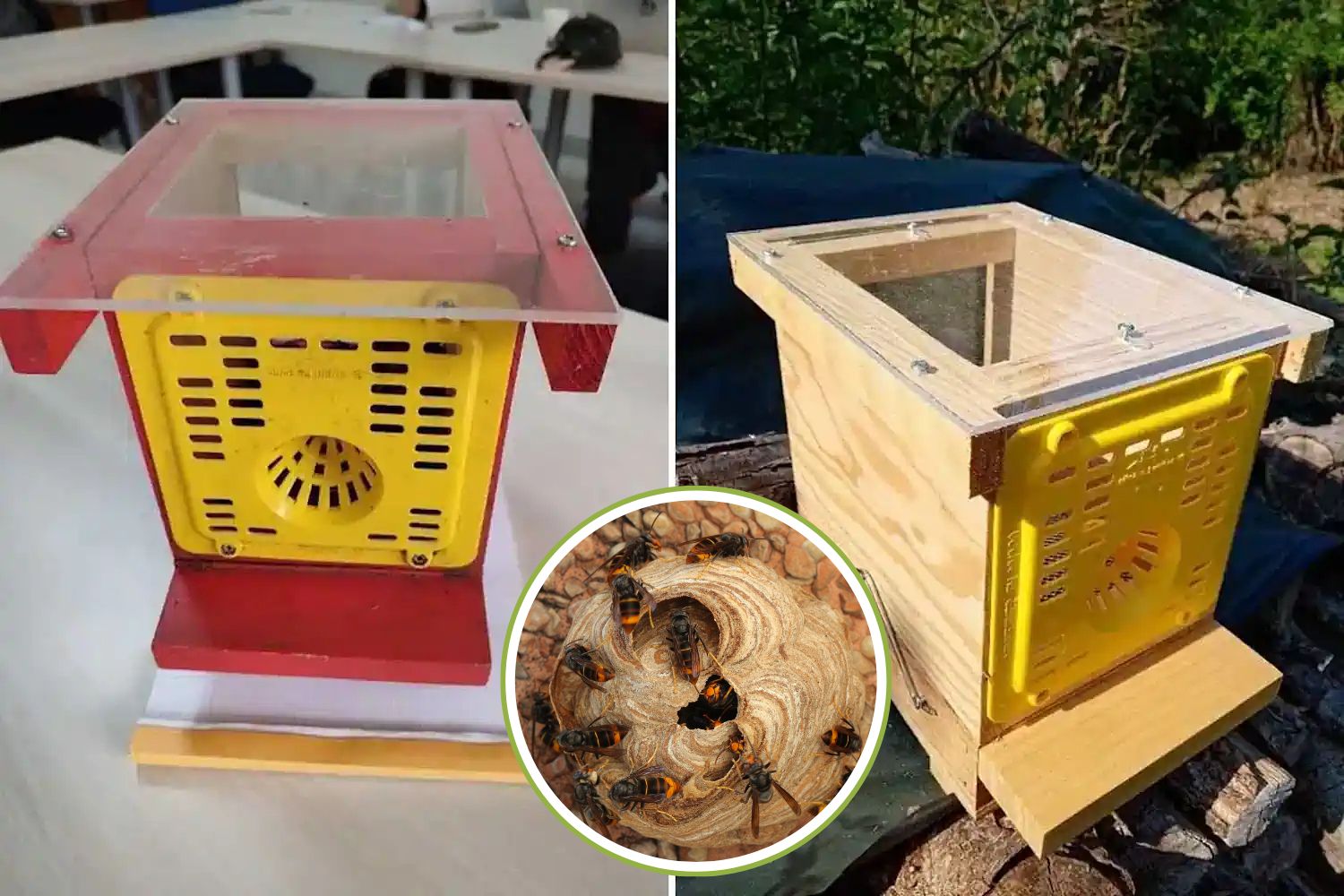
Designed and produced in France, the Robida trap represents an effective and environmentally friendly solution to combat the Asian hornet. The device has already been successfully adopted by groups of French beekeepers and could also be the ideal answer for the Italian market.
Because the Robida trap is unique
- An irresistible bait for the Asian hornet: using a mix of beer, grenadine syrup and red wine, the trap attracts only Asian hornets, leaving other insects undisturbed.
- A selective design: Unlike traditional homemade traps (such as bottle traps), the Robida trap is designed to capture only Asian hornets. Beneficial insects, such as mini-hymenoptera and bumblebees, can easily escape.
- A sustainable solution: Made from recycled materials, including wood and plexiglass, the trap is also an environmentally friendly choice.
In France, Robida traps have been sold in excess 5,400 examples in 2024demonstrating their effectiveness in protecting beehives and biodiversity.
An inclusive production and an example of social innovation
In addition to its ecological function, the Robida trap is a virtuous example of social and solidarity economy. In France, production is entrusted to an Esat center (Etablissement et Service d’Aide par le Travail), where 60 adults with disabilities work. These workers actively participate in the creation of traps, but also of feeders, artificial nests and hives.
This model could also be replicated in Italy, where social cooperatives and associations could take on a similar role in the production and distribution of traps. An initiative that not only combats the Asian hornet, but also promotes work inclusion.
Italian beekeepers have been fighting Asian hornets for years with tools that are often ineffective and harmful to biodiversity. Bottle traps, for example, indiscriminately capture any insect, including beneficial ones.
The Robida trap represents one true innovation: selective, ecological and specifically designed to stop the expansion of the Asian hornet. Available at the price of €39in France it is already distributed through health defense groups (GDS), and the same distribution model could be implemented in Italy.
Bees are responsible for pollinating more than 70% of the world’s food crops. Protecting them means guaranteeing food security and preserving biodiversity. With the Robida trap, it is possible to effectively combat the Asian hornet, protecting bees and promoting sustainable and inclusive solutions.
