
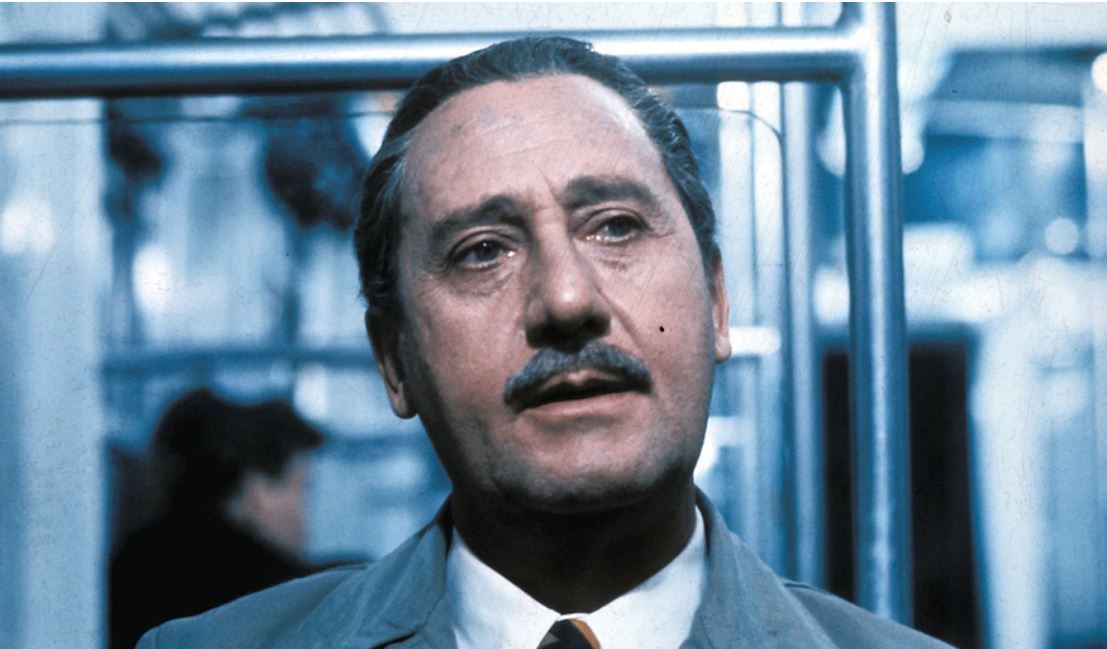
22 years have passed without the national Albertone. On February 24, 2003 Alberto Sordi left us, an extraordinary artist who knew how to embody the Italian people, showing their virtues and defects. It is impossible to forget his laughter and the hilarious scenes – but often by the bitter aftertaste – which he gave us in film masterpieces such as “The Marquis del Grillo”, “An American in Rome” and “I Vitelloni”.
Born from humble origins in the popular neighborhood of Trastevere, He found his great vocation in acting, which became a redemption weapon for him. On him they wanted to bet directors who later became internationally renowned such as Federico Fellini and Dino Risi, who saw a rare talent. Behind the mask of the medium, good -natured and sometimes opportunistic Italian, a deeply critical man was hiding towards the consumption society that was transforming post -war Italy. In fact, Alberto Sordi cultivated a strong aversion to consumerism, an aspect of his personality rarely explored but which has significantly influenced both his private life and his artistic career.
A story of redemption
The history of the national Albertone was not without obstacles. Indeed, that of Alberto Sordi was a career born from a failure. To launch into the world of entertainment, he abandoned his studies at 16, enrolling in the Academy of Filodrammatici in Milan, from which, however, he will be expelled precisely for the strong Roman inflection. That refusal could have brought him down and push him to give up his dream, but he did not do it. Tornate in Rome, he was chosen as the appearance of the film Colossal “Scipio the African” directed by Carmine Gallone, who was then presented at the Venice exhibition in 1937. The rest is known: a very long, dotted with successes and about 200 films and numerous prizes, including 7 David di Donatello, 4 silver tapes and a Golden lion.
Through his iconic characters, Alberto Sordi managed to perfectly unmask cowardice, laziness, indolence and qualunquismo, snatching different laughter from his loyal audience but also pushing him to reflect.
Alberto Sordi and hatred towards consumerism
Today Alberto Sordi we all know him for his cinematographic successes. Yet, there is a less known side than this extraordinary artist on which today – on the occasion of the 20th anniversary of his disappearance – we want to shed light.
Deaf was endowed with great spontaneity, critical spirit and humanity. The comedy was his great passion, but there is one thing that really hated: The consumerism that characterized the society of its time.
Everything is different from forty, fifty years ago: the way of life has changed the same behavior. – said the Roman actor during an interview made by Enzo Biagi in 1996 – Today we live following the dictates of this unbridled consumerism that television proposes. Everyone believes they have to live that way there. This no longer allows you to make reflections and to comment: “Well!”, In the face of what is happening.
And speaking of consumerism, the final monologue of the film is very in line with his thoughts “As long as there is war there is hope”directed by Sordi himself, who tells the events of a arms merchant who is enriched with the damage of others, driven by the continuous requests of money from his family who wanted to live in luxury.
I can also change the profession gaining 300,000 or 400,000 lire per month, a figure with which a family can live decently if you think that a piece of the world has a per capita income of 30 thousand lire a year, but not like you, not as we have lived to us to dear wife, dear guys, and you dear uncle who travel only on the jaguar and you dear mother -in -law who at 70 years of age you make you a removable denture of 3 and a half million lire … – he says The protagonist Pietro, addressing his family – because you see wars do not only make them weapons and travelers who sell them, even people like you families like yours, that I want, I want and never satisfy themselves: The villas, the machines, the motorcycles, the holidays, the horse the anellini the bracelets the fur and all the cocks that they are frequent, they cost a lot! And to get them, someone you have to plunder, that’s why wars are done!.
In that scene there is a very powerful message: a warning against the horrors of the war and a criticism of the desire to accumulate assets, an invitation to essentiality. Who knows what Alberto Sordi would say today if he saw how far humanity has pushed with wars and consumerism …
