
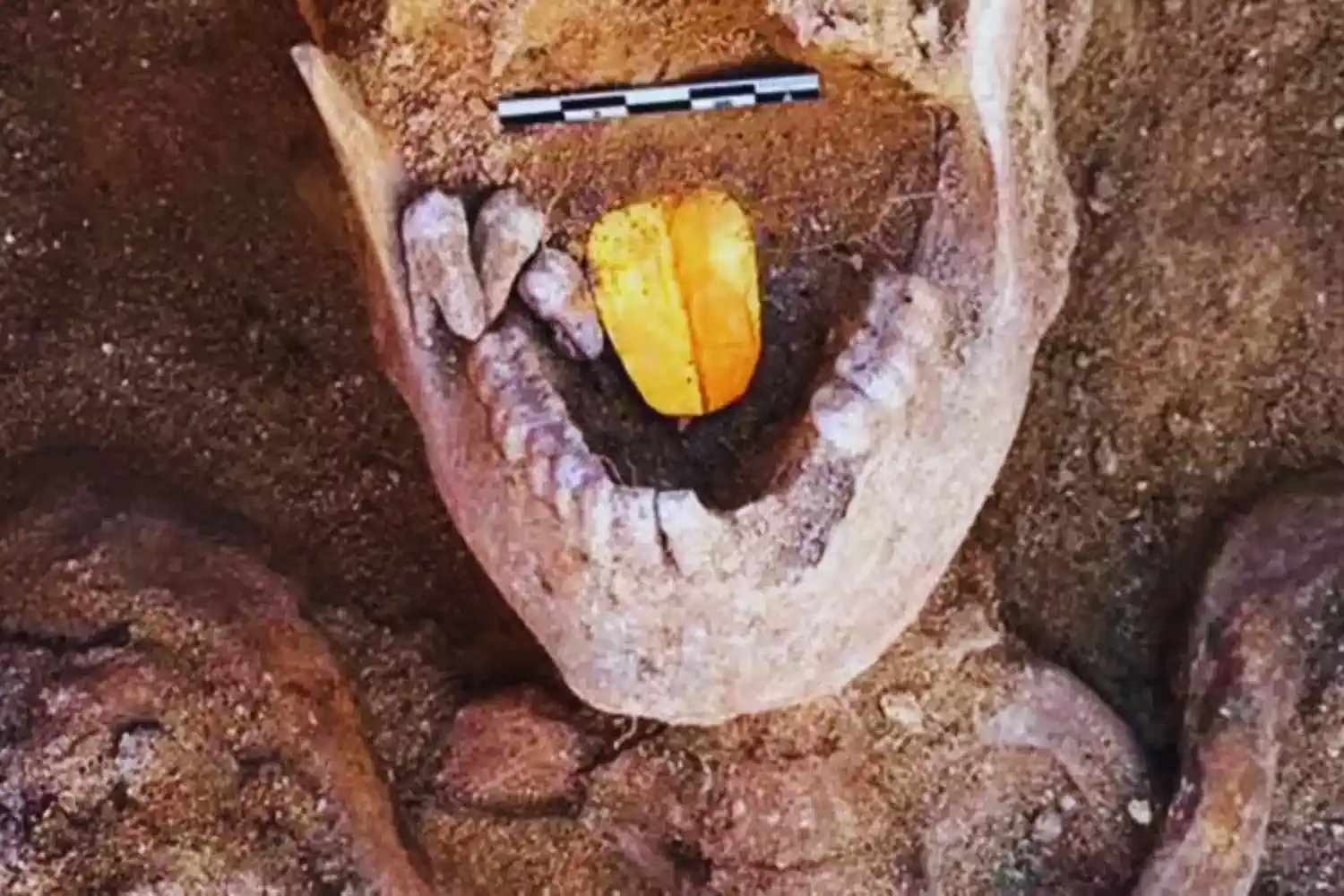
Archaeologists engaged in the excavations of Al-Bahansa, in the heart of Egypt, have brought to light a find that immediately caught the attention of the international scientific community: thirteen golden tongues and numerous golden nails inserted in burials dating back to the Greco-Roman period. The site, surrounded for centuries by sand and silence, has yielded mummies, sarcophagi and precious fragments, opening a concrete glimpse into the complexity of the funerary beliefs of the time.
Because the Egyptians used gold to accompany the deceased into the afterlife
For the ancient Egyptians, gold was not just a precious metal: it was the immortal substance of the gods, the incorruptible matter directly associated with their divine nature. Considered eternal and indestructible, it became a powerful amulet to protect the deceased and preserve their spiritual essence in the afterlife.
Jennifer Houser Wegner, curator of the Penn Museum in Philadelphia, recalls how this material was a symbol of “eternal brilliance”a fundamental attribute to ensure continuity of existence after death. The golden tongues found in Al-Bahansa were born precisely from this belief: they had to allow the deceased to dialogue with the gods, in particular with Osirisruler of the afterlife and guarantor of the passage to eternity.
The scholars’ surprise was evident. Dominican archaeologist Kathleen Martinez underlined how rare these finds are and how much they can broaden knowledge about a period, the Greco-Roman period in Egypt, of which many gaps still remain. In fact, the discovered tombs seem to hold precious secrets destined to rewrite some details of the funerary practices of the time.
Golden nails
If gold tongues are relatively well known in the Egyptian funerary context, i gold nails they are a much more unusual detail. According to the Egyptian Ministry of Tourism and Antiquities, these small metallic elements covered the fingers and toes of the mummies, functioning as a sort of magical armor against hostile forces from the afterlife.
The New York Times confirmed this interpretation, explaining how the use of gold on the extremities of the body served to preserve its integrity and hinder any supernatural attack. The combination of tongues and golden nails in the same funerary complex is particularly rare and testifies to an almost obsessive attention towards the protection of the deceased.
The extensive use of gold as a magical seal and spiritual protection tells much about the fears, hopes and rituals of the ancient Egyptians. In these tombs, the brilliance of the metal did not have an aesthetic value, but a fundamental task: to guarantee safe passage to eternity.
