
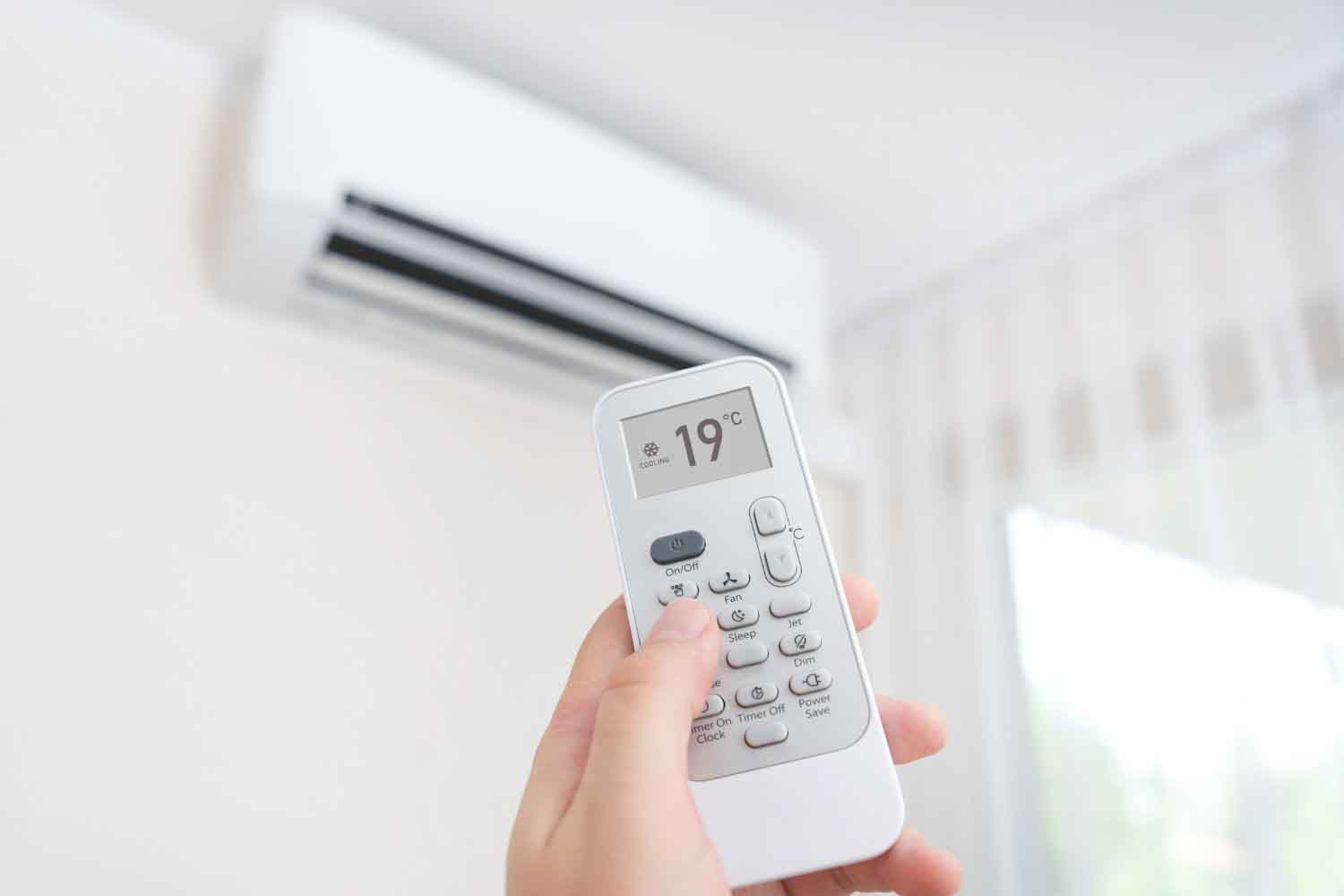
The air conditioner is now as much a part of domestic summer as the mosquito nets, the lowered shutters and the bottle of water left on the bedside table. In many Italian homes it comes on already in May, when the heat stops being an annoying promise and begins to remain on the walls, in the rooms, on the floors that seem to hold the day even at night. You close the windows, you try to keep things cool, you go from one room to another with the remote control in your hand and that little practical satisfaction of having brought order back to the climate, at least inside the house.
It is an understandable response, because Italian homes are becoming increasingly equipped. According to the latest Istat survey on household energy supplies, in 2024 56% of households had at least one air conditioning system in their main home. In 2021 it was 48.8%, while in 2013 the share was stuck at 29.4%. In just over ten years, therefore, the air conditioner has gone from a still selective presence to a common object in more than one home in two.
The estimate released by the Italian Society of Environmental Medicine takes the picture even further: approximately 60% of Italian homes today have at least one air conditioning system. The same communication links this data to the issue of indoor air quality, especially when cooling leads to keeping environments closed for many hours.
The cool closed
Using the air conditioner at home can be important, especially during heat waves and in homes where elderly people, young children, people with chronic pathologies or more fragile people live. Intense heat puts stress on the body, can promote dehydration, fatigue, heat stroke and worsen some respiratory and cardiovascular conditions. The Civil Protection, in the indications dedicated to heat waves, recommends protecting the house with curtains or shutters and setting the air conditioning at a temperature not lower than 25-27 °C.
Alongside the temperature, however, there remains the exchange of air. The air conditioner lowers the perceived heat and can reduce humidity. Stale air, on the other hand, only comes out when the house is ventilated: windows open at the right times, extractors working, mechanical systems designed to truly renew the air. The EPA, the US Environmental Protection Agency, reminds us that insufficient ventilation can cause indoor pollutants to accumulate, because little external air enters to dilute the emissions produced inside the house and take them outside.
Among these substances there are volatile organic compounds, often indicated by the acronym VOC or VOC. The EPA explains that they are emitted as gases from some solids or liquids and can come from paints, solvents, cleaners, disinfectants, cosmetics, aerosol sprays, air fresheners, glues, building materials and furnishings. The concentrations of many VOCs are often higher indoors than outdoors and can remain high even after the use of products that release them.
The bathroom holds back
The preliminary data released by the Italian Society of Environmental Medicine comes from a study carried out in collaboration with VELUX Italia on the dispersion of VOCs in a real environment, with particular attention to the bathroom. The choice makes a lot of sense even looking at any morning. Hot shower, steam, deodorant, cream, detergent on the sink, air freshener, door ajar. Then you go out, and the room remains there, small, humid, full of odors and substances that don’t always go away on their own.
According to what was communicated by SIMA, in the absence of ventilation, VOCs can remain in the air for up to approximately 15 hours. With mechanical ventilation, the return to initial values is reduced to approximately 3 hours. With natural ventilation, however, the time drops to less than 40 minutes. The perimeter must be clearly stated: we are talking about preliminary data released by the scientific society, not about a paper that can already be consulted in its entirety.
The data, precisely because it is preliminary, should be read as a signal to be explored further. But it brings the theme into a scene that we all know. A bathroom closed for hours, perhaps in a house where the air conditioner remains on and you avoid opening it for fear of letting heat in, can retain substances for longer that would be better to dilute and send outside. The quality of indoor air often depends on little visible gestures, those that no one really considers a prevention measure: opening, waiting, closing again.
The Istituto Superiore di Sanità includes VOCs among the indoor pollutants present in homes, together with particulate matter, formaldehyde, benzene and other substances linked to daily activities inside the home. In the informative poster “The air in our home”, the ISS recommends opening windows to dilute the substances emitted, for example after the use of paints or products that release volatile organic compounds.
Open when needed
During the worst hours of the day, when the air outside is scorching hot, it makes sense to screen the windows, keep the most exposed rooms closed and use the air conditioner at a reasonable temperature. Early in the morning, in the evening or at times when the outside air allows it, a change of air is needed. In the bathroom, after a shower or after using detergents and spray products, opening the window for a few minutes can make a real difference. Maintenance also counts: clean filters, checks before the hot season, systems used correctly.
The fan, however, must be understood for what it does. It moves the air, gives relief, helps the evaporation of sweat, but does not lower the temperature of the room. For this reason, the health indications also insist on hydration, curtains, shutters, reduction of activities during central hours and attention to heat reports. The Civil Protection also recommends avoiding direct exposure during the hottest hours, between 11am and 6pm, and drinking plenty of water during high risk days. The cool house must also remain a breathable house.
You might also be interested in:
