
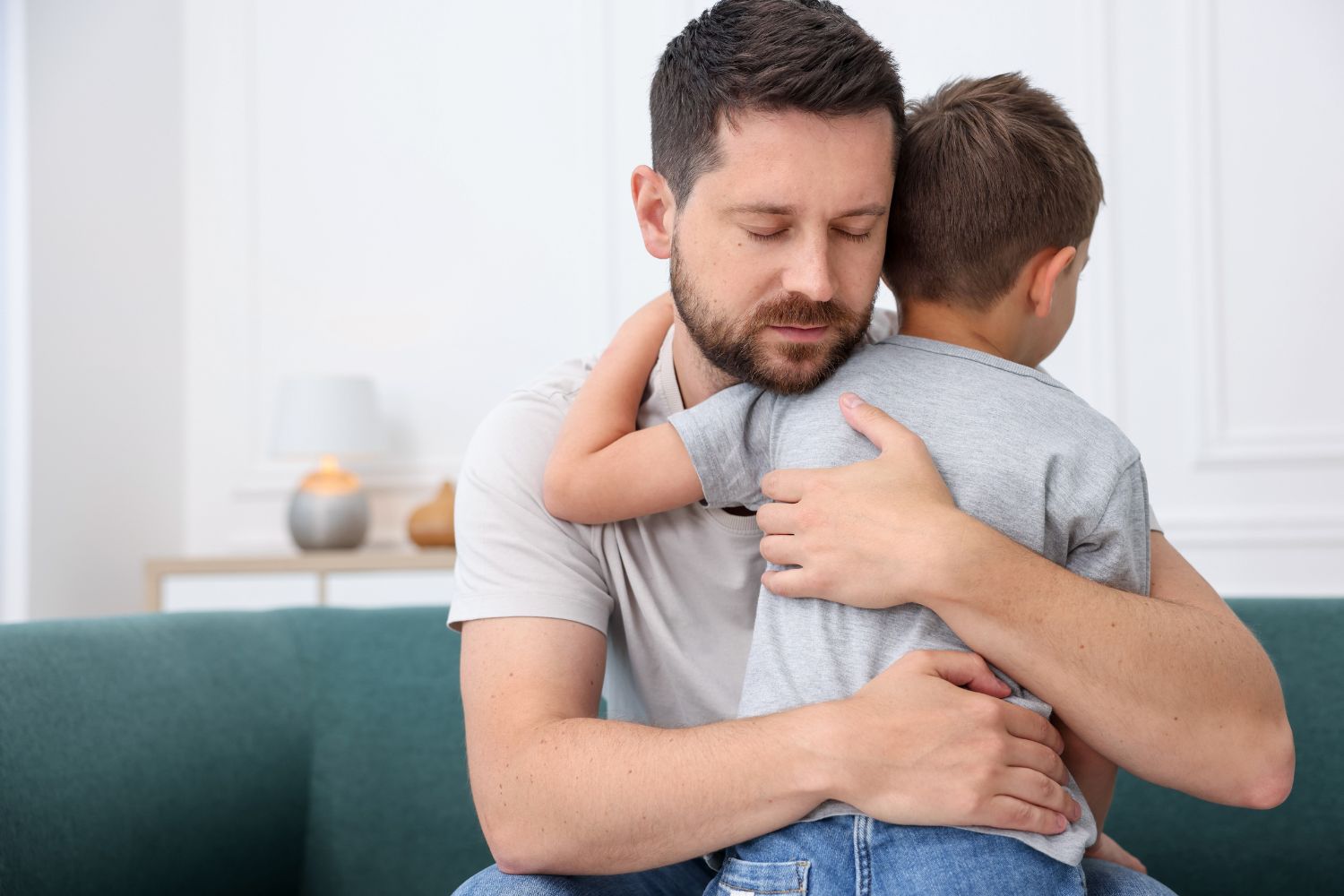
Where in the world do you feel at peace with yourself if you have a child with severe autism or any type of disability? In which do you receive total assistance, which takes away at least for a moment the burden of constant care and almost suffocating dedication? Where can you find someone who makes the gravity of an illness their own and makes it a little lighter, to lift you up and make you breathe for just a second?
Having a child with a disability is something that turns you off and on every day. Several times a day. It messes up your hair, makes you eat badly, makes you not sleep at night. It makes you angry at the whole world. Because, as we know, deep inside you ask yourself this every day: “why me?”, “why my son?”.
You love him, eh, you love him with all your soul, but too often you reach that limit where you are convinced with terror that you can’t do it anymore. Ask for help and maybe you get it. Support and therapies and medicines. Support. And therapies. And medicines.
But in the evening your door closes, leaving you and that overbearing pathology of your child. The luminaries want to fill their mouths. They want to call for inclusion and respectful language. What really happens in a family with kids with serious disabilities? And what will become of them when their parents are no longer there? Prejudices, lack of knowledge and low expectations regarding the abilities of these kids don’t help at all. And anxieties for a parent can be devastating.
This is a bit of the narrative of what they arrived at Maiwenna Goasdowe And Jarrod CluneAustralian wife and husband aged 49 and 50, crushed by the weight of worries. Their children, Leon And Otisaged 16 and 14, both had severe nonverbal autism. “They were“because they killed them and then took their own lives too. An entire family died from the anguish and anxieties that added up, from the layers upon layers of fears dictated by problems with school and by a series of things that were insurmountable for them.
They left a sign at the door, “don’t go in, call the police” and then, at home, two notes in which they talk about murder-suicide: in the first they would have left instructions on their finances, in the second there would be reference to the reasons for the gesture and the wishes related to the burial, including that of dogs and cats.
This is what happens in a family with children with serious disabilities. At first the illness is surprising and worrying, everyone tells you that you are a “warrior“, that you are not alone. Then, little by little, it devours your strength and strips away every single muscle, leaving you in a corner. Many, most of them luckily, roll up their sleeves and continue without giving up, helped and supported by solid communities. They move forward with projects that do a lot in and for the territory, like our Nico Acampora.
Many others, however, are trampled by panic and loneliness. A constant and pressing desire to throw branches into the boat.
The tragic story of the Australian family must remind us of only one thing: behind every smile and every word of encouragement, there are lives that carry invisible burdens, impossible to imagine without having experienced them. The loneliness of those on the front line, every day, in facing such a difficult reality, can become an unbearable burden, an experience that leaves one vulnerable.
True strength could lie in seeking meaning even in the darkest moments, in finding a corner of hope, a gesture of solidarity that can alleviate that daily load even for just an instant. Families living with disabilities need real support, a network that is not just theoretical, but concrete, an inclusion that goes beyond words. And each of us, if you think about it, has the moral duty to listen and welcome, to build together a world in which no one is forced to fight alone.
