
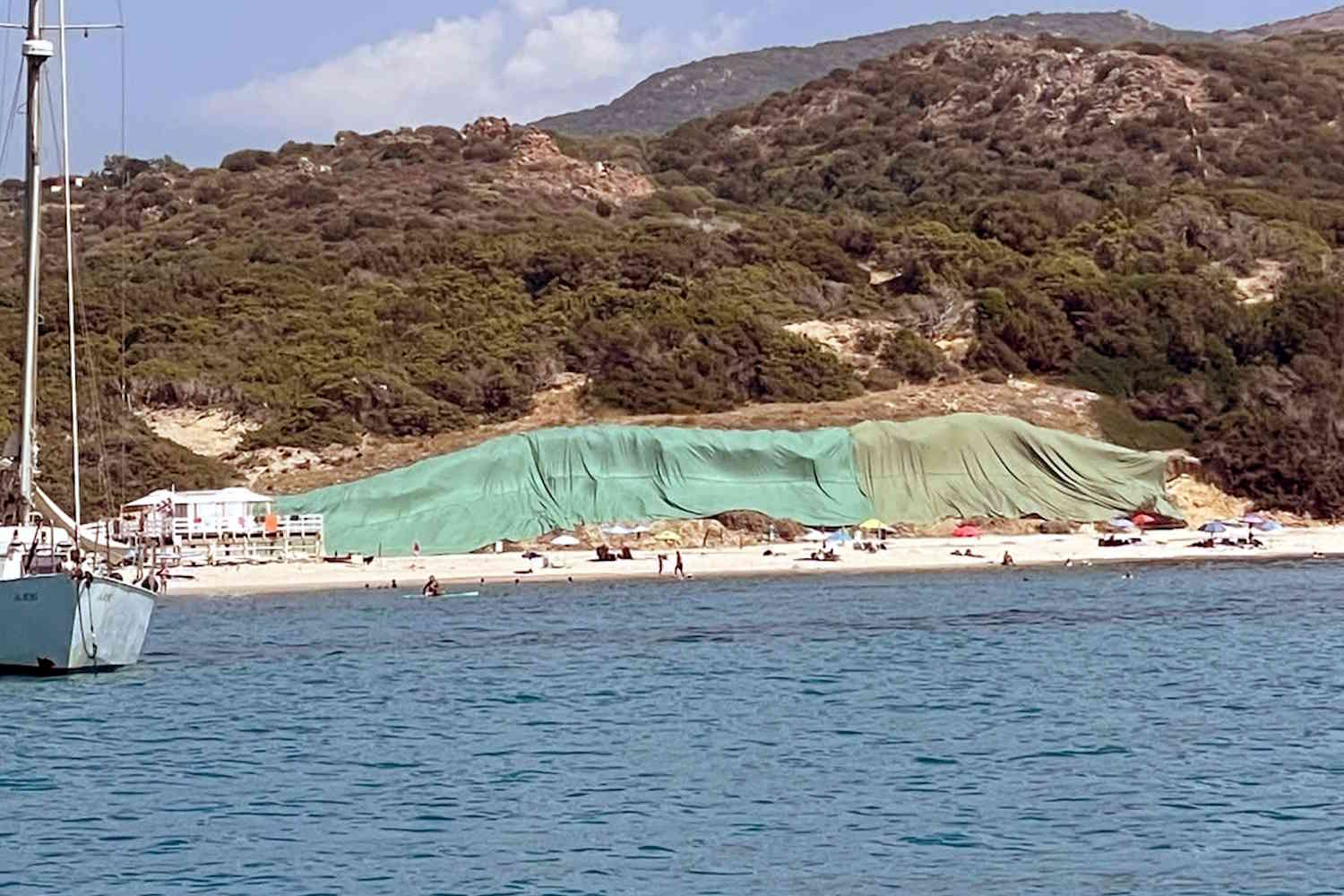
In Sardinia, an old landfill that emerged a few steps from the sea was covered with enormous green sheets tens of meters long.
It happened on the Longa beach of Isola Rossa, in the municipality of Trinità d’Agultu e Vignola, in the province of Sassari, where last spring’s storms brought to light an accumulation of waste which, according to the mayor Giampiero Cartawould have remained buried since the Seventies.
Plastics and other materials have resurfaced from the ground behind the beach, practically close to the beach frequented every day by residents and tourists. And here, instead of removing everything immediately, the area was first cordoned off and then covered with two large green tarpaulins. A solution that, inevitably, made more noise than the landfill itself.
The landfill has been there for about 50 years
According to what the mayor said, the Municipality discovered the presence of the waste in June and since then various materials had already been removed with around 30 trucks, while the area was fenced off. With the arrival of the high season, however, the continuous passage of heavy vehicles on the beach would have become problematic. Hence the decision, on the recommendation of the competent department according to the mayor, to cover the remaining material.
Carta assured that this is indeed a “temporary solution” and that a beach nourishment intervention would be planned for October thanks to funding already obtained.
But what exactly is under those sheets? At the moment, the real extent of the accumulation, the origin of the landfill and above all the nature of the materials present are still to be clarified. These are precisely the aspects that, beyond the decidedly surreal visual impact, are most interesting from an environmental point of view.
The images circulated in recent hours show the gigantic sheet practically next to the area used by swimmers. And the scene, let’s face it, is alienating: crystal clear sea, sand, umbrellas and, behind, tens of meters of tarpaulin under which half a century old waste can be found.
But covering and reclaiming are certainly not the same thing and for this very reason it remains essential to understand whether environmental analyzes have been carried out or planned on the waste, the soil and any contamination of the area, especially considering that the accumulation is located a very short distance from the sea.
Meanwhile, the problem is that a landfill that would have remained hidden for about fifty years has resurfaced next to one of the busiest beaches in the area and, as of August, continues to be there. Whether it is covered by a green sheet, sand or anything else changes very little with respect to the fundamental question: when will that waste be definitively removed and what consequences have it had, or could have, on the surrounding environment?
The information available to date indicates that the accumulation would have emerged after the spring storms, that the Municipality would have been aware of it in June and that part of the waste would have already been taken away with around thirty trucks; However, the origin, extent and complete composition of the materials have not yet been publicly clarified.
