
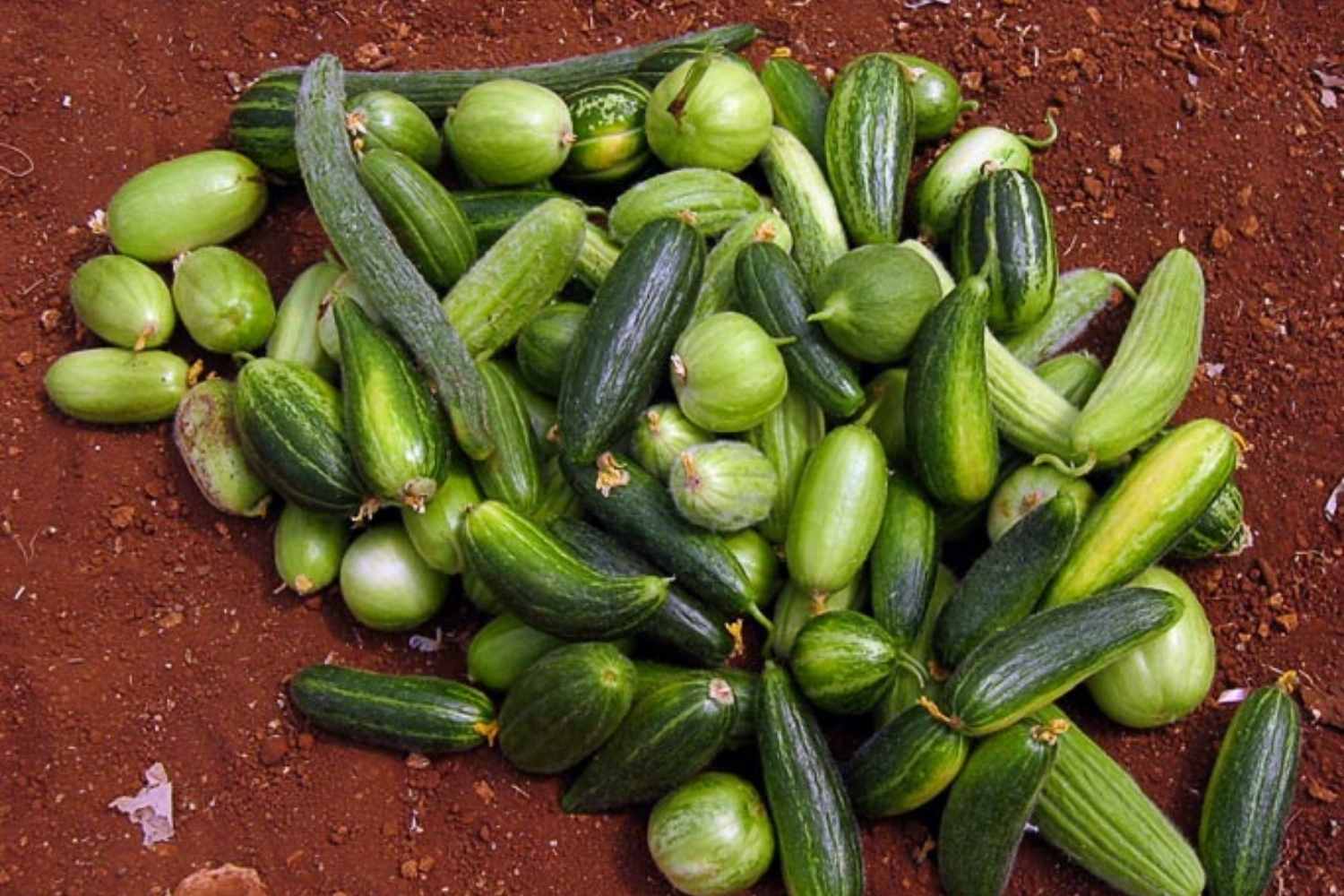
In Puglia they call it carosello, but botanically it shouldn’t even be on the same shelf as the cucumber since it belongs to the species Cucumis melothe same as melon, the point is that it is harvested when the fruit is still unripe. This is confirmed by the studies of the Institute of Food Production Sciences of the CNR of Bari, which for years has been involved in characterizing this and other local Apulian varieties together with the University of Bari Aldo Moro. The taxonomic confusion, after all, is less interesting than the cause, given that in the peasant cuisine of Southern Italy the criterion has never been the botanist’s shelf but that of the table. The carousel is eaten raw, has the watery and crunchy consistency of the cucumber, and regularly takes its place in summer salads, despite being a sort of “impostor” that no one considers such.
@wikipedia
A fruit that changes name depending on the area
The carousel is not a single variety but a container of local ecotypes, selected over time by different farmers in different areas. The ISPA-CNR monograph, created with the University of Bari and the Puglia Region, lists among others the carosello Bari (also called scopatizzo), that of Polignano, the white Leccese and the tondo di Manduria. The barattiere, often confused with the carosello, is actually a distinct ecotype, more rounded and less bitter. Cultivation is still very niche, and according to the study published in the journal Plants by the ISPA-CNR group, in the Puglia region it occupies around 100 hectares, with even smaller surfaces in Sicily, Basilicata, Campania and, more recently, in Lazio and Tuscany. A product that ISTAT does not survey separately and which remains almost entirely linked to the regional market.
Cucurbitacin is not always absent, as we continue to write
There is a point on which it is worth being precise, because the sector press almost always repeats it as an established fact: the absence of cucurbitacinsthe bitter substances responsible for the unpleasant aftertaste of some cucumbers. It is the standard statement, also taken up by the same ISPA-CNR study mentioned above, and for years it has been the main reason for the greater digestibility attributed to carousel compared to cucumber. More recent work, however, scales it back. A group of researchers from Puglia has published on Horticulture the first report on the presence of cucurbitacins in a local Italian variety of immature melon, disproving the general rule at least for one of the varieties analyzed. It is not enough to dismantle the reputation of a light and well-tolerated vegetable, confirmed on other fronts, but it constitutes a detail to take into consideration before associating the “cucurbitacin-free” formula with the carousel, as if it were always valid and for every ecotype.
A heritage that remains off the radar
With just a hundred hectares registered and no dedicated ISTAT survey, the carousel is a product that lives outside the large numbers of the agri-food sector, one of those that we could classify as a “forgotten fruit”. Survival still depends on family gardens and on anyone who continues to sow it out of habit rather than for the market, the same dynamic that explains the reason for so much agricultural biodiversity in the South, which is handed down as long as there are those who are still willing to cultivate it.
