
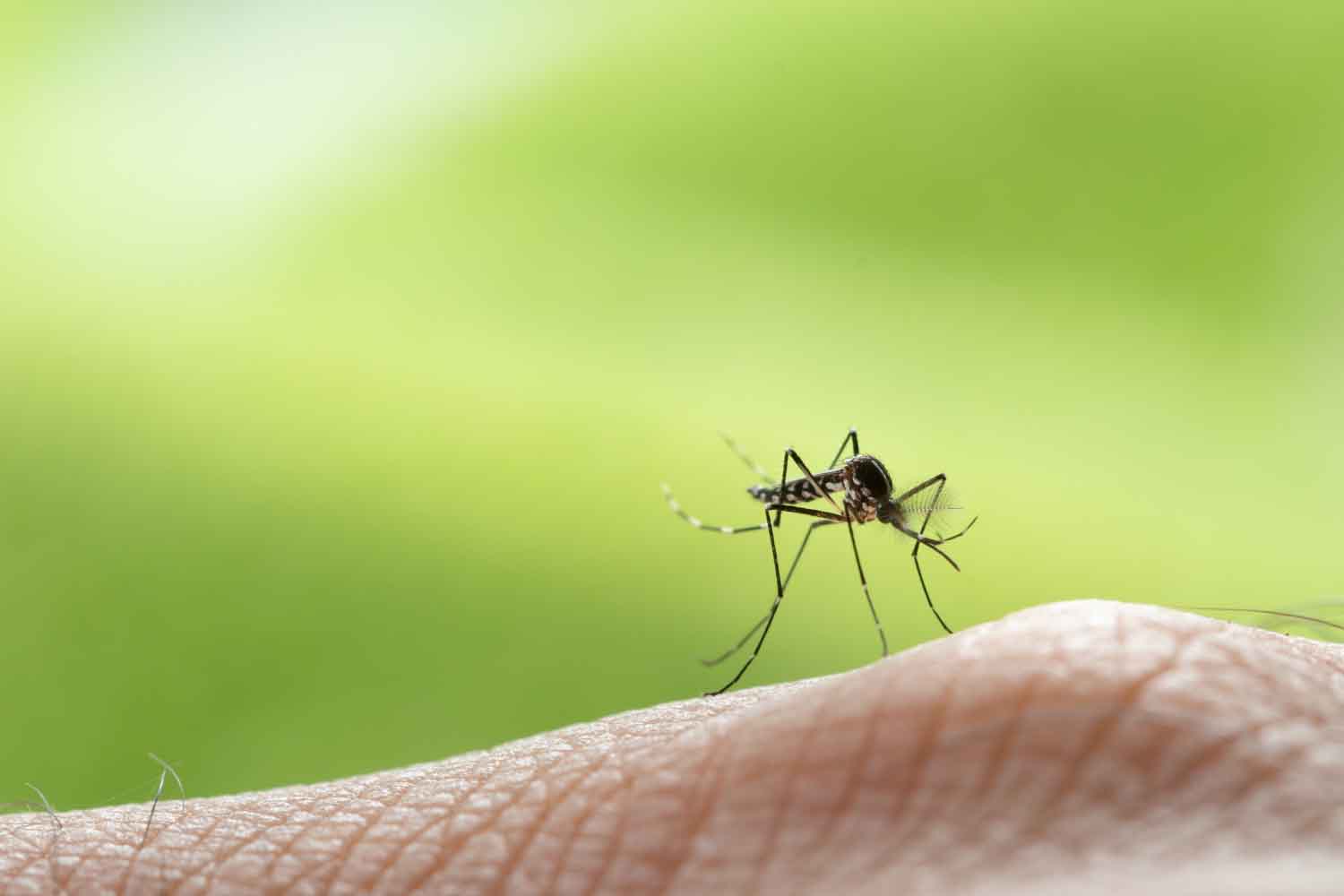
On the balcony, in the park, at dinner out, the scene is always the same: someone ends the evening with lumps on their ankles, someone else goes home intact. “Sweet blood” has little to do with it. The mosquitoes they follow much more concrete signals: carbon dioxide, skin odor, heat, humidity, color of clothes, substances released by the body.
It is the females that sting, because the blood is used for the development of the eggs. To find us they use a precise sequence. First they intercept the CO₂ that we exhale, then combine that signal with body odor and temperature. A study published in Cell showed that these cues work together: removing a single cue reduces attraction, but does not erase it.
Skin odor matters more than we think
The decisive part is often on the skin. We smell sweat, sunscreen, deodorant. Mosquitoes pick up a much finer chemical profile, also produced by the microorganisms that live on our bodies. Bacteria and fungi transform sebum and sweat into volatile compounds, invisible to us and very legible to them. A review on Frontiers in Microbiology linked the attraction of mosquitoes to the signals produced by the skin microbiota.
Among the substances observed most carefully are the carboxylic acids. In a 2022 study on Cellsome people were found to be much more attractive to Aedes aegyptia species involved in the transmission of dengue, Zika and yellow fever in several areas of the world. The most targeted subjects had higher levels of carboxylic acids on the skin and this characteristic remained stable over time.
Translated: those who are stung often could have a rather constant chemical signature. Changing body wash, deodorant or cream can shift something for a few hours, for better or worse. The basic odor, however, depends on the skin, microbiome, metabolism, genetics, habits and environment.
The skin microbiome changes with the way we live, sweat, wash, dress and spend time outdoors. Mosquitoes read this mixture. Some people emit more heat, others more CO₂, still others a more attractive set of compounds. Thus, in the same group, there is always someone who seems to be a favorite target.
Beer, banana, pregnancy and dark clothes
Skin odors weigh heavily, but other factors can increase attraction. There pregnancy is one of the best documented cases: a study conducted in Gambia observed that pregnant women attracted about twice as many mosquitoes as non-pregnant women. The most likely explanation concerns greater CO₂ emission and higher body temperature.
Alcohol can also have an effect, at least for beer. A study on PLOS One found an increase in mosquito attraction after beer consumption, without simply tracing it back to body temperature or carbon dioxide. The most conservative hypothesis involves temporary changes in body odor.
Then there’s the banana. Research published in Insects observed that eating bananas increased attractiveness to some mosquitoes of the genus Anopheleswhile green grapes did not produce the same effect. The data should be read with caution: we are talking about controlled conditions and a possible effect, probably linked to the by-products of metabolism.
Even the color of the clothes can have an impact. Mosquitoes mainly use their sense of smell, but when they have already intercepted the CO₂ they also begin to orient themselves by sight. Research from the University of Washington showed that Aedes aegypti it tends to move towards colors such as red, orange, black and cyan after the stimulus of carbon dioxide. Light-colored clothing, in many situations, helps reduce exposure.
Sweat, heat, exposed skin and movement complete the picture. Ankles and feet, often left uncovered, are very vulnerable areas: they host intense odors and active bacterial flora. This is why the bites there always seem to arrive first.
What really works to protect yourself
One’s natural chemistry changes little. But you can become a less easy target. Repellents remain the most reliable tool when outdoors in areas full of mosquitoes. The CDC indicates registered products with active ingredients as effective as DEETpicaridin, IR3535, lemon eucalyptus oil, PMD or 2-undecanone, when used according to label instructions.
In Italy the Istituto Superiore di Sanità recommends effective repellents against the tiger mosquito, including products based on DEET and icaridin. Prevention also comes from home: saucers, buckets, manholes, gutters, bowls left outside. The tiger mosquito exploits small stagnant water, so emptying or treating those points remains one of the most useful actions.
The clothes do their part: long sleeves, light fabrics, light colors, not too tight clothes. For those who frequent heavily infested areas, clothing treated with permethrin can offer additional protection. However, the CDC reminds us that permethrin should be used on clothing and equipment, not directly on the skin.
A fan can also help. Mosquitoes fly poorly in moving air, and a constant current also disturbs the trail of CO₂ and odors they use to reach us. Even the act of chasing them away can have an effect: some studies have shown that mosquitoes can learn to associate a human odor with an unpleasant experience and avoid it afterwards.
Natural solutions must be scaled down. Lemongrass, essential oils and plant products can help, but they last less and work more variably. Lemon eucalyptus oil, when present in registered products and used correctly, has a stronger foundation than many DIY blends.
The issue also concerns public health. The tiger mosquito is considered by the ISS to be a source of nuisance and a possible health problem. The West Nile virus, however, typically passes through common mosquitoes of the genus Culexactive mainly from dusk to dawn. In 2025, ECDC recorded widespread circulation of West Nile in Italy, with 779 confirmed human cases and 72 deaths reported for that year.
Research is also studying creams capable of temporarily modifying the odors produced by the skin and strategies to interfere with mosquitoes’ sense of smell. For now, though, the defense remains very practical: quality repellent, less standing water, covered skin, light-colored clothing and moving air. Those who attract mosquitoes will probably continue to attract them, but at least they can make the job more difficult.
