
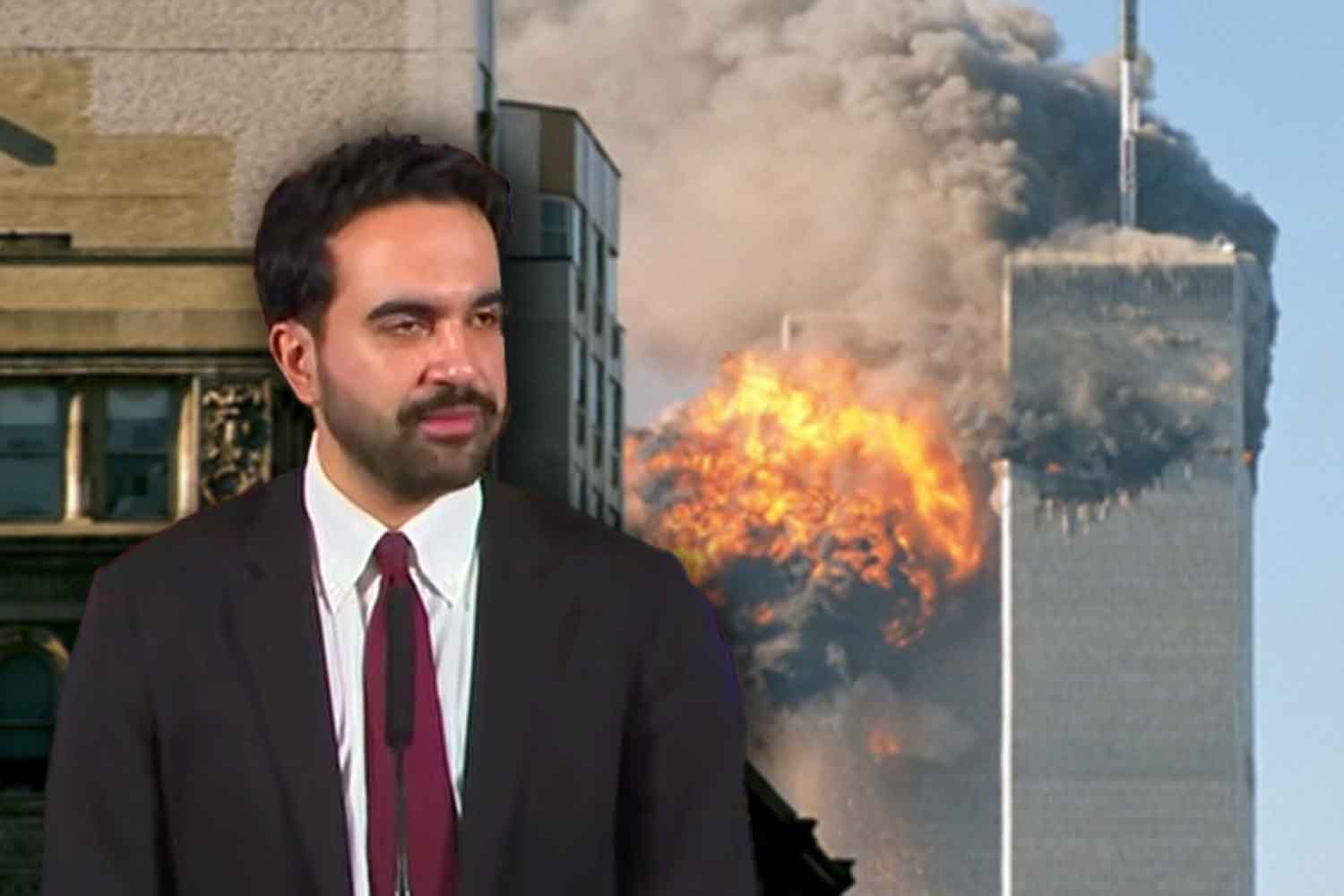
Sixty-eight boxes remained out of public reach for more than twenty years and, according to the New York administration, were only traced in 2025. Inside there are air and dust tests, asbestos checks, internal communications and documents on the health response to the collapse of the Twin Towers. On September 8, 2026, Mayor Zohran Mamdani opened the first municipal public archive dedicated to the environmental and health consequences of September 11, putting online a first tranche of over 170 thousand pages. More will arrive in the next twelve months.
Time, here, has a rather embarrassing measure: twenty-five years. For various administrations, rescuers, residents, families of victims and associations have requested access to those documents through the FOIL procedures, the New York State law on access to public documents. Now the so-called Harding Memo and papers from the 68 boxes that the municipal Department of Environmental Protection had failed to locate during previous requests also appear among the published material.
The asbestos was still there months later
The cloud of September 11th lasted for hours. Contaminated materials, definitely more. During the presentation of the archive, Mamdani recalled the documents relating to asbestos tests and environmental risks. The newly published maps will allow us to reconstruct in detail the places and times of the surveys; one thing, however, was already officially documented at the time.
On July 29, 2002, more than ten months after the collapse, the New York Department of Environmental Protection announced that the program to clean the exteriors of buildings in Lower Manhattan had detected a “mostly minimal” presence of asbestos and other contaminants attributable to debris from the World Trade Center on roofs and external surfaces. More than a thousand buildings had been inspected and those affected by debris could be remediated by companies licensed to remove asbestos.
The detail significantly changes the weight of the reassurances received in the first weeks. On September 18, 2001, just seven days after the attacks, the then administrator of the Environmental Protection Agency Christie Whitman declared that the available data allowed citizens to be reassured about air quality.
Two years later, EPA’s own Office of Inspector General cast that safety in a much less comfortable light. In the report published on August 21, 2003, it concluded that when the Agency declared the air “safe to breathe,” it did not have sufficient data and analysis to make such a general reassurance. Information was missing on several contaminants, including particulate matter and PCBs. The same report also reconstructs the statement of 18 September and the first communications on asbestos.
It doesn’t mean that all of Manhattan breathed the same concentrations measured near Ground Zero for months. Exhibitions, places and times were profoundly different. A subsequent EPA assessment of inhalation exposure concluded that, excluding September 11 and the days immediately following, ambient air data made adverse effects unlikely for the general population. That assessment, however, did not include rescuers, workers or internal environments. And apartments, offices and workplaces are an essential part of the story of exposure to dust from the World Trade Center.
The memo on health risks and the city’s responsibility
Among the most anticipated documents is the Harding Memo, drawn up in October 2001 for the Giuliani administration. The Mamdani administration itself describes it today as a paper documenting internal discussions on health risks and the city’s possible legal liability. The theme also included the consequences of a rapid return of workers and residents to Lower Manhattan. The document is specifically cited in the note with which the city announced the opening of the archive.
This document alone does not demonstrate who knew what concentration of contaminants in each street, school or apartment, nor does it automatically assign individual responsibility. It shows something more limited and already quite relevant: while reassurances were spread outside, within the administration the possible health effects and legal consequences of exposure were also discussed.
It is precisely this sequence that makes the archive interesting. There is no need to transform 170 thousand pages into an already written sentence. You need dates, samples, addresses, memos, people who received the information and decisions made after receiving it. The city announced it will continue to release documents for at least a year, limiting redactions mostly to personal data and some still-sensitive security information.
Twenty years later, the numbers have become medical records
In the meantime, the health consequences of September 11th have emerged from the fears of the first months and entered the monitoring programs. As of June 2025, the World Trade Center Health Program was following 136,862 people; 89,953 had at least one health condition certified by the program. Inside there are rescuers and survivors, but also people who lived, worked or studied in the affected area.
The FDNY report on 25 years of health consequences, published in September 2026, adds another measure: over 10 thousand members of the New York fire department are certified with at least one physical pathology linked to September 11th. More than 15 thousand members of the department were exposed during rescue, recovery and rubble removal operations that continued for over ten months.
Research is also starting to capture effects that take a long time to become measurable. A cohort study published in 2025 on JAMA Network Open followed 12,334 rescuers after a minimum latency period of ten years and recorded 118 lung tumors. Compared to the group with mild exposure, the incidence was higher among people with moderate exposure and almost three times higher among those with severe exposure, even after adjustments for demographic factors and smoking. It’s a dose-response association within that cohort, not evidence that every cancer that appeared after 2001 had the same cause.
Those pages can also be useful today
The archive therefore has a much less archaeological function than it might seem. New York will deploy dedicated staff in city offices and public schools to help former workers, students and others recover documents that demonstrate their presence in the New York City Exposure Zone. That proof may be needed to access the World Trade Center Health Program or the September 11th Victim Compensation Fund.
Since returning to business in 2011, the September 11th Victim Compensation Fund has awarded more than $16.8 billion to more than 71,000 claimants. In 2025 alone it recognized almost 2 billion dollars and new requests rose on average from around 700 per month in 2024 to 900 in 2025. Twenty-five years have passed, the practices evidently have not.
The 170 thousand pages released on September 8 are just the beginning. They should be read without turning each memo into a smoking gun and without forgetting what is already established: the first federal reassurances were more solid than the information available, exposure changed enormously from person to person and the health consequences continue to be studied today.
For some New Yorkers, however, among those papers there may be something extremely concrete: evidence of where they were while they breathed that dust. After twenty-five years, it is difficult to call it just history.
