
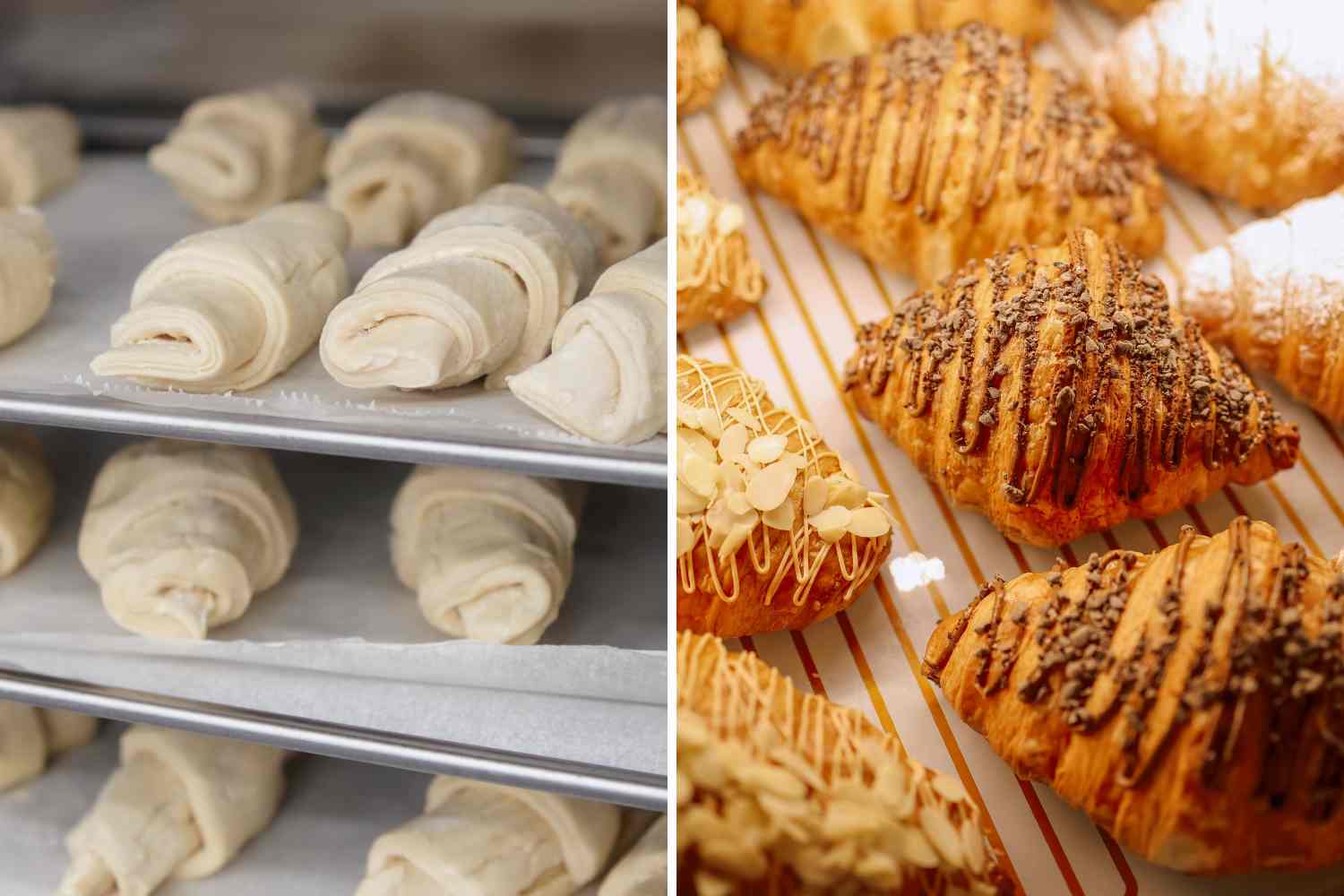
It is one of the Italians’ favorite breakfasts: cappuccino and croissant represent a small daily ritual for many. But how many really know how to distinguish a handcrafted croissant from one that comes from a frozen product?
In recent years the use of frozen croissants has become a widespread practice in bars, hotels and restaurant outlets. This does not necessarily mean that the product is of poor quality: today there are frozen croissants made with selected ingredients and very advanced production techniques. However, many consumers believe that a freshly baked croissant is automatically artisanal, when this is not always the case.
The truth is that there is no infallible method to establish with certainty the origin of a croissant simply by observing it. However, there are some clues that can help understand whether the product was probably made in a laboratory or whether it comes from an industrial supply chain and subsequently cooked at the point of sale.
Because many bars use frozen croissants
Preparing artisanal croissants requires time, skills and specialized personnel.
The process involves several phases: kneading, rolling the dough, inserting the butter, folding, leavening and cooking. This is a long and delicate process that can take many hours.
For this reason many commercial establishments choose to purchase ready-made or semi-finished frozen croissants. The products are stored at low temperatures and cooked just before sale, guaranteeing customers hot croissants throughout the day.
From a commercial point of view it is a practical solution that reduces waste and allows for greater organization of work.
Is the shape too perfect?
One of the first aspects to observe concerns uniformity. When a laboratory produces large quantities of croissants through industrial processes, each piece tends to have practically identical dimensions, shape and weight.
On the contrary, in artisanal products it is normal to find small differences. Some croissants may be slightly larger, others more curved or more puffy. These variations are the result of manual processing and do not represent a defect.
If the bar counter displays dozens of croissants all perfectly identical to each other, this could be a clue to the industrial origin of the product.
Observe the leafing carefully
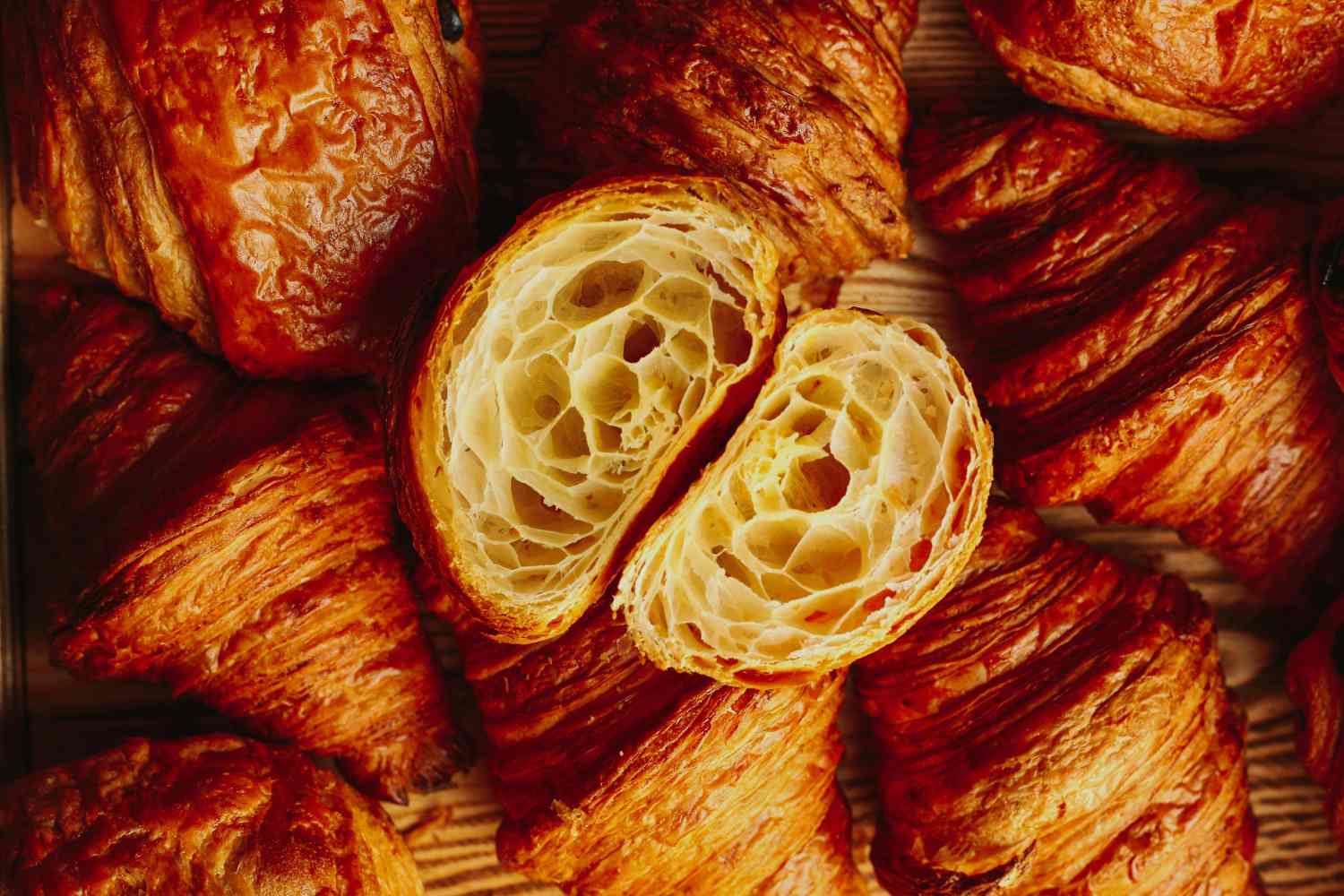
Peeling is one of the most important elements in evaluating a croissant. An artisanal product made with correct lamination generally has clearly visible layers and a light structure. The folds of the pastry can also be observed on the external surface.
When the croissant is broken, the layers should be distinct and well developed.
In industrial products, flaking may appear more regular and uniform. This does not necessarily mean that it is of lower quality, but often the internal structure tends to be more standardized.
Look at the inside when you break it
The inside of the croissant can also provide interesting information. In artisanal products, leavening generates cells of different sizes. The internal structure often appears irregular, with larger cavities alternating with smaller ones.
This apparent imperfection is actually a positive sign and testifies to a natural process of fermentation and processing.
In industrial products, however, the crumb can be more uniform and compact. The alveoli tend to be similar in size and more evenly distributed. This is not an absolute rule, but an element to be considered together with the others.
The scent can give some indication
Smell can also help, croissants prepared with a significant amount of butter develop particularly intense and complex aromas. The scent can recall lactic, caramelized and slightly toasted notes.
Many industrial products still use good quality butter, but in some cases blends of vegetable fats are used which produce less characteristic aromas.
For this reason, a particularly intense and persistent perfume can be more easily associated with artisanal workmanship, even if it does not represent definitive proof.
Pay attention to the price
Price is another element that can offer some guidance. Making artisanal croissants requires expensive ingredients, especially if you use quality butter, as well as very long processing times and specialized personnel.
For this reason, a croissant sold at a particularly low price is unlikely to have been entirely produced in the bar’s workshop.
Of course, price alone is not enough to judge a product, but it can help complete the picture.
Freshly baked does not necessarily mean artisanal
It is perhaps the most widespread misconception. Many consumers automatically associate the expression “freshly baked” with production made on site.
In reality, a croissant may have been prepared weeks or months before in an industrial plant, stored frozen and subsequently cooked in the bar a few minutes before being sold.
From the customer’s point of view, the product will still be warm and fragrant, but this does not mean that it was made entirely in a laboratory. Final cooking and production are two distinct phases that should not be confused.
Is there a safe way to know?
The answer is no. None of the signals described allow us to establish with absolute certainty whether a croissant is artisanal or frozen.
In fact, there are very high quality industrial products that can be very similar to those made in the laboratory, just as there are artisanal croissants that are not particularly successful. The only truly reliable way is to ask the staff for information directly or consult any information provided by the venue.
Better artisanal or frozen?
There is no one-size-fits-all answer. Many enthusiasts prefer the artisanal croissant for the greater aromatic complexity and the uniqueness of the workmanship. Others, however, appreciate the constant quality guaranteed by the best industrial products.
More than establishing which is the absolute best choice, it can be useful to learn to recognize the differences and know the product you are purchasing.
The next time you enter a bar, look carefully at the brioche counter. Shape, flaking, aroma and internal structure don’t tell the whole story, but they can offer some interesting clues about the origins of your croissant.
Frequently asked questions
Is a frozen croissant of inferior quality to an artisanal one?
Not necessarily. There are frozen products made with selected ingredients and advanced production techniques, capable of guaranteeing good quality and consistent results.
How do I know if the croissant at the bar is frozen?
There is no infallible method, but some signs help: excessive uniformity in shape, excessively regular flaking, compact internal honeycomb, not very intense aroma and very low price.
Why do many bars use frozen croissants instead of preparing them by hand?
Because artisanal processing requires time, specialized personnel and different phases (dough, lamination, leavening, cooking). Frozen foods allow you to offer hot croissants all day, reducing waste and work time.
If the croissant is hot and freshly baked, does this mean it is artisanal?
No. A croissant may have been industrially produced, frozen and then simply freshly cooked in the bar. The final cooking and production are two distinct phases.
Is the low price a sure sign of a frozen croissant?
It is a useful but not definitive clue: making an artisanal croissant requires expensive ingredients and a long time, so a very low price makes an entirely artisanal production less likely, but on its own it is not enough to be certain.
What is the safest way to know if the croissant is handmade?
Ask the bar staff directly or check any signs displayed in the restaurant: it is the only truly reliable information.
