
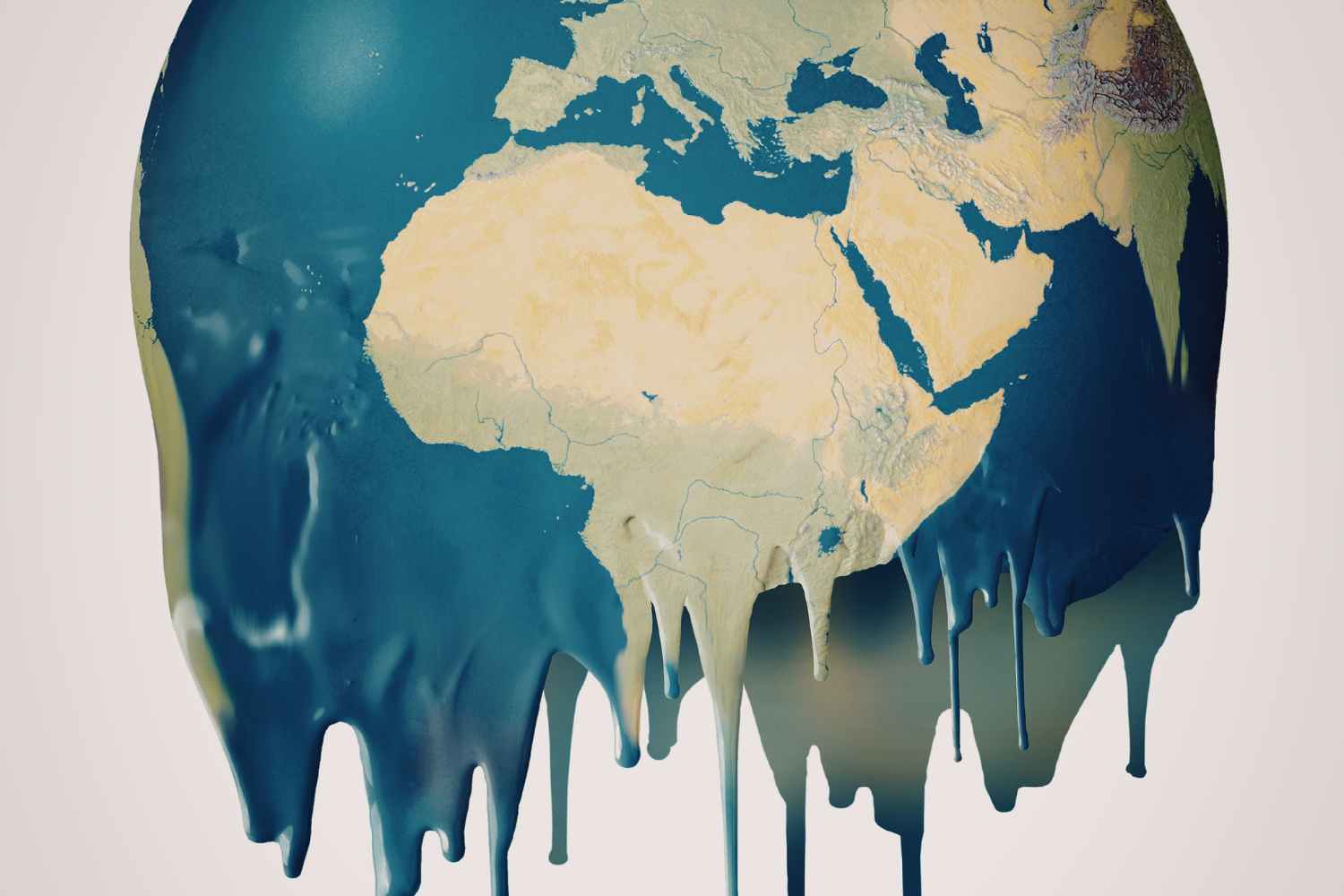
The expression always resonates in bars, on the beach, on social media: “It has always been hot, remember 1976? And 2003?”. A nostalgic argument that confuses meteorology with climate, treating the atmosphere as a simple linear thermometer. It’s a shame that not even the atmosphere takes umbrella chatter into account: the climate is a complex system in which small increases in global temperatures drastically change the frequency and intensity of extreme events, including heat waves.
The heat wave that hit Western Europe in June 2026 is proof of this. According to the World Weather Attribution (WWA) study, led by Theodore Keeping of Imperial College London, an event of this magnitude would have been virtually impossible fifty years ago. Even compared to the historic summer of 2003, similar daytime highs are now ten times more likely, and nighttime temperatures over a hundred times more likely. The thermometer no longer oscillates naturally: the die is clearly rigged.
Hannibal, the Vikings and disinformation
To understand the root of climate denialism, scientists like Giulio Betti, in the essay It was always hot!examine historical clichés used to downplay the present. Erik the Red’s Greenland is often cited as a once verdant land, forgetting that it was just a publicity stunt by an exile to attract settlers.
In the volume Penguins at the equatorSerena Giacomin and Luca Perri also dismantle the legend of Hannibal’s elephants in the Alps thanks to the presumed torrid climate of the time: “There were actually thirty-seven animals and almost all of them died from the cold before completing the crossing”. Evoking these old historical specters serves a specific purpose: to divert the blame elsewhere. For example on the Sun, accused of heating too much just as it is going through a phase of minimal activity. But physics doesn’t care about denialist tweets. When the average global temperature rises by one degree, the heat does not increase in an orderly and linear way. The law of probability actually changes: the weather events that we previously considered secular exceptions suddenly transform into our new and suffocating daily normality.
The big business of doubt
Behind the denialism factory there is not an innocent bar nostalgia, but a precise economic strategy. During a panel at the èStoria festival last year, climate scientist Luca Mercalli lifted the veil on the financial engine of disinformation: the fossil fuel market moves trillions of dollars. For those who have been selling oil, coal and gas for two centuries, blocking the path to transition is the only way to defend revenues of colossal proportions.
View this post on Instagram
Admitting that the current climate crisis is real and directly attributable to the extraction, distribution and consumption of their products would mean, for these lobbies, signing their own self-boycott. International judicial investigations confirm this: for decades energy giants have funded compliant scientists and think tanks to spread lies, manipulate data and claim that oil was not to blame.
The energy trap in cities
Our cities are in the crosshairs of an unprecedented heat emergency which in recent weeks has been bringing Europe and the United States to their knees. It is the thermometer of a global crisis that collides with obsolete homes and urban infrastructures, real energy sieves not designed for this new normality. This is why the request for decarbonisation put forward by science does not respond to a political agenda, but to the immutable laws of thermodynamics. Continuing to say that it was hot even forty years ago is equivalent to looking at a single stopped car to try to explain the entire traffic jam of a metropolis.
