
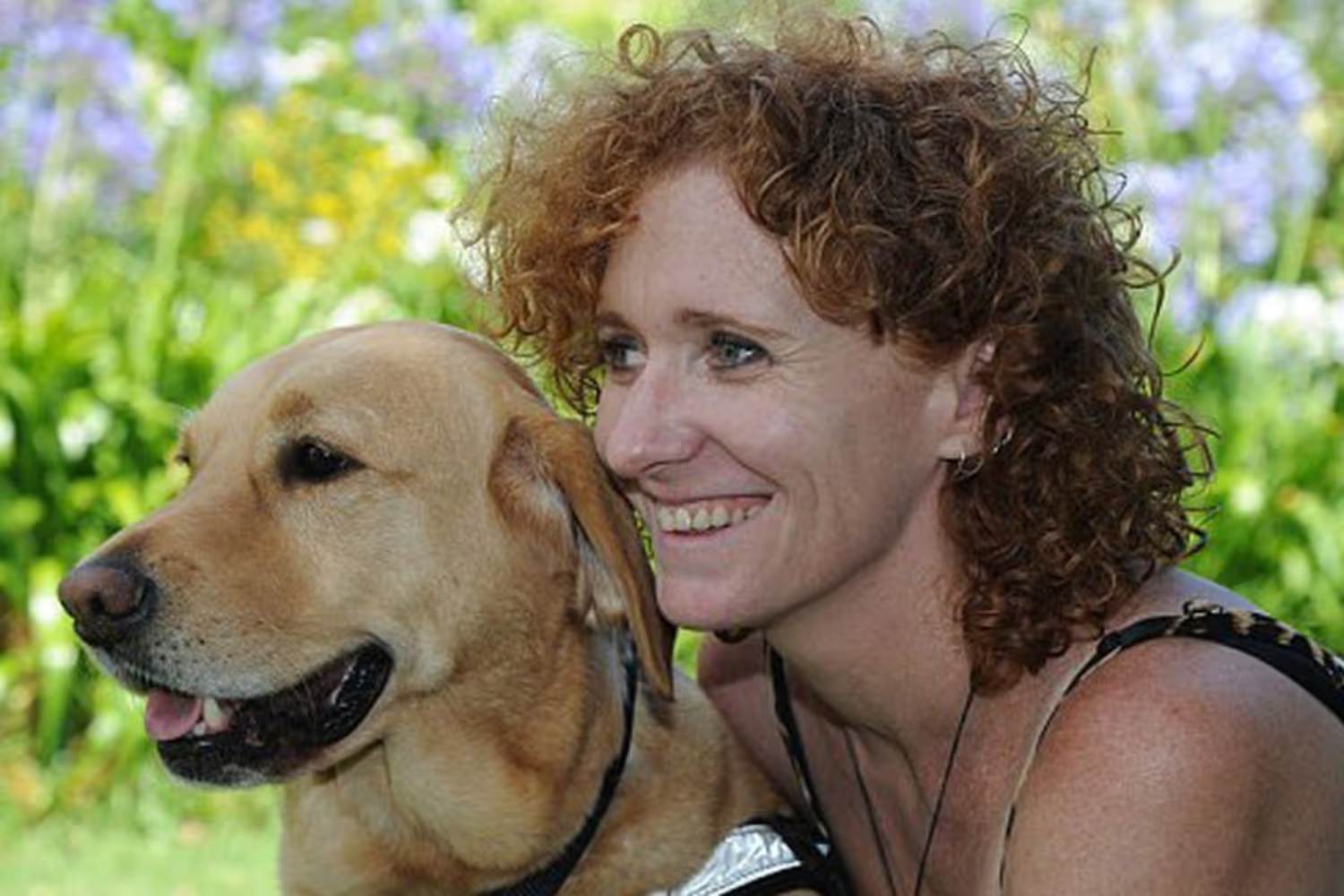
There are times when bad luck decides the trajectory of a life and others when a completely random event rewrites destiny in the blink of an eye. The existential parable of Lisa Reid, resident in Auckland, New Zealand, belongs to this second, very rare category. The woman had completely lost her sight at the age of 11, due to a serious form of tumor that was pressing on the optic nerve.
For thirteen years her daily life took place in total darkness, until the evening of November 15, 2000. At the age of 24, while she was in her home, she bent down to kiss her faithful guide dog Ami goodnight. In making that very natural and affectionate movement, he miscalculated the distances and violently hit his head against a coffee table.
@Blind Foundation NZ
The miraculous awakening and the visual shock of growing up
After the accidental impact against the furniture, Lisa Reid went to sleep regularly, without feeling any particular symptoms. The real revolution took place the next day: when she woke up, the woman reopened her eyes and realized that the black veil had vanished, leaving room for the images, lights and colors of the surrounding world.
Doctors and scientists have failed to formulate a clear scientific explanation behind this sudden recovery. One of the most overwhelming emotional impacts for the New Zealander was seeing the signs of aging on the faces of her loved ones. He saw his brother for the first time after thirteen years, discovering that the child he remembered had now become an adult man with a goatee, just as his mother appeared identical but visibly aged.
A precious testimony for the Blind Foundation
The story of this extraordinary clinical miracle emerged years later, when Lisa Reid – who had in the meantime become the mother of little Maddison – decided to break her silence at the age of 38 to support an important cause. The woman wanted to share her experience to shine a spotlight on Blind Week, the awareness week promoted by the charity Blind Foundation. This is the main New Zealand non-profit organization supporting the blind, an institution towards which the former patient has immense gratitude and which she has defined as a fundamental pillar without which she would have felt totally lost during the years she spent blind.
You might also be interested in:
