
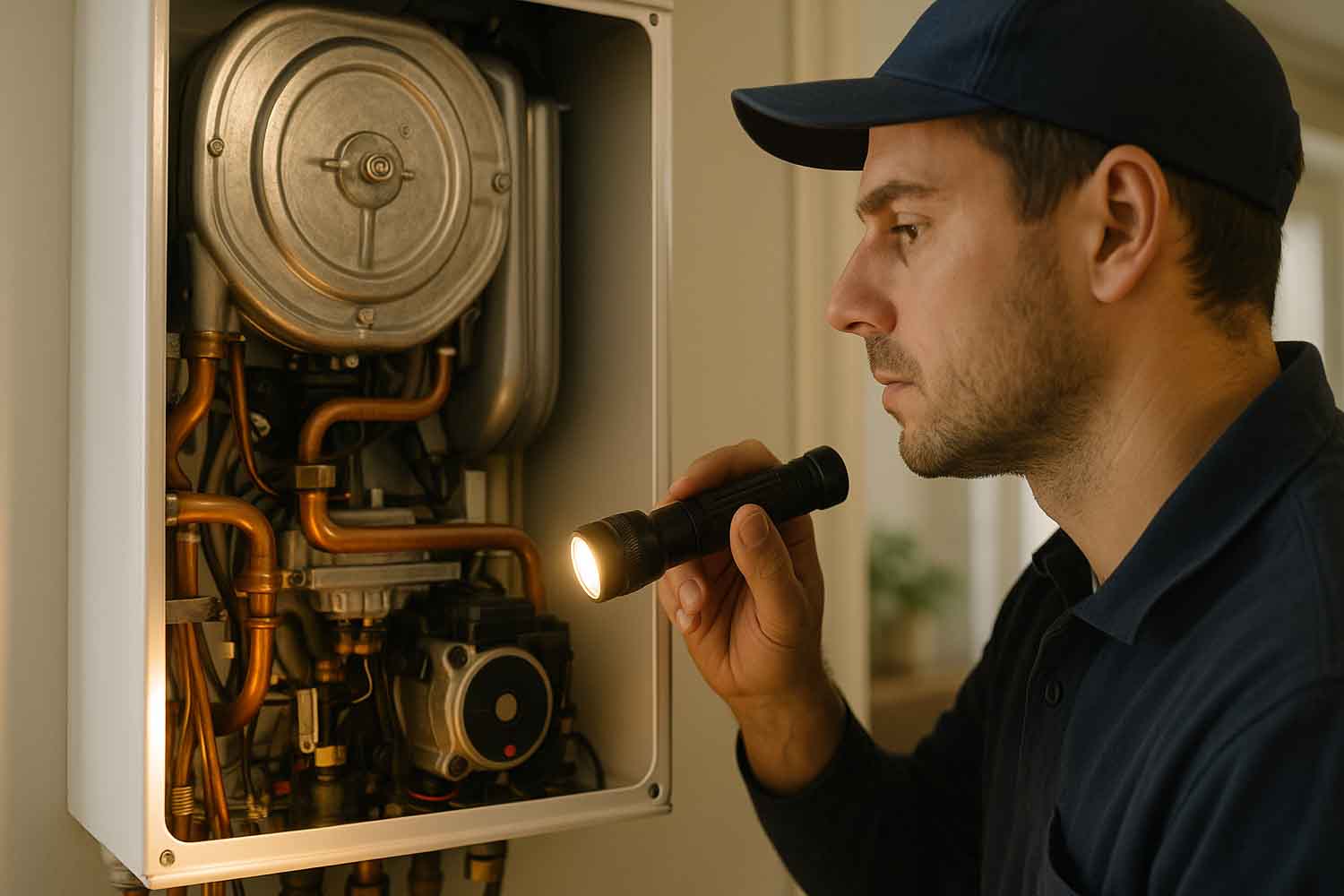
In Italian homes the boiler is often treated as an invisible object: it works in silence, heats the water, accompanies the winter and remains there, forgotten until it stops doing its duty. Yet, that very habit of taking them for granted is what makes it a potential problem. A neglected boiler begins to consume more, burns less cleanly and releases a greater quantity of pollutants into the air. All this happens without noise, without obvious signals, but is reflected in the quality of the air we breathe every day.
An inefficient boiler consumes more and pollutes more
When maintenance is left behind, the system progressively loses efficiency. It’s not a sudden collapse: it’s a slow decline. The water takes longer to heat up, the gas is used in greater quantities and the combustion becomes dirty. The result is a constant increase in domestic emissions, which represent a major source of urban pollution during the winter. Higher bills are only the most immediate side of the problem.
Italian law requires periodic checks for a specific reason. It’s not about bureaucracy, but about prevention: an untested boiler can become unsafe, as well as inefficient. Skipping these checks means exposing yourself to fines that can reach up to three thousand euros, a risk that many underestimate until the warning arrives.
Scientific research shows how important home heating is
A study published in 2023, “Energy Resources and Environmental Impacts of Heating Systems,” analyzed the environmental impact of major heating systems across their entire life cycle. The verdict leaves no room for interpretation: the gas boiler is the most impactful system, for the simple reason that it is based on a fossil fuel and requires a significant amount of non-renewable resources. Heat pumps powered by sustainable energy are much lighter on the environment, while hybrid systems are halfway.
This photograph does not point the finger at those who still live in gas-powered homes, but invites us to look more carefully at what we can already do: reduce the impact by preventing the system from working badly. A clean, regulated and controlled boiler releases fewer emissions and consumes less energy. It is a concrete, daily form of sustainability within everyone’s reach.
Most home systems could work better than they do today. A regular check would be enough to avoid sudden breakdowns, unnecessary waste and pollution that we often perceive only from a distance, when the air in cities becomes heavy.
Maintenance is not an imposed ritual: it is a way to bring the boiler back to its original efficiency, to protect your home, the environment and your wallet. It is a small gesture that affects everything we usually ignore: the air that enters our lungs, the consumption of resources, the safety of the environments in which we live.
You might also be interested in:
