
The Adriatic coast holds a microcosm of architecture and nature where time seems to slow down, far from the stereotypes of summer nightlife alone. Cervia and Cesenatico, just a few kilometers away, embody two unique historical and cultural souls of Emilia-Romagna. If the first is inextricably linked to the epic of its white gold and the families of the salt workers, the second develops around a heart of water designed by the genius of the Renaissance. Visiting them in autumn or spring allows you to catch the best light on the docks, taste the traditional watercress and breathe the sea breeze without the frenzy of the peak months and that’s what we did.
@RebeccaManzi/GreenMe
The historic heart of Cervia between the Quadrilatero and the Pietra delle Misure
Our weekend began in the ancient core of Cervia, a city entirely rebuilt at the end of the 17th century. The ideal starting point is Piazza Garibaldi, overlooked by the Town Hall and the Cathedral of Santa Maria Assunta. The Quadrilatero develops around the square, the rectangular city wall created to protect the center and house the homes of the salt workers, inside which the nineteenth-century Municipal Theater is also hidden.
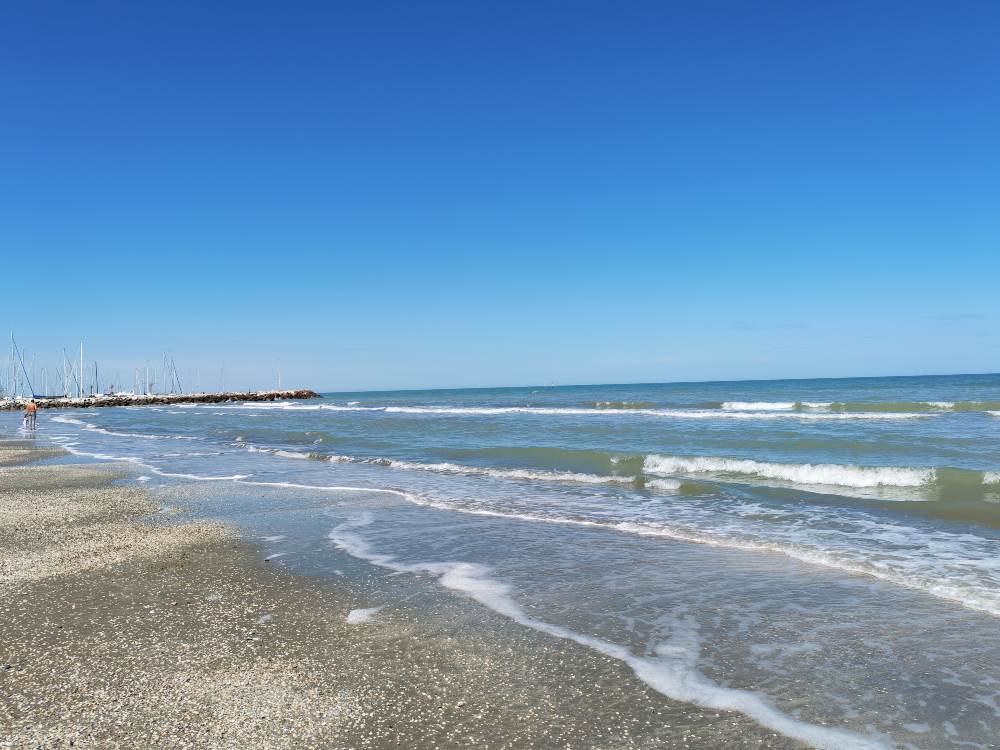
After passing the Town Hall we entered Piazzetta Pisacane, known as Piazza delle Erbe, where the historic Pietra delle Misure is located, a rock matrix once used by merchants to verify local calculation units such as the step and the quadrè. Crossing the arch of Porta Mare you enter Viale Roma, which leads towards the sea meeting the Angelika fountain, a bronze mermaid donated by a German tourist as a token of love.
@RebeccaManzi/GreenMe
The salt culture along the canal and the ecosystem of the Po Delta
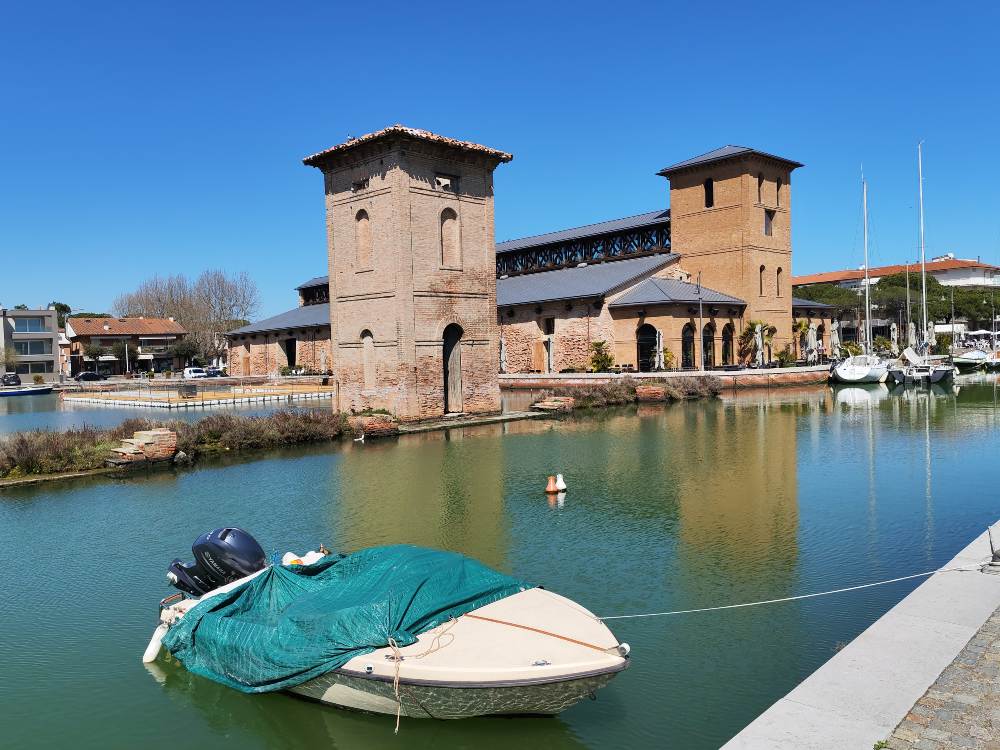
Bending towards the Cervia river channel, the productive symbols of the town emerge: the San Michele Tower and the two imposing historic warehouses. The Torre Warehouse today houses the MUSA, the salt museum which houses the artefacts of local civilisation, while the Darsena Warehouse has been converted into a space dedicated to wellbeing and spa. Crossing the mobile bridge, near the Church of Sant’Antonio, you come across the spectacular Suspended Carpet Fountain, decorated with handmade mosaics.
@RebeccaManzi/GreenMe
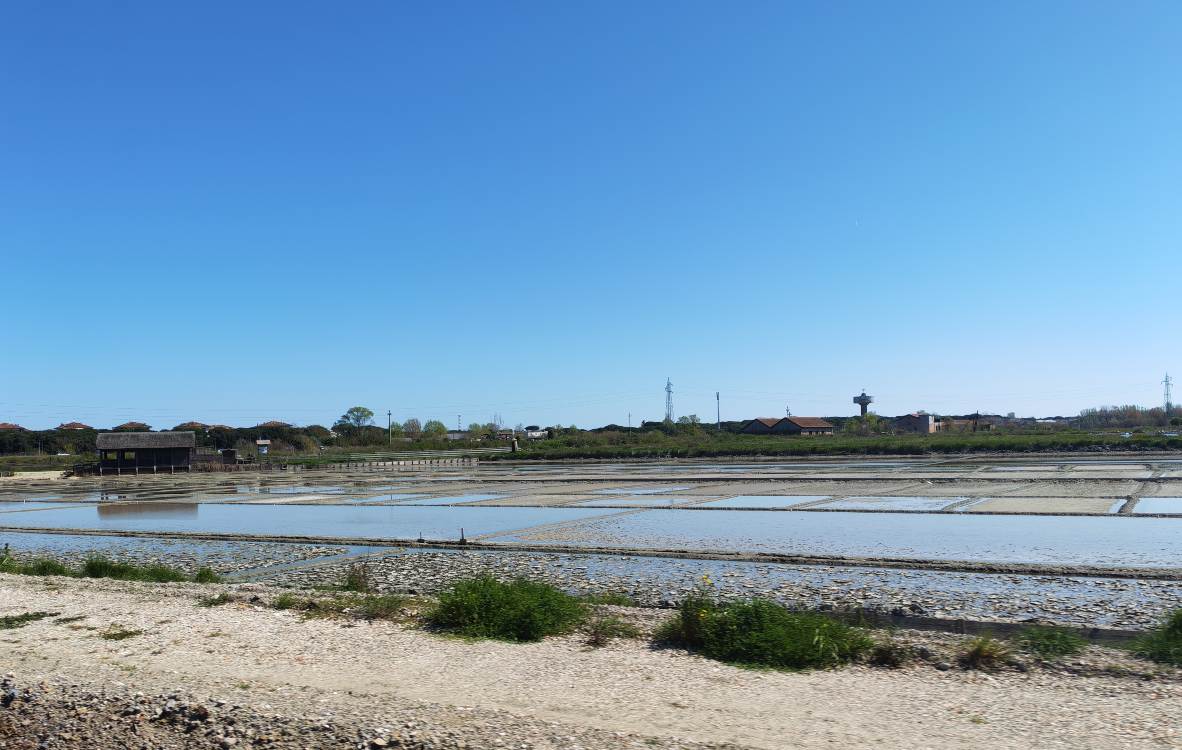
At the gates of the town extends the Salina di Cervia, part of the Po Delta Park and UNESCO protection, where birdwatching is practiced among pink flamingos and herons. Here the Camillone salt pan still produces sweet salt with artisanal methods and wooden tools. For the more active, the city offers the suspended routes of the pine forest at CerviAvventura, therapeutic treatments at the Terme di Cervia, the Kite Festival in May and the European Flavors Market in September.
@RebeccaManzi/GreenMe
The Canal Port of Cesenatico and the historical memory of the territory
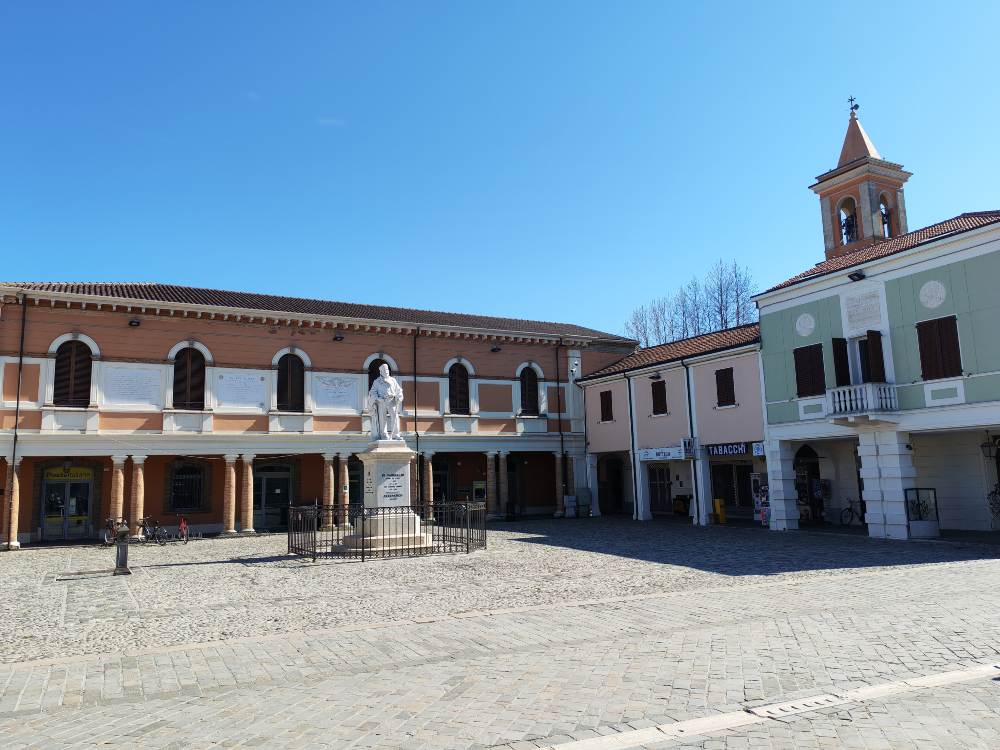
The next day we moved to Cesenatico, the entire urban layout revolves around the Leonardesco Canal Port, originally designed by Leonardo da Vinci to connect the hinterland to the Adriatic. Walking along its banks means encountering monuments such as the one dedicated to Giuseppe Garibaldi in Piazza Pisacane, the Parish Church of San Giacomo and the eighteenth-century Piazza delle Conserve, characterized by underground wells in which fish were crammed under the snow. The quay also houses the birthplace of the poet Marino Moretti.
@RebeccaManzi/GreenMe
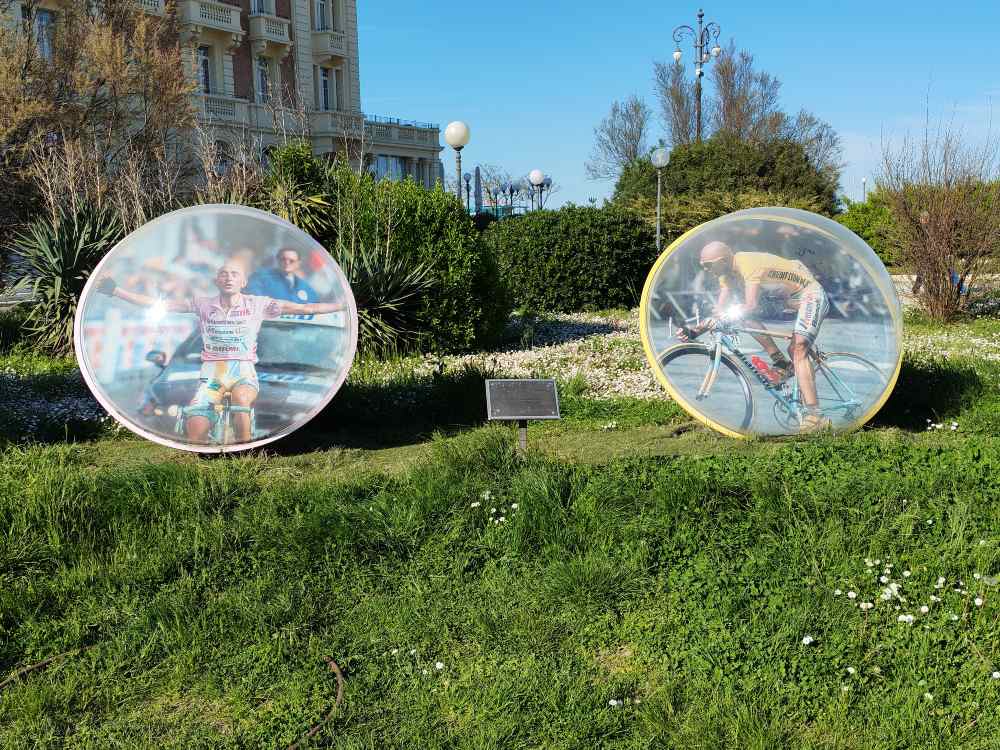
For cycling enthusiasts like us, near the train station, the Spazio Pantani is unmissable, an exhibition structure that retraces the cycling exploits of Marco Pantani through memorabilia and official bicycles. In Piazza Andrea Costa, however, we found two large giant marbles, one pink and one yellow, inaugurated in October 2020 on the occasion of the “Cesenatico-Cesenatico” stage of the Giro d’Italia. They contain the face and exploits of the cyclist who in 1998 simultaneously conquered the Giro and the Tour de France. This pop monument explicitly recalls the monumental 4-metre sphere known as the Biglia di Imola, created in 2005 by Alessandra Andrini along the A14 motorway commissioned by Mercatone Uno, transforming a beach game into a collective symbol along the seafront.
@RebeccaManzi/GreenMe
The historic boats of Cesenatico and the open-air Maritime Museum
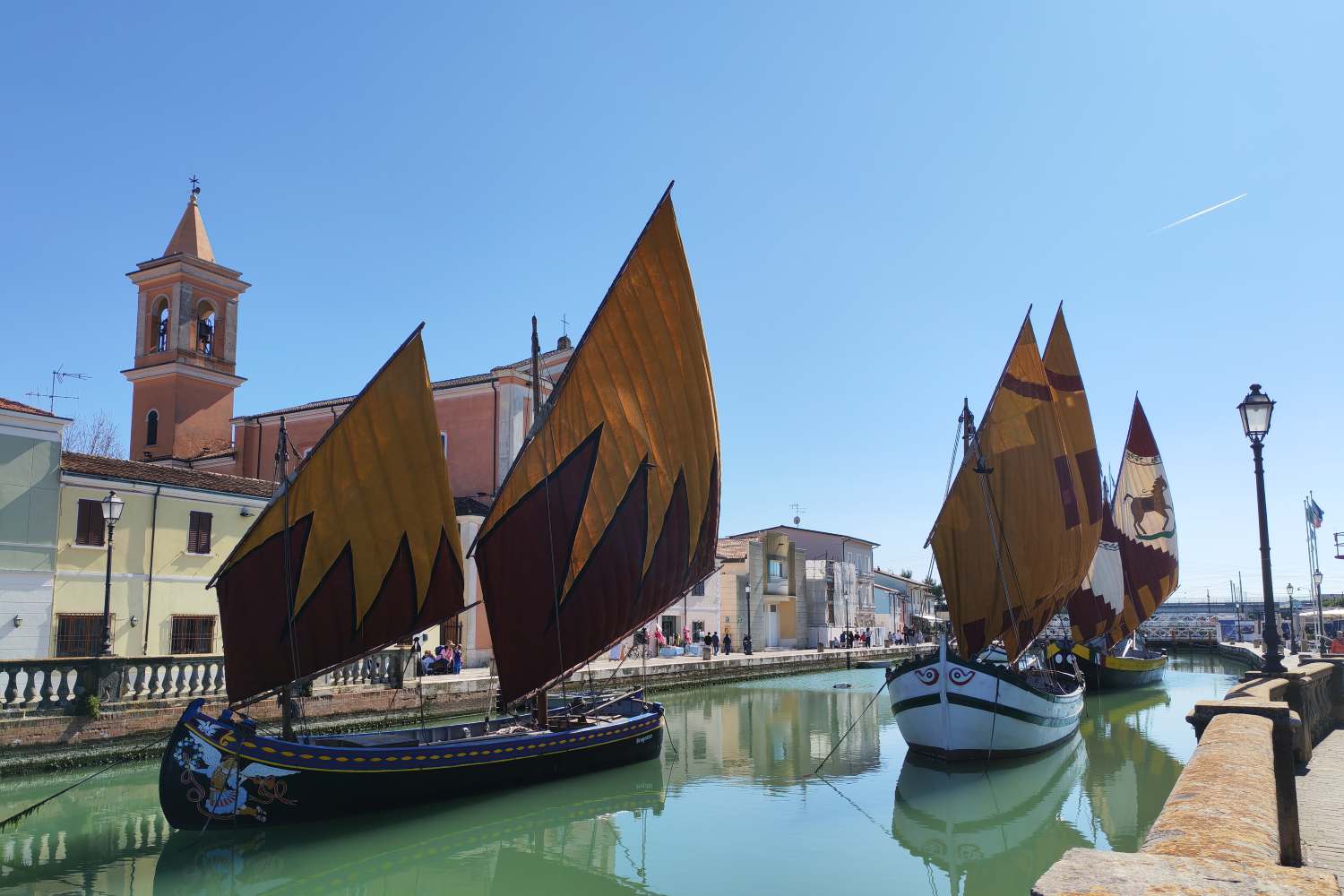
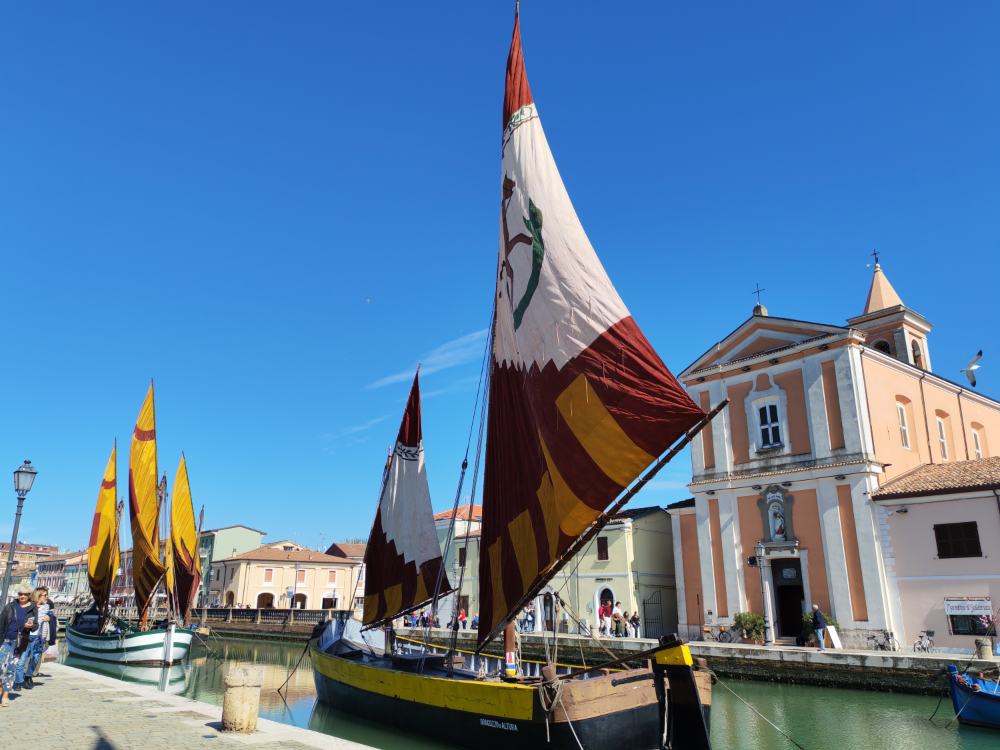
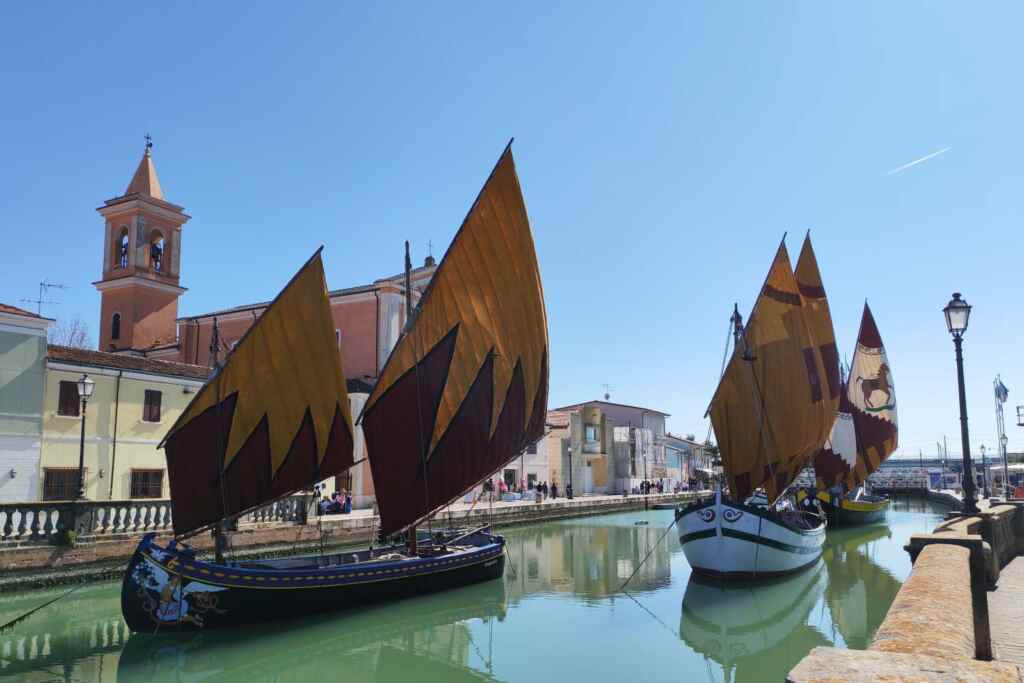
But without a doubt the most identifying and fascinating element of Cesenatico that has remained in our hearts and impressed us is the vintage fleet permanently moored in the canal. The floating section of the Maritime Museum is unique at a national level: ten historic boats, typical of the Upper Adriatic between the 19th and 20th centuries, remain in the water all year round. For me it was a particular emotion precisely because many of these come from Chioggia, the city where my grandmother was born.
@RebeccaManzi/GreenMe
During the summer, the trabaccoli and bragozzi unfurl their colorful sails in the wind, decorated with the heraldic symbols of the ancient Romagna fishing families. In front of the hulls, the land section of the museum reveals the secrets of the shipwrights, showing the construction techniques, period equipment and the evolution of navigation until the advent of engines. From here you can walk to the Levante Pier to closely observe the trebuchets, the large dark wooden structures equipped with fishing nets stretched out over the water.
@RebeccaManzi/GreenMe
