
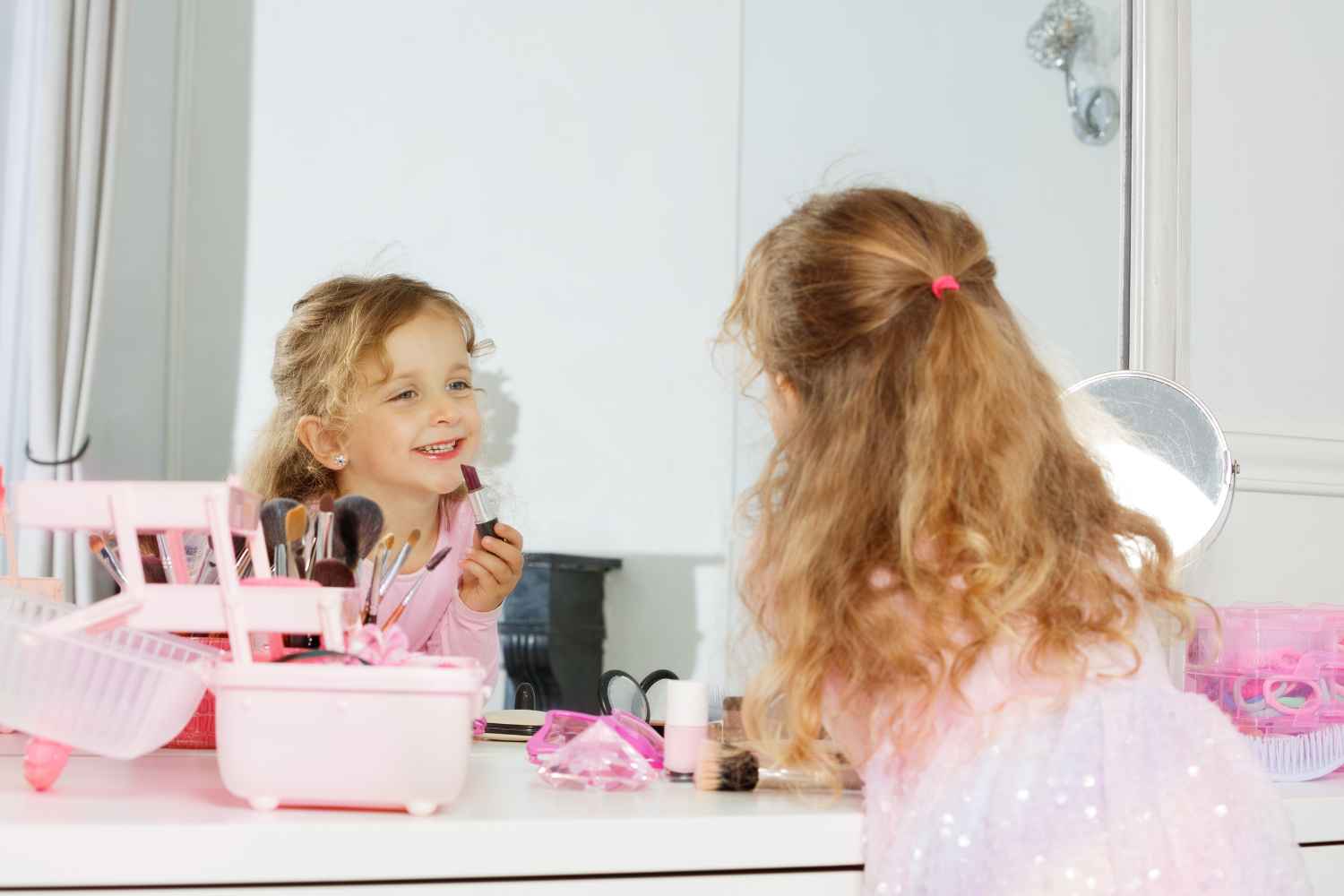
Face masks, serums, eye contour, lip gloss and even anti-aging products: what until a few years ago was a routine reserved for adults today also captivates children and pre-adolescents. In fact, videos are becoming popular on social networks in which very young creators show elaborate skincare and make-up routines, transforming skincare into a daily ritual to be shared with millions of users.
The alarm is raised Öko-test, which dedicates an in-depth analysis to the phenomenon of the so-called kidfluencers, highlighting the risks that this trend can have both on the health of the skin and on the psychological well-being of the little ones.
On TikTok, Instagram and YouTube it is now possible to come across videos with the title “Get ready with me for Kindergarten!” (“Get ready for kindergarten with me”), in which children as young as four or five years old show long beauty routines made up of creams, serums, masks, contouring and gloss.
Behind this content, often supported by parents and accompanied by commercial collaborations, lies a rapidly growing market. According to estimates reported by Eco-testthe cosmetics sector for children could go from a turnover of around 1.2 billion euros in 2024 to 1.8 billion by 2030, with an average annual growth of 6.7%.
The success of this content is also linked to the fact that advertising is increasingly less recognisable. Products are presented as spontaneous recommendations from peers, making it difficult for children and teenagers to distinguish between entertainment and marketing.
When skincare becomes a model to imitate
According to Priska Breves, professor of persuasive communication at the University of Amsterdam, who studies the effects of influencers on social media and on body perception, the problem goes beyond the simple purchase of a cosmetic:
Right here lies a central risk: beauty routines are not just perceived as product recommendations, but as part of a desirable lifestyle. Children might then think not only ‘this product is interesting’, but ‘I want to be like her’.
The result is that skin care is no longer seen as a choice, but as a requirement for feeling beautiful, popular and accepted.
In the United States the phenomenon exploded in 2023 with the so-called “Sephora Kids”, children and adolescents who filmed their routines directly in the chain’s stores using products designed for adult skin, such as anti-wrinkle creams and retinol serums.
Even in Italy, “cosmeticorexia” is being investigated
The theme has also arrived in Italy. In fact, since March 2026, the Competition and Market Authority (AGCM) has launched an investigation into the LVMH group and the Sephora and Benefit companies for alleged commercial practices aimed at minors.
According to the Authority, some products intended for adults were also promoted to children and adolescents through very young influencers, without providing adequate information on possible risks. The AGCM also recalls the phenomenon of “cosmeticorexia”, a term used to indicate the increasingly precocious obsession with skincare and the search for aesthetic perfection.
For experts, the main problem concerns how these contents influence the construction of identity. As Breves further explains:
Children and young people are at a stage in which their self-image and identity are still highly malleable. Repeatedly being confronted with beauty content can lead them to define themselves more through their appearance.
If you use products to prevent wrinkles, enlarged pores or other normal skin changes from an early age, you risk considering these natural aspects as serious defects to be corrected.
According to the scholar, there is also the risk of “self-objectification”, that is, the tendency to perceive one’s body above all as an object to be observed, evaluated and continuously improved. For children who post this content, likes and comments end up becoming a measure of their personal worth.
Parents have a fundamental role
Eco-test underlines how the responsibility largely falls on adults, especially when parents manage their children’s social accounts or encourage commercial collaborations.
In fact, Breves recalls that:
Children have the right to privacy and non-commercialized development. The line between gaming and child labor blurs when brands and visibility come into play.
The expert invites families to watch these contents together, helping their children to distinguish what is advertising from what is simple entertainment and discouraging the use of cosmetics that are not suitable for their age, such as anti-aging products or products containing retinol.
Even from a medical point of view the message is clear. Dermatologist Wolfgang Lensing, interviewed by the German magazine, recommends using as few cosmetics as possible on children’s healthy skin, with the exception of sunscreen.
According to the specialist, the daily use of creams, makeup and other products can alter the delicate balance of infant skin, hindering the formation of a healthy skin barrier.
Possible consequences include cosmetic acne, dermatitis and, with the arrival of puberty, even allergies due to the fragrances contained in cosmetics.
In other words, for the majority of children who have healthy skin there is no need for any skincare, but only correct daily hygiene and effective protection from the sun. The real challenge is to prevent social media from transforming a normal growth path into an early race towards an ideal of aesthetic perfection.
