
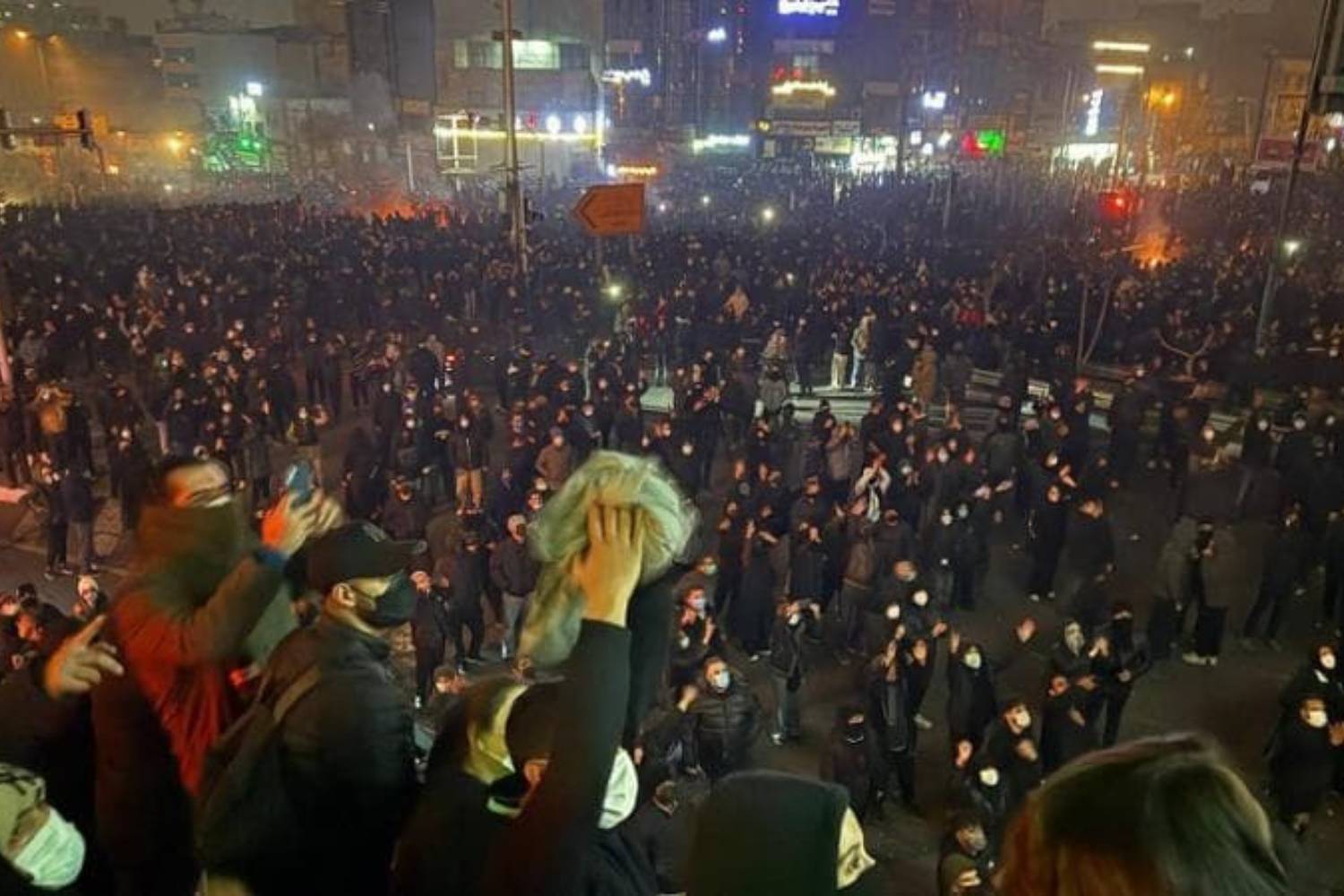
In Iran the repression has not stopped. It has changed shape, targets and even language, but continues to hit where it hurts most: those who heal on the one hand and those who grow, or at least try to do so, on the other.
After the protests at the beginning of January – suffocated in blood according to numerous human rights organizations – the power of the ayatollahs has started a new phase of retaliation. No longer just against the protesters who took to the streets, but against the doctors, nurses and healthcare personnel who tried to save them. Treating, in this context, becomes a suspicious act. Testifying, a risk. Silence, an imposed condition.
According to various sources, the victims of the repression are over 6 thousand, perhaps many more. In those weeks, security forces entered hospitals, hindered rescue efforts and, in some cases, arrested or killed injured people who were already hospitalized. Some were even disconnected from the resuscitation machines. Others have disappeared. The bodies, when returned to the families, would arrive days later, sometimes for a fee.
Today the pressure is concentrated on those who tried to save those bodies: doctors summoned, interrogated, threatened, among confiscated cell phones and monitored departments. The goal would be twofold: to get protesters’ names curated and to prevent uncomfortable stories from emerging. Yet many of the reconstructions spread around the world arise precisely from those medical testimonies. Breaking them means trying to erase the memory.
The climate of fear has immediate consequences: several injured people avoid hospitals and seek treatment in secret, often at home. But there is other news that makes this phase even more difficult to understand without feeling dismayed.
The Iranian teachers’ union has published the list of 200 children killed during the crackdown on the streets. Two hundred names. Two hundred empty desks. Not an archive, but – in their words – an indictment against a system in which the death of a child becomes possible, and therefore political.
Two hundred empty desks are a reminder of a simple reality: this system kills the future.
The professor Ali Sharifi-Zarchione of the most authoritative academic voices in the country, defined the Islamic Republic as a “Infanticidal Republic“. Harsh words that arise from a coherent gesture: already in 2022 he refused to collaborate with the police to identify his protesting students. Today he continues to use his voice to remember that without young people there is no future, only the survival of power.
Meanwhile, outside Iran, diplomacy is trying to move. Talks are planned in Oman between US and Iranian delegations, with the nuclear dossier at the center and – in the background – missiles, regional alliances, human rights. But within the country the question is simpler and more radical.
It’s about the right to care without being arrested. The right to study without dying and the right to grow without becoming a target.
When a state fears doctors and loses children, it is repressing a protest, yes, but it is also fighting against its own tomorrow.
Read also:
