
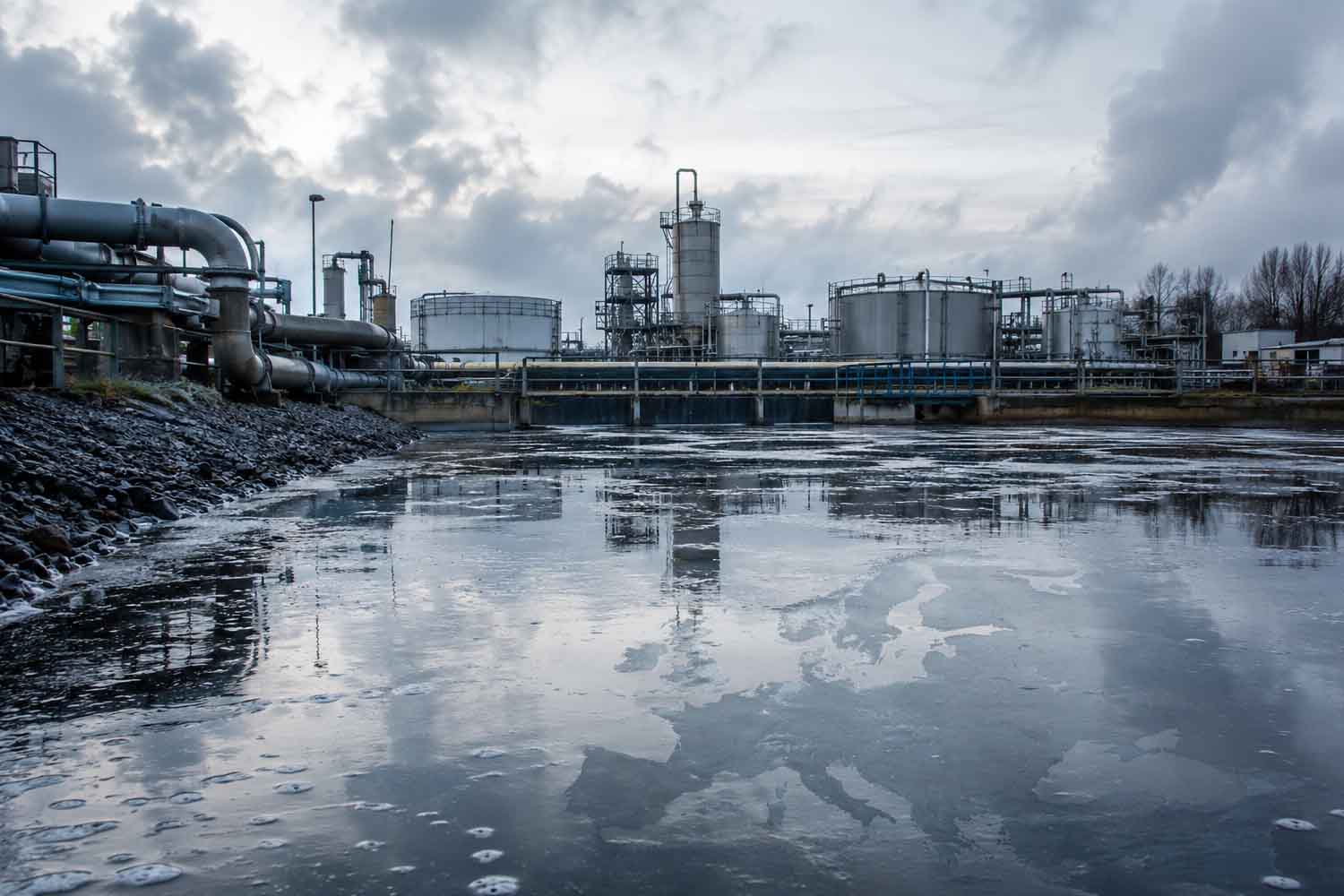
Up to €200 billion each year to remove less than 2% of PFAS that continue to be emitted in the European Union. The estimate comes from a published study in the magazine Environmental Science: Processes & Impacts and shows how difficult it is to clean up the environment from “eternal pollutants” once they have left factories, products and landfills. The nickname, apparently, had already read the quote.
Researchers estimate that one of the largest cleanup programs imaginable today would capture between 3 and 50 tons of PFAS and their precursors per year. A tiny amount compared to current European emissions, which continue to add to the contamination accumulated over decades. Spending amounts from the national budget would therefore allow the flow to be slightly slowed down, while the tank continues to fill.
How much it costs to chase eternal pollutants
The group led by Alison Ling, professor of civil and environmental engineering at the University of St. Thomas, built two scenarios using public data on contaminated sites, real costs of cleanup and an evaluation of technologies already applicable on a large scale. These are therefore forecast models, not an account already presented to the European Commission. They serve to measure the order of magnitude of the problem.
The first scenario, defined legacymainly concerns long-chain PFAS released in the past, such as PFOA and PFOS, which are now subject to strong restrictions. It includes some particularly contaminated sites and the treatment of drinking water. The central estimate comes to around 37 billion euros spread over twenty years, equal to 1.8 billion per year.
The second scenario, called emergingalso includes the most recent short- and ultra-short-chain PFAS, which are very mobile and difficult to intercept. It involves 1,636 European sites with high contamination, the discharges of large purifiers, the main drinking water networks, the sludge used in agriculture and the leachate collected in landfills. The estimated cost varies between 52 and 200 billion euros each year.
Technologies change together with molecules. Granular activated carbon filters can be used for several long-chain PFAS. Smaller and more mobile substances require treatments such as reverse osmosis, capable of separating them from water with much higher energy consumption and costs. At that point the contaminant has been concentrated in another material, which must be managed and destroyed. Disappearing, with PFAS, remains an out-of-catalogue service.
What does that 2% really mean?
The percentage indicated by the study compares the quantity that the modeled cleanups could intercept each year with the European emissions estimated in the same period. It does not mean that a treatment plant only removes 2% of the PFAS in the water it receives. It means that, even by treating numerous critical points, the overall mass recovered would remain much lower than that continuously released into the environment.
The estimate also does not include a complete cleanup of the continent. Most of the surface waters, groundwater not used for drinking water supplies, land affected by widespread contamination, buildings, sediments from rivers and seas and several disposal sites without systems to collect the leachate are left out. The 200 billion therefore represent the maximum cost of an already very ambitious and still partial scenario.
The European Environment Agency has long warned that cleaning up PFAS-contaminated sites is expensive, technically complex and sometimes impossible. These substances can descend through the soil, reach the groundwater, move with water and return to the food chain through crops and animals. Soil and groundwater thus become deposits and, at the same time, new sources of contamination.
Among the European examples indicated by the Agency, Veneto also appears, where emissions from an industrial site have contaminated soil, surface and underground water, reaching drinking water. It is the concrete measure of a phrase that would otherwise be convenient to leave in reports: intervening on hotspots remains essential to reduce the exposure of the communities involved.
Targeted reclamations are therefore necessary. They protect aqueducts, reduce contact with contaminated water and food and limit risks in the most affected areas. The study debunks the idea that they can compensate for their still widespread production and use.
Stop emissions before paying the bill
According to the authors, a strategy based mainly on downstream cleaning would have enormous costs and marginal results. Resources should also target prevention: substitution of avoidable uses, development of safer alternatives, redesign of products and control of industrial emissions.
The European Environment Agency itself recalls that PFAS are used in fabrics, packaging, construction, medicines, pesticides, vehicles and numerous production processes thanks to their resistance to water, fat and heat. Emissions can occur during production, use and disposal. Each step leaves a door ajar. Thousands of substances, thousands of doors.
PFAS already dispersed will require decades of controls, filters and local interventions. Those still inside an industrial process or product can instead be stopped before they reach water, soil and blood. It costs anyway. Only, it’s a lot cheaper than chasing them forever.
In Belgium, PFAS arrive before the European Committee of Social Rights
The environmental bill is also becoming a legal issue. On July 8, 2026, the organization ClientEarth filed a complaint against Belgium with the European Committee of Social Rights, alleging that authorities have failed to adequately protect public health from PFAS contamination. The appeal recalls article 11 of the European Social Charter, dedicated to the right to health protection.
The organization cites contamination near the 3M plant in Zwijndrecht, near Antwerp, around the Chièvres military base and in sources supplying Brussels. The Committee is expected to express its opinion on eligibility in 2027; a decision on the merits is expected in the following two or three years. It cannot directly impose fines, but its findings can increase pressure on states to change rules and policies.
The study on cleanups gives governments a number that is difficult to get around: 200 billion a year to intercept less than 2% of emissions. PFAS already dispersed must be looked for where they cause the most damage. Those that have yet to exit the industrial spigot can be stopped sooner. It is the only part of the cleanup that, for now, remains economically viable: avoiding having to do it.
