
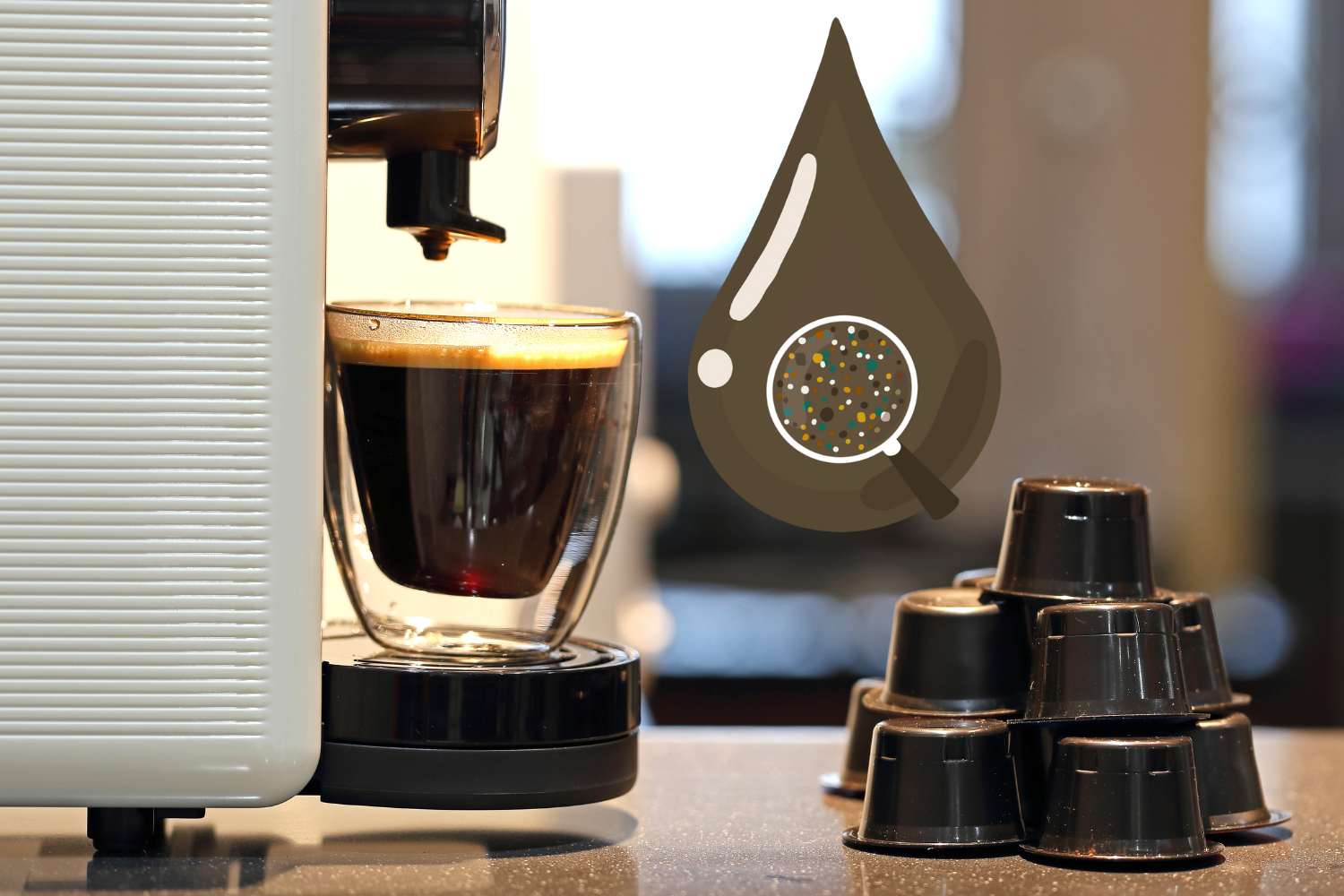
Coffee in capsules is now a usual presence in Italian homes. Practical and quick to prepare, it allows you to obtain a cup in just a few seconds. But does the quality of these products really always live up to expectations? And what substances are hidden in the mixture? The issue was examined by Il Salvagente, which subjected 17 of the best-selling capsules in Italy to laboratory tests, belonging to 14 brands, from the best-known manufacturers to large-scale retail chains.
The analyzes took three aspects into consideration: pesticide residues, presence of acrylamide, a substance that develops during roasting, and organoleptic quality, assessed by a group of professional tasters. The survey comes at a time when coffee consumption continues to be very high. In 2025, over 22 million Italian families have purchased at least one pack, with average spending growing in recent years. Capsules, in particular, have conquered an important space and now represent almost half of total domestic consumption.
Pesticides and acrylamide: what emerges from the analyses
One of the most significant results concerns chemical residues: all 17 capsules examined present traces of pesticides, although the concentrations are always lower than the limits established by law.
Among the most frequently identified substances are: 2-phenylphenolused in agriculture as a fungicide and preservative, and theamitrazan acaricide whose metabolism can produce compounds active on the nervous system. Clothianidin, a neonicotinoid banned in the European Union for use in open fields due to the risks to pollinating insects, was also detected in several samples. The diffusion of these molecules in products of different brands suggests that the problem is linked above all to agricultural practices along the production chain, rather than to a single brand.
The analyzes also covered theacrylamidea substance that develops naturally during the roasting of coffee beans and which is classified as potentially carcinogenic. All samples comply with the European indicative reference value, even if the concentrations change significantly from one product to another. Some capsules have lower quantities, while others reach or exceed 200 micrograms per kilogram. The differences confirm the role of manufacturing processes in the formation of this substance.
The taste test: evident differences between the products
The laboratory was not limited to chemical analyses. A group of expert tasters also evaluated the aroma, body, balance, sweetness and complexity of the different blends. The results highlighted a rather uneven quality: some capsules offer a rich and complex aromatic profile, others provide a poorly characterized coffee, flat and lacking particular intensity.
The worst capsule coffee is from Todis
Todis Scirocco Caffè Intenso – rating: 3.5/10
It is the product that convinced the experts the least. The blend is made entirely of Robusta coffee, but the result in the cup was considered disappointing: the cream does not form a compact layer and the drink appears structureless. The aromatic profile is also very weak, with hints essentially attributable to cereal. The analyzes detected 0.018 mg/kg of 2-phenylphenol and 0.031 mg/kg of amitr az and metabolites, values in line with those found in the other samples. The concentration of acrylamide is higher, equal to 221 µg/kg. Some critical issues also emerge on the environmental front: the packaging simply suggests separate waste collection after cleaning the capsule, without providing more precise indications for correct disposal.
To consult all the results and find out the position of the other products examined, you can refer to the May issue of Il Salvagente.
Coffee capsules and disposal: what changes with the new European rules
The investigation also examined an often overlooked aspect, namely the end of life of the capsules. An issue destined to gain greater importance with the application of the new European provisions on packaging. EU Regulation 2025/40 came into force on 12 August, which considers each individual capsule to be disposable packaging. Producers will therefore have to include specific instructions on the packaging for correct disposal, overcoming the absence of indications which has so far created confusion among consumers.
Some brands have already set up solutions, such as Nespresso and Starbucks, for example, which have collection systems for aluminum capsules. Among the 17 products examined, only three are compostable: Jerez by Eurospin, Vergnano and Esselunga. Among the companies that came under observation for waste management, Lavazza stands out, receiving the heaviest penalties: both capsules subjected to the test lacked clear indications on disposal.
